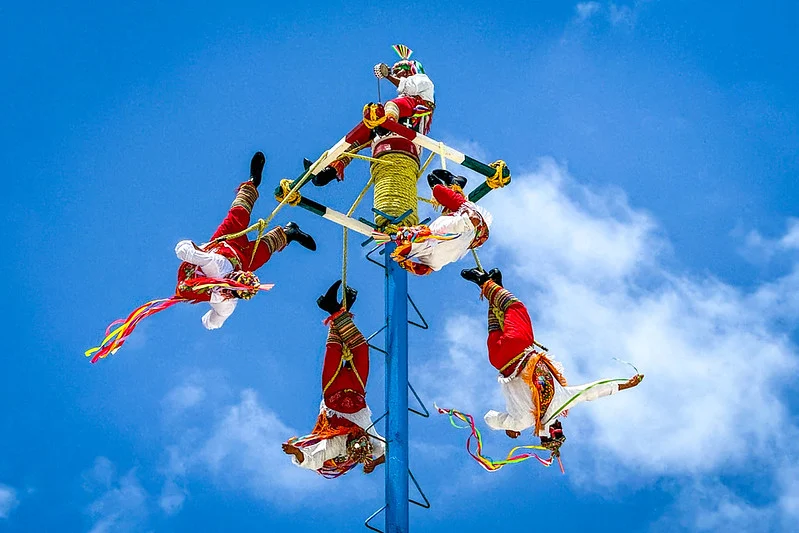
Tulum, Quintana Roo — Mexico’s federal Culture Department is preparing to bring the Papantla flyers back to Tulum after the performers left the archaeological area in March. Before setting a date, officials will inspect the ceremonial pole and surrounding infrastructure to make sure the ritual can be performed safely.
The departure ended more than three decades of performances at the site. The reason, according to one of the flyers, was straightforward: too few visitors were stopping to watch, and the group was no longer earning enough to cover expenses.
Juan García, a flyer from Papantla, Veracruz, said members still had to pay for rent and food and needed to look elsewhere for income. Their decision to leave Tulum did not mean the ceremony itself had ended; it meant performing at that location had become unsustainable for them.
Why the Ceremony Matters
Often called the Voladores de Papantla, the flyers perform a living ritual practiced by several Indigenous communities, particularly the Totonac people of Veracruz. UNESCO, which added the ceremony to its Intangible Cultural Heritage list in 2009, describes it as an expression of respect for nature and the spiritual world.
In the ceremony described by UNESCO, four flyers climb a tall pole while a fifth participant, the caporal, plays a flute and drum at the top. The four then descend on ropes, circling the pole as they move toward the ground. The music, preparation and movement are part of the ritual’s meaning, not simply a prelude to the flight.
For years, the ceremony gave visitors to Tulum a chance to encounter that tradition in person. It also gave the performers a place to share knowledge passed between generations. García told La Jornada Maya that continuing to teach young people the practice remained important to the group even as they left the site.
What the Government Has Announced
Federal Undersecretary of Culture Marina Núñez Bespalova said her department is working, on President Claudia Sheinbaum’s instructions, to improve conditions in Tulum and restore the ceremony as part of that effort.
The plan is to bring back the complete ritual, including its music, dances, preparations and flight, with performers from Papantla. Núñez Bespalova said she wants the return to happen in 2026.
There is no confirmed performance date. Officials first need to determine whether the pole and related infrastructure are safe. Núñez Bespalova said the government will not put the flyers at risk to meet a timetable.
The announcement also leaves a question raised by the March departure: how the performers will earn enough to make regular appearances viable. Officials have not published a schedule, payment arrangement or other plan for sustaining the performances. Passing a safety inspection would allow the ceremony to resume physically; keeping it in Tulum will also require conditions that work for the people who perform it.
What It Means for Residents and Visitors
If the plan goes ahead, people visiting the archaeological area could once again see a cultural practice that had become familiar in Tulum over 30 years. For residents, the return would restore a public encounter with the performers and their tradition. For the flyers, it could reopen a place to work and share that heritage—provided the practical reasons they left are addressed.
The proposed return comes amid wider federal efforts to improve access to Tulum’s attractions. In July, the government announced free entry to Parque del Jaguar and revised charges for the archaeological zone. Those changes provide context for the effort to bring people back to the area, but officials have not said they will, on their own, resolve the flyers’ loss of income.
For now, the news is a plan to restore the ceremony, rather than notice that performances have resumed. The next steps are the inspection, any work the pole requires, and an announcement confirming when the flyers can safely return.
More Tourism
- Mérida Jazz Festival 2026: 40 Artists, Free Shows, Tourism Boost
- Bacalar’s Maya Train Station Leaves Taxi Drivers Waiting
- Otoño Cultural 2026: Free Concerts, Butoh Dance and Electronic Music in Mérida
- Tulum-Miami Flights to End as American Airlines Adjusts Routes
- Winjet Drops 9 p.m. Cozumel Ferry, Narrowing Options for Late Travelers
More Tulum
- Uber Opens Driver Registration in Playa del Carmen and Tulum for Taxi and Motorcycle Services
- Playa del Carmen Officials and Transport Firms Meet After Fatal Tulum Crash
- Gastrointestinal Illnesses Rise in Tulum’s Irregular Settlements
- Captain Sun’s Tulum Penthouse: Cash Trail Under Scrutiny
- Tulum Reports Fewer Traffic Accidents and Injuries in Third Quarter of 2026