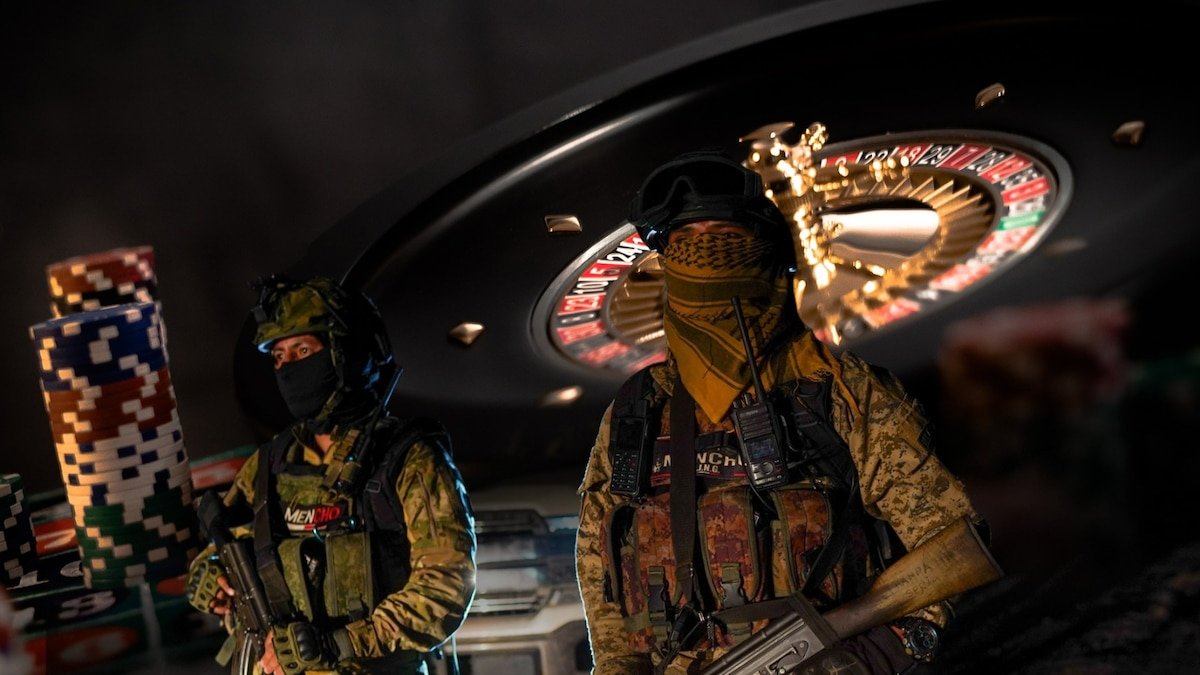
MEXICO CITY — The 2026 FIFA World Cup is expected to generate a record wave of legal and illegal sports betting, creating fresh concerns for financial regulators, gambling authorities, and law enforcement agencies in Mexico and around the world.
A new analysis by the Global Initiative Against Transnational Organized Crime, or GI-TOC, warns that football remains one of the sports most exposed to illegal betting, match manipulation, and organized criminal activity. With 48 teams, 104 matches, and host cities across Mexico, the United States, and Canada, the 2026 tournament offers an enormous and fast-moving betting environment.
GI-TOC estimates that global betting linked to the 2026 World Cup could exceed $50 billion, up from about $35 billion during the 2022 tournament. That volume alone creates a challenge. The more money moving through betting platforms, digital wallets, crypto exchanges, and payment processors, the harder it becomes to identify suspicious activity in real time.
The report places special attention on prediction markets, a fast-growing form of betting that functions differently from traditional sportsbooks. Instead of betting against a bookmaker, users trade “yes” or “no” positions on future events, such as match outcomes, tournament statistics, or player performance. Prices move as users buy and sell positions, making the platform look more like a financial exchange than a traditional betting shop.
For legitimate fans, prediction markets may offer a new way to engage with the World Cup. For criminal groups, they can also create opportunities to move illicit money.
According to GI-TOC, criminal actors can use loosely regulated or offshore platforms to deposit illegal funds, often after converting them into cryptocurrency. They can then place bets, trade against other users, withdraw apparent winnings, and move the funds through stablecoins, multiple wallets, or other digital assets before converting them back into traditional currency.
That process can obscure the origin of the money. Without strong identity verification, it becomes difficult to know who actually controls the accounts moving funds in and out of the platform.
Traditional sportsbooks are not immune either. Criminal groups can use networks of accounts to place offsetting bets, reducing the risk of major losses while creating a transaction history that appears legitimate. They may also use front men, stolen identities, or vulnerable individuals to open accounts and simulate ordinary betting activity.
Mexico has already seen how gambling platforms can be used in suspected laundering schemes. In November 2025, Mexican authorities suspended operations at 13 casinos suspected of moving millions of dollars through international money laundering networks. According to authorities, the schemes allegedly used stolen or borrowed identities, including students, homemakers, and retirees, to register small bets while recording large winnings. The money was then moved through overseas accounts and returned to Mexico.
That case did not involve the World Cup, but it shows why gambling oversight matters. Betting platforms can be attractive to criminal groups because they combine cash flow, fast transactions, high volume, and in some cases, weak verification.
The 2026 tournament adds another layer because prediction markets are moving into the mainstream. FIFA has named ADI Predictstreet as its official prediction market partner for the World Cup, describing the deal as a new form of interactive fan engagement. FIFA says the platform will include safeguards, real-time monitoring of suspicious trading activity, and information-sharing systems designed to protect transparency and fairness.
Those safeguards are important, but they do not eliminate wider concerns. Prediction markets operate across borders, and different countries classify them differently. Some treat them as gambling, others as financial products, and others have not yet created clear rules. That fragmented legal environment is exactly what organized crime can exploit.
There is also the issue of insider information and manipulation. If a person has non-public information about a player, team decision, injury, or off-field development, a prediction market can become a place to profit from that knowledge. In more serious cases, betting markets can create incentives to manipulate results, especially in lower-profile matches or events where oversight is weaker.
For Mexico, the issue is not only theoretical. As a World Cup host country with an expanding digital economy, a large betting market, and ongoing concerns about organized crime, the country will need to monitor both licensed operators and less visible online platforms. That includes traditional casinos, online sportsbooks, crypto-based betting platforms, payment processors, and informal networks that may move money around the tournament.
The World Cup will bring tourism, business, and global attention. It will also bring enormous betting activity.
The challenge for authorities is to separate legitimate fan participation from financial activity designed to hide criminal proceeds. In a tournament this large, that will require more than watching the games. It will require watching the money.
More Crime
- Cancún: 3 Kidnappers Get 80-Year Sentences Each
- Lone Robber Steals 3,000 Pesos From Playa del Carmen Pharmacy
- Armed Individuals Reported on Land South of Puerto Aventuras
- Three Raids in Playa del Carmen and Cancún Net One Detention and Suspected Drugs
- Police Detain One of Three Men Who Tried to Rob Young Man in Playa del Carmen