
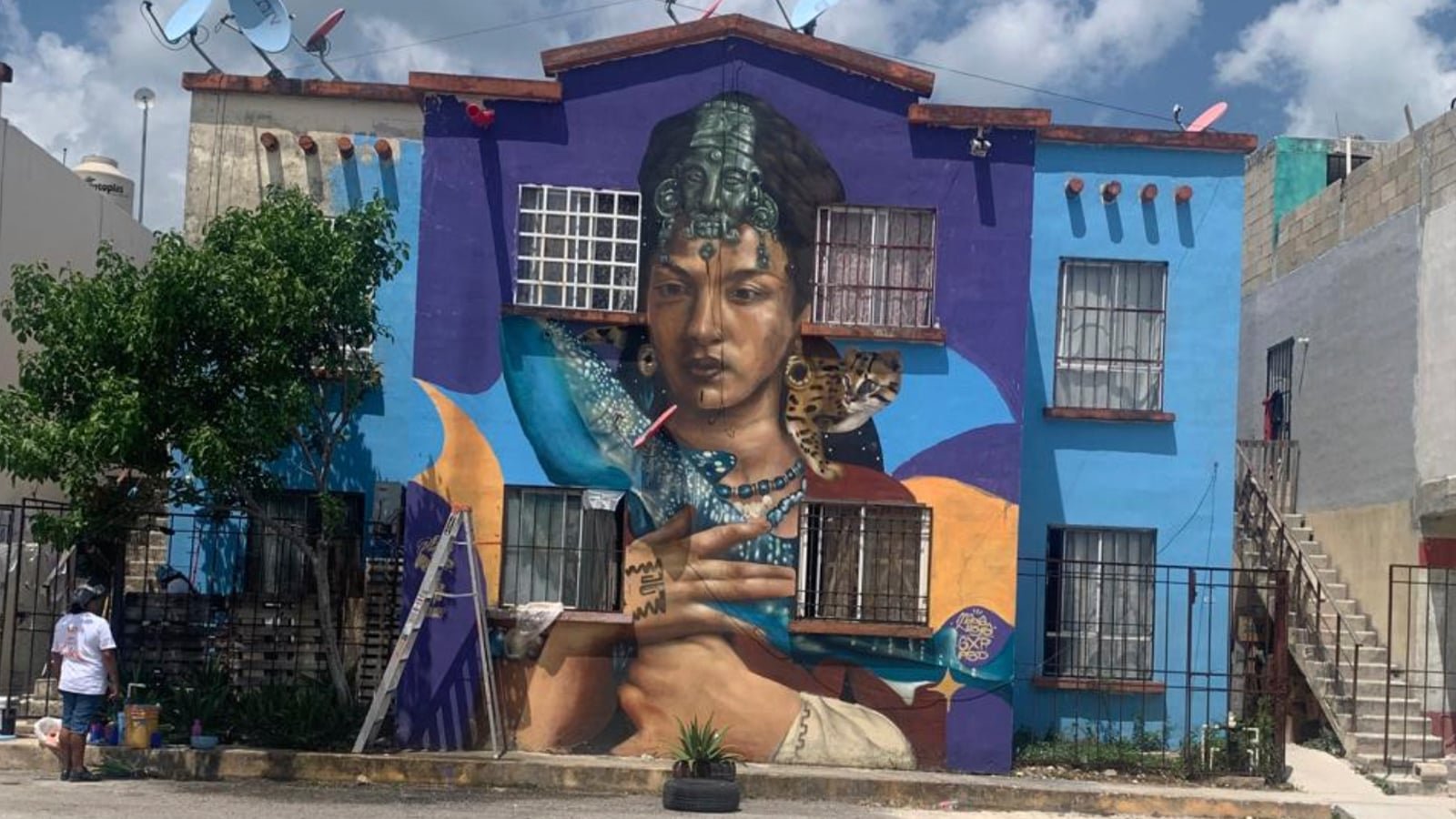
Cancún, Quintana Roo — A citizen-led program that turns abandoned public spaces into gathering points for children, teenagers and families has achieved one of its main goals: lowering crime in the highest-risk areas of Cancún, Playa del Carmen and Cozumel, project coordinator Verónica Meza said.
Haciendo Barrio, which works alongside municipal and state public security agencies, focused on 18 spaces this year that have either been fully recovered or are still in the process. Twelve are in Cancún, four in Playa del Carmen and two in Cozumel, in densely populated areas such as Villas Otoch and Villas del Sol, plus two parks in each of the latter two cities.
A seven-month process
Meza said recovering a single space takes about seven months on average. The first step is knocking on doors, raising awareness and helping residents identify their own needs, while also bringing security personnel in so the community can see that police respond when called.
At the end of the process, a large mural is painted in the main area of the site. With the artwork completed today, the program has produced 25 murals in total. In Villas Otoch, one mural is painted for each recovered parking lot; in Playa del Carmen, one for each park; and in Cozumel the practice has been adopted as well. In Cozumel, two neighborhoods with high crime rates were targeted and two parks were assigned for residents to take over.
Each site also hosts a community workshop involving between 15 and 20 children. Organizers take particular care with the youngest participants, who are not allowed to handle spray cans and are instead steered into other recreational activities.
Neighborhood networks against risk factors
Meza said residents have kept the finished sites clean and organized, completely changing conditions that had been marked by neglect. Persuading people is harder in lots where residents are not the owners, so the team extends its activities until the community is engaged.
The recovery phase involves setting up a community network to encourage the creation of a neighborhood security committee. Residents help identify risk factors such as streetlights that are out, a lack of trash containers or other red flags. The work concludes when those hazards are removed, the mural is painted and a working network coordinated with security authorities is left in place.
The sessions include cleanups, painting curbs and repairing and repainting playground equipment. Heavy machinery jobs, such as tree trimming or debris removal, are handled with support from the municipal government.
“With the mural we make the community part of the space, they feel they took part […] and they start to feel that sense of belonging,” Meza said.
Changing how residents feel about safety
Each site identifies neighborhood leaders who join the Haciendo Barrio network. “The idea is that the people who have already been through this whole process now teach new neighbors […] how to report something or request a prevention talk with the police,” the coordinator said.
The program does not keep exact statistics on crime reduction, but the sense of security in areas such as Villas Otoch has changed dramatically. The municipal government has added to the citizen effort by installing a “safe path” in the area, investing in sidewalk-level and overhead lighting along with trash containers.
“The perception isn’t only about whether crimes happen, but also about how a person feels when walking through a place. If there is trash or it isn’t lit, that has an effect,” Meza said.
She pointed to T’uubul K’iin, an emblematic park that had been used as a dumping ground and was cleaned up and equipped with playground equipment and a dirt soccer field through joint work by residents and the municipality, bringing the site back to life.
More Community
- Santino Beach Club Opens on Playa del Carmen’s Calle 28, Taking On Mamita’s and Lola
- Tulum Murals Turn Streets Into Open-Air Gallery for Horizontes Mexicanos Festival
- Cancún International Music Festival Returns With ‘América Mestiza’ Theme and More Than 15 Events
- Cancún’s ‘México Imparable’ Community Center Tops 80% Completion in Región 249
- Lorraine Pinto, Sculptor of Cancún’s Iconic Ceviche, Dies at 92
More Cancun
- Mercado 28 in Cancún: What to Buy, Where to Eat and How to Haggle
- Cancún and Riviera Maya Close 2026 With a Wave of Hotel Openings
- Cancún’s CRIT Teletón Holds Autism Education Sessions to Dispel Myths and Train Community
- Staff Turnover at Migration Agency Stalls Tourist Service Training, Industry Group Says
- Searching Mothers Keep Indefinite Blockade in Cancún Hotel Zone as State Officials Stay Silent
