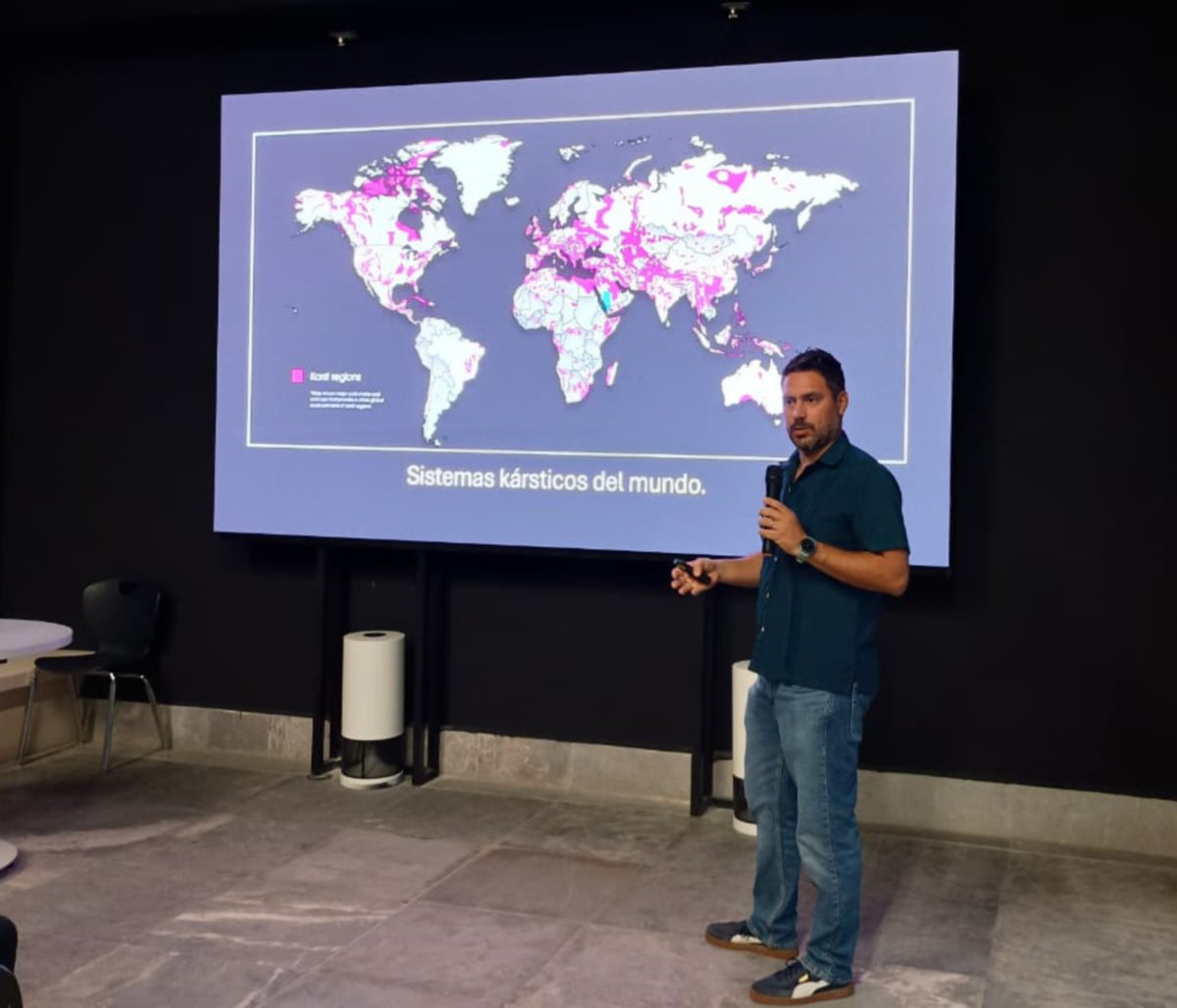
Mérida, Yucatán — Cenotes are not just freshwater reservoirs but complex ecosystems teeming with life, warned Efraín Chávez Solís, a doctor in sciences, during a recent talk.
“People forget they are not swimming pools — they are ecosystems. There is a lot of life beneath our feet,” said the specialist, who has conducted underwater explorations in various cenotes across the Yucatán Peninsula.
Chávez explained that the region has three main types of underground structures: cenotes, where water is exposed; caverns, which have a small entrance and a large flooded chamber; and caves, completely underground spaces with no light.
These formations also allow scientists to study Earth’s geological and climatic history, he noted. Some caves are so deep they suggest that 20,000 years ago, sea levels were up to 120 meters lower than today.
Cenotes represent a window into the past, Chávez added, as they have yielded remains of Ice Age fauna and ancient human evidence. “We have found remains of Ice Age animals, such as saber-toothed cats, dwarf elephants, and human remains over 13,000 years old,” he said.
He also clarified a common misconception: cenotes were not directly created by the meteorite impact that wiped out the dinosaurs. When the collision occurred 66 million years ago, the Yucatán Peninsula was still submerged under the ocean. Cenote formation is much more recent, linked to the peninsula’s uplift between 8 and 30 million years ago.
For caverns and cenotes to form, karst rock must be exposed to three main factors: precipitation, which fractures the rock; lower sea levels, which allow collapses; and haloclines — boundaries between fresh and saltwater — that accelerate the dissolution of rock walls.
Regarding biodiversity, Chávez reported that 67 species have been recorded in these ecosystems, mostly crustaceans, and about 86% are endemic to the Yucatán Peninsula.
He also highlighted environmental risks facing cenotes and the region’s aquifer. “Through cenotes we can either protect the aquifer or contaminate it. They are the access points we have to study the ecosystem — how it works, who lives there, how it changes, and how we can care for or harm it,” he said.
In some sites, heavy metals, pesticides, and fecal coliforms have already been detected, along with oxygen depletion and eutrophication — an excessive growth of algae caused by excess nutrients and sunlight.
Despite these threats, Chávez believes tourism can be viable if properly regulated and if visitors are environmentally conscious, promoting low-impact tourism that preserves these unique ecosystems.
More Lifestyle
- Cancún Opens Registration for Janal Pixan 2026 Catrina and Altar Contests
- Brain-Eating Amoeba Found in Six Artificial Lakes in Mérida; Water Contact Restricted
- Cancún Launches 2026 Ocular Prosthetics Program With Free Evaluations
- Playa del Carmen Health Center in Villas del Sol to Close Two Days for Maintenance
- Tulum’s Mureco Museum Adds 53 Archaeological Pieces From Across Mesoamerica