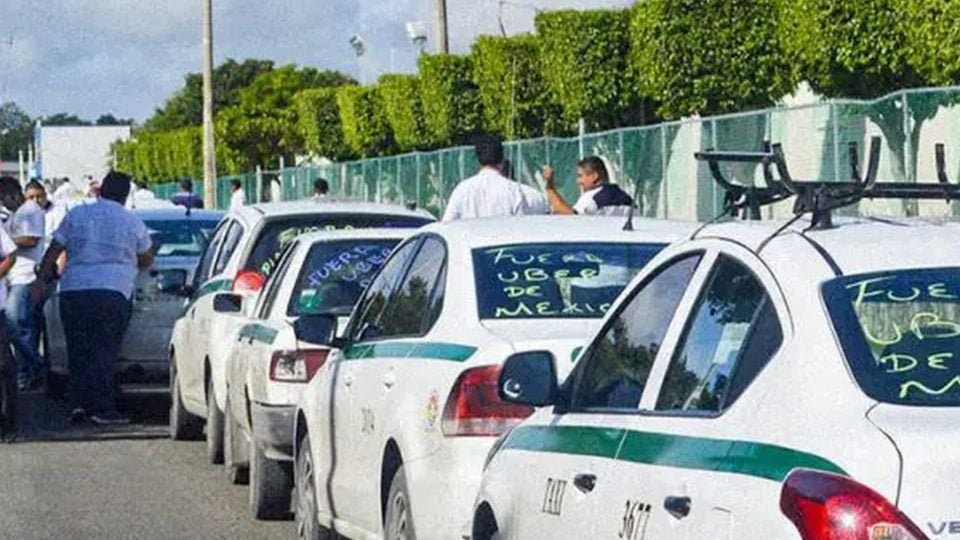
Cancún, Mexico — Taxi drivers in Cancún, through the “Andrés Quintana Roo” union, announced this week that they are working on a new strategy to end the conflict they have maintained for years with transportation apps like Uber: the implementation of taxi meters in the municipality of Benito Juárez.
The measure, which has already been presented as a proposal to the Institute of Mobility of the State of Quintana Roo (IMOVEQROO), aims to regulate taxi service costs, improve the experience for local users and tourists, and align with what is established in the Mobility Law of the State of Quintana Roo.
Cancún, Without Meters and With Zone-Based Fares
Unlike other tourist destinations and cities in the country, Cancún has never used taxi meters. For decades, service charges have been based on zone-based fare schedules, delimited on maps that establish fixed prices according to the origin and destination of the trip.
However, over time this scheme ceased to be functional. During 2025, taxi service in Cancún was harshly criticized by national and foreign tourists, who reported excessive charges, in some cases in dollars, for trips of just 10 to 20 minutes, which affected the image of the tourist destination.
Gradual Implementation of Taxi Meters in 2026
According to the proposal presented by the union to IMOVEQROO, the use of taxi meters in Cancún would begin gradually during the first quarter of 2026, initially in some units, as part of a strategy to regulate prices in the face of high demand and competition with digital platforms.
So far, the cost of the “banderazo,” that is, the base fare of the service, has not been disclosed. However, on social media, residents of the municipality of Benito Juárez have requested that Mayor Ana Paty Peralta ensure the initial charge is not in dollars nor exceed 500 pesos, one of the main historical complaints.
New Improvements in Cancún Taxi Service
In addition to taxi meters, union leaders announced that technological improvements are being considered to modernize the service and make it more competitive against Uber and other transportation apps. Among the planned changes are:
- Payment with bank cards or QR codes
- Real-time route visualization
- Option to share the live route
With these actions, the Government of Quintana Roo and the taxi union seek to reduce the tension that has been experienced in recent years between traditional taxis and digital platforms, a conflict that has even led to incidents of violence, threats, and loss of confidence by visitors in areas such as Cancún International Airport and tourist zones.
The possible arrival of taxi meters in 2026 represents a historic change in Cancún’s public transportation, with the goal of ensuring fair fares, greater transparency, and better service for residents and tourists.
Discover more from Riviera Maya News & Events
Subscribe to get the latest posts sent to your email.