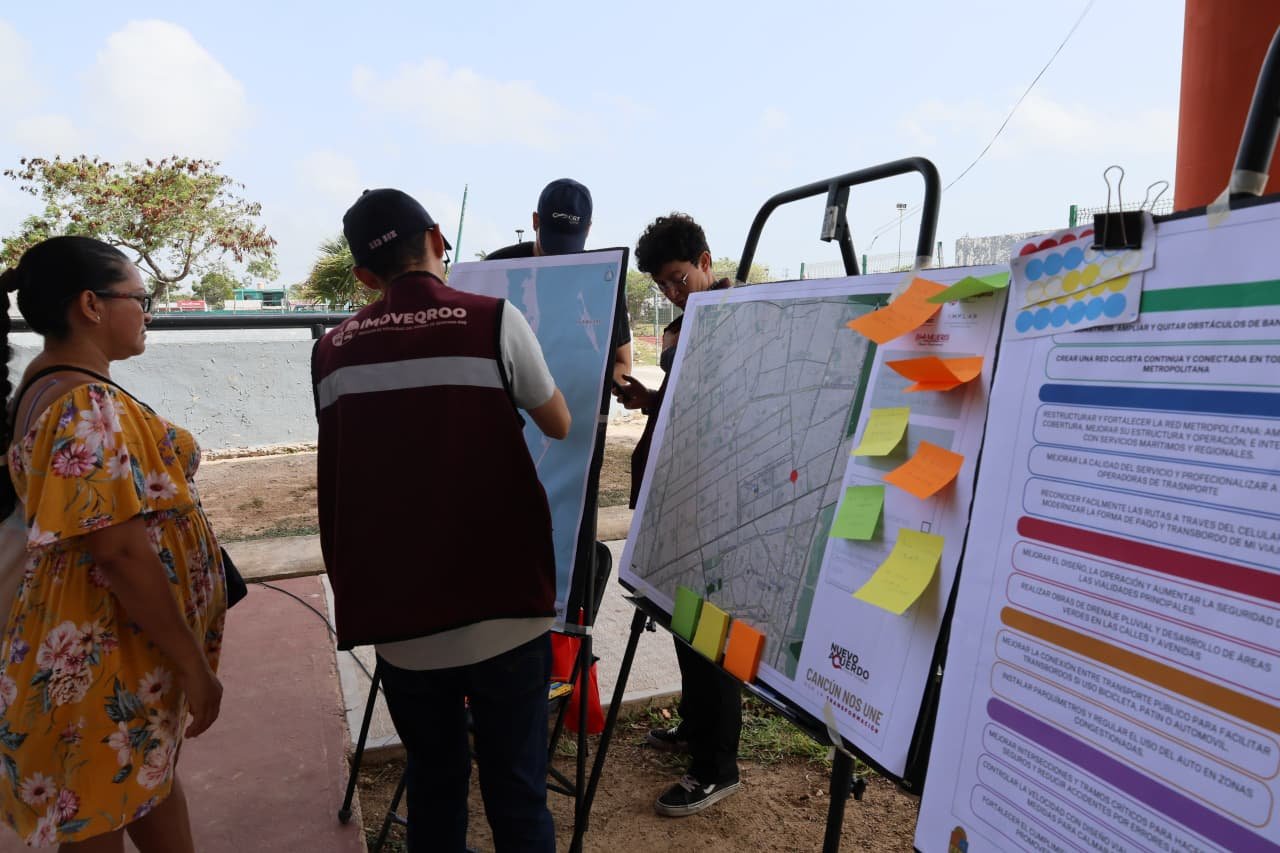
Cancun, Quintana Roo — Residents of Cancun took advantage of a community outreach event to voice their concerns and proposals regarding public transportation, road safety, and pedestrian infrastructure, as part of the development of the city’s Comprehensive Sustainable Urban Mobility Plan (PIMUS).
The Quintana Roo Mobility Institute (IMOVEQROO) set up a service booth at the Toro Valenzuela sports dome, where staff collected input from local residents on the main mobility challenges facing the city.
Among the most frequent requests were increased frequency and coverage of public transport routes, improved safety at pedestrian crossings, construction of more connected bike lanes, and greater accessibility for older adults and people with disabilities.
The institute said all information gathered will be incorporated into the participatory diagnosis for the PIMUS of the Cancun-Isla Mujeres metropolitan area. The plan will establish the mobility strategy for the 2026–2040 period and help identify travel patterns, congestion zones, and priority infrastructure needs.
Authorities said the exercise will allow them to design solutions focused on improving transport, strengthening active mobility, and building a safer and more efficient road network, based on proposals made by citizens.
More Lifestyle
- Quintana Roo Youth Sailors Join Mexico’s Team for Optimist Championship in Uruguay
- Playa del Carmen Skater Vivian Morfin Places Seventh at World Speed Skating Championships
- Group Gives Free Breast Prostheses to Cancer Survivors in Quintana Roo
- Passenger Says Cancún Airport Handed Him Suitcase Open and Soaked
- Orionid Meteor Shower to Peak Over Mexico on Oct. 21-22
More Cancun
- Meliá Invests €50 Million in Paradisus Cancún Renovation
- Cancún to Host Climate Change Colloquium With Experts From Mexico, Guatemala and New York
- Tourism Slump Forces 35% of Skål México Businesses to Borrow to Cover Payroll
- Alleged Crime Boss ‘El Marce’ Arrested in Mérida Over Quintana Roo Killing
- Quintana Roo Bolsters Sargassum Strategy With Satellite Monitoring and Research