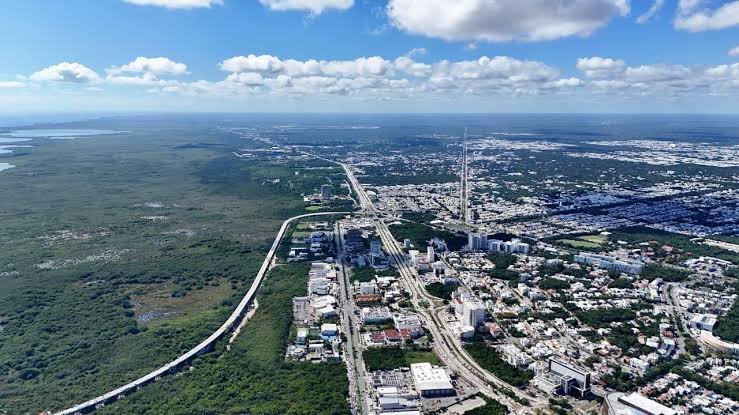
Cancún, Quintana Roo — Cancún could add nearly 500,000 residents over the next 25 years, a surge that would sharply increase demand for housing, transport, water, public services and infrastructure, according to projections from the city’s urban planning institute.
The forecast from the Institute for Urban Development Planning (IMPLAN) poses a major challenge for Benito Juárez, the municipality that contains Cancún: guaranteeing decent living conditions both for people who already live there and for the generations arriving in the coming decades.
Héctor Sánchez Tirado, IMPLAN’s director general, said Benito Juárez already has more than 1 million inhabitants, a threshold it reached in just 56 years — a measure of how quickly the city has transformed since it was created as a tourist destination.
Planning for the next 50 years
The institute is drafting new planning instruments to define how and where Cancún should grow over the next 50 years. The proposal puts environmental protection first, then seeks to identify the areas where urban and housing infrastructure can be developed in line with the population’s future needs.
Other goals include promoting affordable housing near planned public transport corridors and encouraging denser neighborhoods with services close at hand, in order to cut commuting times and reduce dependence on cars.
Sánchez Tirado said the institute is also updating the Local Ecological Land Use Program (POEL) and the Municipal Urban Development Program (PMDU). He expects the latter to be ready between April and May 2027, and said its revision will be one of the tools used to steer the city’s growth in the coming years.
The challenge, officials say, is for the city’s expansion to amount to more than added residents and buildings. It should also translate into better living conditions, with shorter commutes and access to housing, public spaces and sufficient services.
Urban planning will also have to account for the protection of natural areas, since the decisions taken now will shape daily life for the hundreds of thousands of people who will live in Cancún in the decades ahead.
More Development
- Tulum Mayor Inspects Progress on New Football Pitch
- Playa del Carmen Plans to Spend Environmental Sanitation Fee on Water Quality Monitoring in 2027
- Quintana Roo Launches Digital Procedures Platform With 11 Online Services
- Solar Project Near La Presumida Raises Deforestation Fears in José María Morelos
- Cozumel and CFE Review 3.6 Billion Peso Submarine Power Cable Project
More Cancun
- Viva Aerobus Trims Cancún Flight Frequencies as Engine Inspections Ground 10 Aircraft
- Quintana Roo Moves to Rewrite Mobility Law So Ride-Hailing Apps Operate as Private Service
- Cancún Opens FIP Junior America Padel Cup With 11 Nations
- Business Leaders Praise Move to Drop In-Person Visitax Collection at Cancún Airport
- Cancún Restaurateurs Urged to Report Extortion After Playa del Carmen Gang Is Busted