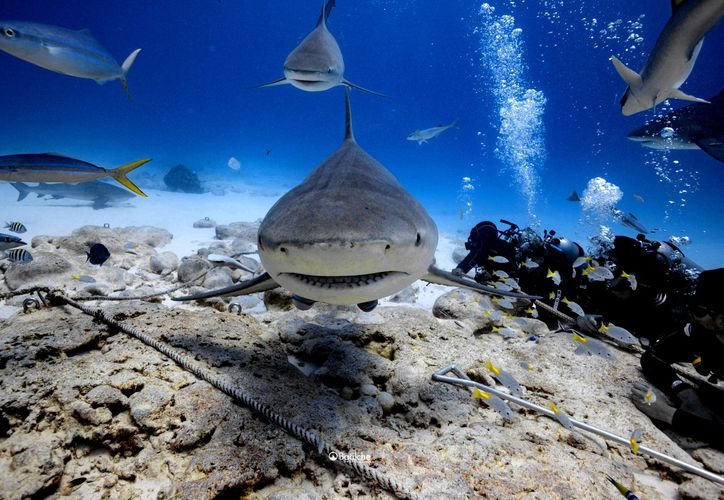
Playa del Carmen, Quintana Roo — The Bull Shark Festival is expected to return to Playa del Carmen later this month for its second edition, bringing together conservationists, dive operators, permit holders, local authorities, families, and visitors around one of the city’s most recognizable marine species.
Cecilia Gutiérrez, director of Ba’alche Proyecto Azul, said the festival is being prepared in coordination with permit holders and authorities, with the goal of promoting awareness and protection of the bull sharks that visit the coast of Playa del Carmen. More details are expected to be announced soon, but organizers are aiming for the end of July.
Like last year’s edition, the event is expected to include activities for both adults and children. The purpose is not only to talk about sharks, but to help change how the public sees them. Bull sharks are often treated as frightening animals, but conservation groups stress that they are also important predators that help maintain balance in marine ecosystems.
Playa del Carmen has a special relationship with the species. Each winter, usually from November through March, bull sharks return to the waters off the city, drawing experienced divers from Mexico and abroad. The aggregation is especially notable because many of the sharks observed in the area are pregnant females. Their seasonal presence has helped make Playa del Carmen one of the best-known bull shark diving destinations in the region.
That visibility also creates responsibility.
Through Ba’alche Proyecto Azul, Gutiérrez and collaborators have worked to document individual sharks using photography and community-based monitoring. The project’s photo-identification work has contributed to a growing catalog of local bull sharks and supports research aimed at better management and conservation of the species. According to Ba’alche’s project materials, the initiative has identified dozens of sharks so far as part of ongoing work with researchers and technical advisors.
The festival is not designed only for divers. Organizers want it to serve a broader educational purpose, helping residents and visitors understand why shark protection matters and how marine wildlife can become part of a more responsible tourism model.
Last year’s first edition, promoted by the Playa del Carmen government as Tiburón Toro Fest 2025, included environmental workshops, artistic activities, educational programming for children and young people, participation from environmentally focused entrepreneurs, a mini documentary screening, and a marine ecosystem photography exhibition at Planetario Sayab.
This year’s edition is expected to continue that conservation message while also highlighting Playa del Carmen’s broader underwater tourism offerings. In addition to ocean diving, the municipality is one of the main gateways for cenote diving, reef diving, and other nature-based experiences that go beyond the beach.
That point matters in a year when the destination has faced pressure from sargassum, tourism competition, and concerns about the visitor experience. Events like the Bull Shark Festival help remind people that Playa del Carmen’s appeal is not limited to sand and shoreline. Much of its value is underwater.
For dive operators, the bull shark season is also an important part of the local economy. Responsible shark tourism can support guides, boat captains, instructors, photographers, hotels, restaurants, transportation providers, and other businesses. But experts emphasize that this type of tourism must be managed carefully, with safety, science, and conservation at the center.
The return of the festival suggests that Playa del Carmen is trying to frame the bull shark not as a danger, but as a symbol of identity, biodiversity, and sustainable tourism.
If done well, the festival can serve two purposes at once: giving families and visitors an accessible way to learn about one of the region’s most powerful marine animals, and reinforcing the need to protect the waters that bring them here.
More Environment
- Playa del Carmen Unveils Recycled-Plastic Lifeguard Tower at Playa 72
- Chankanaab Park Eyed as Site for Cozumel’s First Dolphin Sanctuary
- Tulum Launches Credentialing Program for Parque del Jaguar Tourism Workers
- Cancún to Host National Climate Change Colloquium in October
- Riviera Maya Hotels Offer Free Nights When Sargassum Blocks the Beach
More Playa del Carmen
- US Lawmakers Press Mexico to Resolve Vulcan Materials’ Calica Dispute
- Playa del Carmen Launches Survey Work to Legalize San Judas Tadeo Neighborhood
- Uxuxubi Seeks Spot in Mundo Sagrado Community Tourism Corridor
- Extortion Cases Hit Several Playa del Carmen Churches in 2026
- Gas Leak Near Playa del Carmen Elementary School Sickens 10 Students