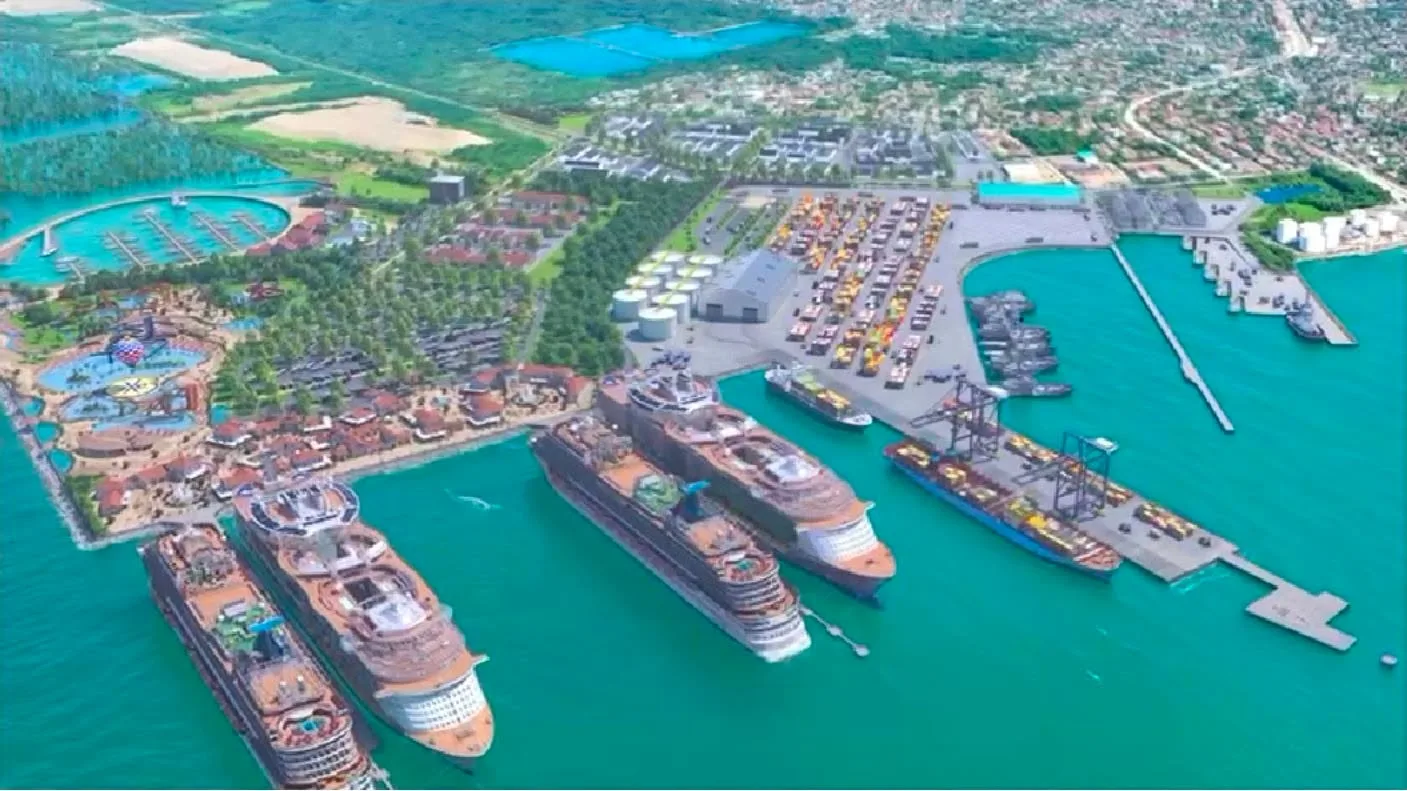
Chetumal, Quintana Roo — Belize has approved one of the largest infrastructure projects in its history: the expansion of Belize City’s port to accommodate up to four next-generation mega-cruise ships simultaneously, just 115 kilometers (71 miles) from the Mexican cruise port of Mahahual.
The environmental approval was granted by Belize’s Department of the Environment on June 22, 2026, according to official documents, without any major public announcement — a silence that has already raised questions about transparency in Belize.
The project by Port of Belize Limited involves dredging approximately 8.6 million cubic meters of marine material, constructing deep-water docks, expanding cargo facilities, and creating a 448-acre (181-hectare) artificial mangrove island using the dredged material.
The authorization includes environmental conditions such as continuous water quality monitoring, manatee protection measures, waste management requirements, and compliance bonds worth hundreds of thousands of dollars.
From Tenders to Giants
The leap for Belize’s port is significant. Currently lacking deep-water docks, cruise ships must anchor offshore and shuttle passengers to land via small boats (tenders), limiting operations to between 1.5 and 2 million passengers annually, with medium-sized ships and an average of 150 to 200 arrivals per year.
With the new infrastructure, Belize will be able to dock up to four vessels the size of Icon of the Seas — 365 meters (1,198 feet) long, taller than the Eiffel Tower — each carrying nearly 10,000 passengers and crew. The neighboring country aims to attract 4 to 5 million cruise passengers annually, more than double its current volume.
That flow would largely come from the same market that Mahahual, Mexico’s second-most-important cruise port, currently competes for.
Stark Contrast with Southern Quintana Roo
The Belize authorization comes as the situation on the Mexican side is the opposite. Expansions and operational certainty for Costa Maya remain stalled by environmental restrictions and uncertainties from federal authorities, as highlighted by the controversy over Royal Caribbean’s project in the area.
Added to this is the case of the Zaragoza Canal and Chetumal Bay: the strategic project to connect the Caribbean Sea with the state capital and boost the southern economy remains suspended and incomplete amid budget cuts, technical complications, and environmental hurdles that the federal government has not resolved.
The result is a regional double standard: while Mexico keeps its southern border infrastructure under environmental restraint, Belize advances with a massive dredging project that will even create an artificial island, poised to capture high-impact tourism in the Western Caribbean.
More Development
- Quintana Roo Plans Two Wastewater Plants and Two Aqueducts for Cancún and Playa del Carmen
- Tren Maya Freight Project Targets 4.7 Million Tons by 2030
- Cancún Advances Yaxchilán Revitalization With Pedestrian Corridor to Avenida Nader
- Mexico’s 911 Centers Explore AI to Speed Up Emergency Response
- Punta Allen Road Rehabilitation Reaches 80 Percent Completion
More Chetumal
- Power Outage in Chetumal Forces Closure of Quintana Roo Labor Courts
- Playa del Carmen Mayor Joins Quintana Roo’s 52nd Statehood Anniversary in Chetumal
- Chetumal Airport Customs Nears Full Operation Next Year
- Former Quintana Roo Tourist Police Chief Bound Over for Trial in Human Trafficking Case
- Pre-Hispanic Frog Pendants From Tren Maya Route Shed Light on Ancient Maya Trade