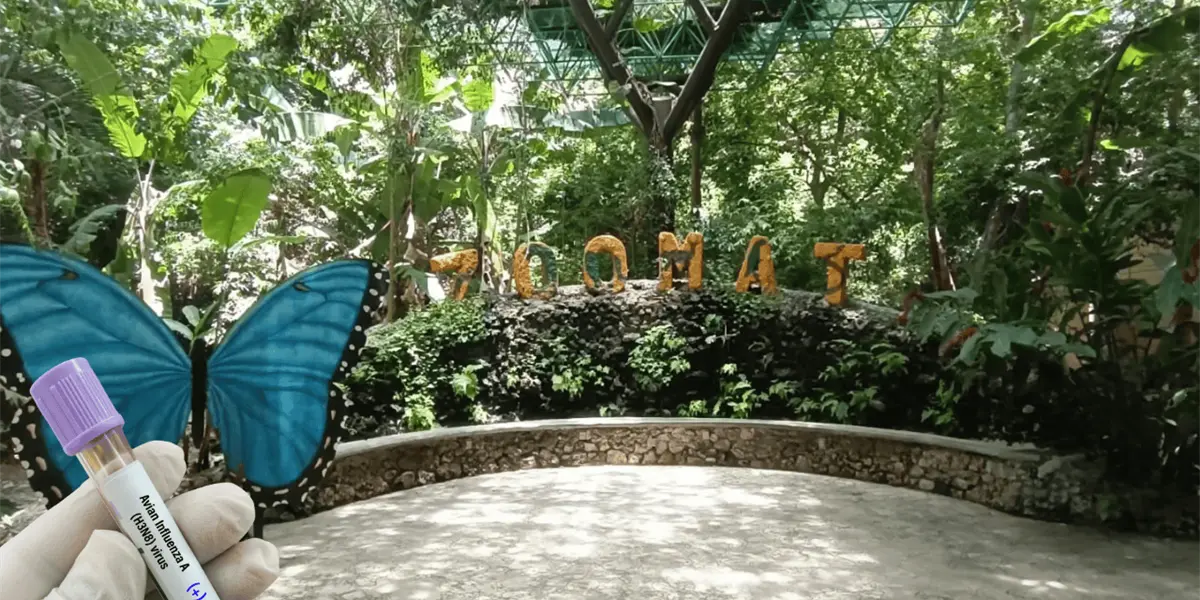
Tuxtla Gutiérrez, Chiapas — Two wild birds found in the El Zapotal natural reserve, home to the Miguel Álvarez del Toro Zoo (ZOOMAT), have tested positive for H7 avian influenza, prompting a special containment operation for the zoo’s exhibition animals.
The birds, identified as chachalacas, were discovered in open areas of the zoo. After showing unusual behavior, they were removed but died before receiving medical attention, officials said.
The zoo houses a wide variety of species, including endangered birds such as the harpy eagle, two great curassows, and a quetzal. Authorities have placed these high-value specimens under protective isolation to prevent infection while the National Service of Health, Safety, and Agri-Food Quality (SENASICA) implements a 15-day observation period for all birds on site.
What Is H7 Avian Influenza?
Avian influenza is an infectious viral disease that spreads through the air and, in some strains, has high mortality rates. The World Health Organization and its Pan American Health Organization maintain constant surveillance.
While some influenza viruses can infect humans, the H7 strain found in these two birds is still under study to determine its potential impact. The H5N1 variant remains the most concerning globally due to its high contagiousness and lethality in birds.
International animal health organizations track outbreaks, particularly in migratory birds. Previous outbreaks were reported in 2020 and 2021 in the Mexican states of Jalisco, Sonora, Yucatán, Chiapas, and Durango. SENASICA has reported no human cases of H7 avian influenza to date.
Zoo Implements Biosecurity Measures
Visitors to the Miguel Álvarez del Toro Zoo must now follow strict biosecurity protocols during their tours, according to Joe Miceli, head of the state coordination for zoo improvement and a prominent veterinarian.
Miceli stated that the infected birds were detected about a week ago in the zoo’s perimeter area, and authorities were immediately notified. No additional cases have been reported since.
During a press conference, officials emphasized that there is currently no risk of transmission to humans, although human cases have been documented elsewhere. The zoo will temporarily restrict the exhibition of certain specimens and closely monitor the entire movement and care chain of its birds.
Additionally, the zoo will not accept any new birds from seizures or abandonments, a common practice through the Federal Attorney for Environmental Protection (PROFEPA).
Chachalacas: The Affected Species
Chachalacas are medium-sized, long-necked birds known for their loud calls. They are common in urban and peri-urban areas of Chiapas and are related to chickens and turkeys, feeding mainly on seeds and fruits.
The ZOOMAT has a unique relationship with local wildlife, allowing free interaction between captive and wild animals. In some areas, such as monkey habitats, there are no cages, and animals often roam freely, sometimes venturing into inhabited zones.
More Environment
- Playa del Carmen Unveils Recycled-Plastic Lifeguard Tower at Playa 72
- Chankanaab Park Eyed as Site for Cozumel’s First Dolphin Sanctuary
- Tulum Launches Credentialing Program for Parque del Jaguar Tourism Workers
- Cancún to Host National Climate Change Colloquium in October
- Riviera Maya Hotels Offer Free Nights When Sargassum Blocks the Beach