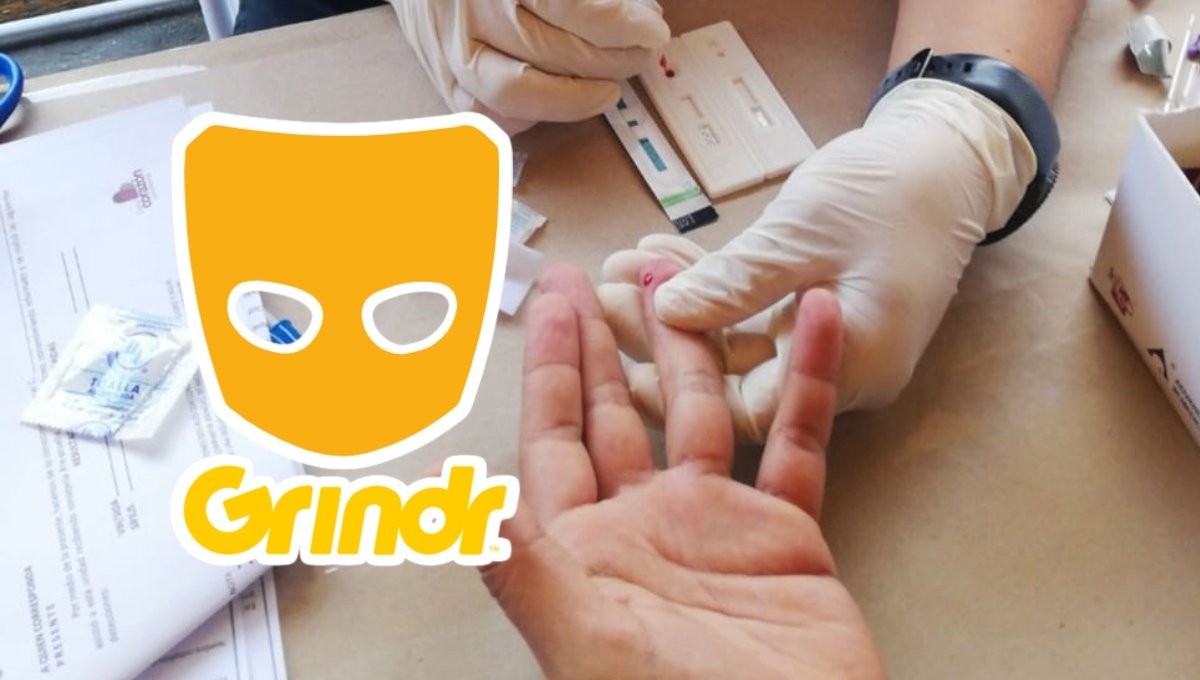
Yucatán, Mexico — Users of the dating app Grindr in Yucatán, particularly in the municipalities of Mérida, Tizimín, and Valladolid, will be able to access free third-generation HIV self-tests as part of a prevention pilot project that seeks to facilitate timely diagnosis and reduce barriers to accessing health services.
The strategy is part of an initiative promoted by the Consorcio de Investigación en Salud (Cisidat), in coordination with allied organizations, and is being implemented in parallel in other states across the country. The project began in November of last year in Puerto Vallarta, Jalisco, and by the end of 2025, more than 150 kits had been delivered, primarily in Puerto Vallarta.
Cisidat is comprised by researchers of high national and international prestige. According to its website, its mission is to contribute to the generation of evidence and the training of human resources in health in low- and middle-income countries, providing strategic tools to national health institutes.
This strategy aims to allow those who have not approached health services or organizations to get tested to do so at their home in complete confidentiality. A similar plan was implemented in the United States and had positive results. The objective is to bring early detection tools to populations at higher risk, through digital channels of everyday use.
Grindr is an application widely used by men who have sex with men, a population that, according to health organizations, presents a higher prevalence and risk of acquiring the Human Immunodeficiency Virus (HIV) compared to the general population.
In the first stage, 5,000 third-generation HIV self-tests will be distributed. These tests have the approval of the Comisión Federal para la Protección contra Riesgos Sanitarios (Cofepris) and will be delivered at no cost to people over 18 years of age.
How to Access
Interested individuals will be able to register directly from the Grindr application and request the self-test, which they can pick up at allied community centers or receive at their home, depending on availability.
Each delivery will be made in a sealed package that includes the test, condoms, informational material, and a foliated coupon to facilitate linkage with public health institutions, in case the person requires medical attention.
According to specialists in the health sector, the use of third-generation self-tests represents a key tool to promote early detection of HIV, by offering a confidential, accessible process that can be carried out in each person’s environment of trust.
This modality also allows for accelerating linkage to medical and support services, which is fundamental for initiating timely treatment and reducing transmission.
Other Options
The program will have an estimated duration of up to six months or sooner if the five thousand available self-tests run out. Upon conclusion of the pilot period, it is planned to share aggregated results with health authorities, in order to evaluate its impact and possible expansion.
As part of the project, users will also be able to access the Paress platform, developed in collaboration with the Fundación México Vivo, which offers remote counseling 24 hours a day, accompaniment at community centers, and informational content about prevention and sexual health.
Registration is done from the Grindr application, through the link to the “Vínculo Seguro” page. In the case of Tizimín, the telephone number 999 435 6436 has also been enabled for guidance.
In Mérida, the self-tests will be available at the Wellness Center Mérida and at the Hospital General Dr. Agustín O’Horán.
Discover more from Riviera Maya News & Events
Subscribe to get the latest posts sent to your email.