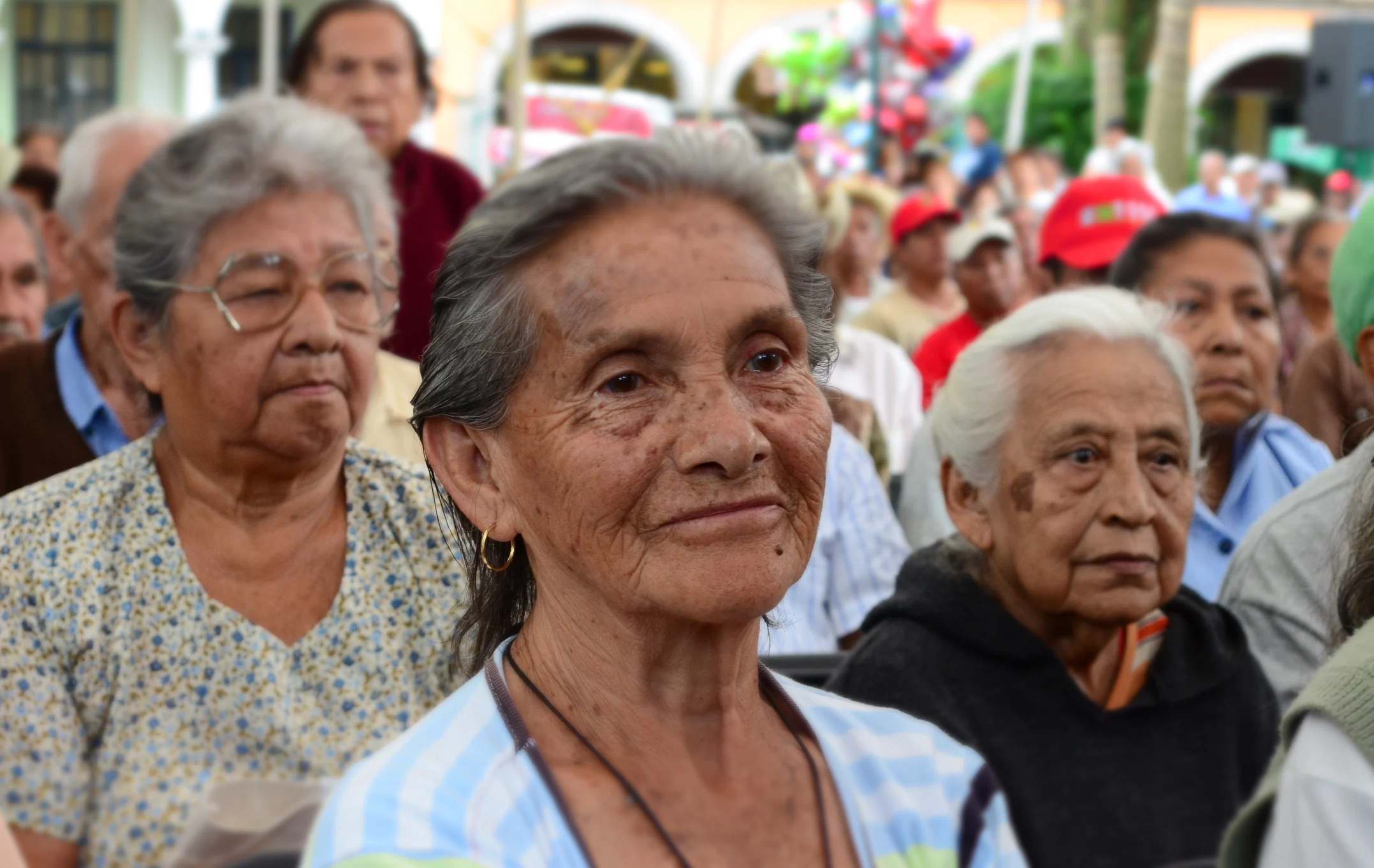
Mérida, Yucatán — Yucatán will reach a demographic tipping point in 2031 when people aged 60 and older outnumber children under 12, three years earlier than the national average, according to the National Population Program 2026-2030 published in the Official Gazette of the Federation.
The program places Yucatán among five states — along with Mexico State, Sinaloa, Sonora and Tamaulipas — that will hit this inflection point in 2031. Mexico City already crossed that threshold in 2019, while Colima and Veracruz will do so in 2028, followed by Morelos between 2029 and 2030. Within the Yucatán Peninsula, Yucatán is the most advanced: Campeche will reach the same milestone in 2034, matching the national trend, and Quintana Roo will be the last in the region, in 2039.
By 2034, adults 60 and older will represent 16.8% of Mexico’s population, surpassing children under 12 at 16.2%, the program projects. Nationally, the share of people 60 and older will rise from 13.24% in 2026 to 24.12% by 2050 — nearly doubling in 24 years. Life expectancy in Mexico has reached 75.85 years, 15 years more than in 1970, a key factor driving the aging trend.
The challenges accompanying this transition are already visible: 28.8% of people 65 and older lack social security, and 29.3% of seniors without a pension live in extreme poverty, according to figures cited in the federal program.
The program does not allocate new funding to address the phenomenon; actions will be financed with already approved resources, shifting responsibility to each state. Yucatán faces the 2031 scenario without a current State Population Program. Only seven states nationwide have one, and the federal goal is for 18 states to have one by 2030.
The accelerated aging coincides with the closing of the demographic bonus — the period when the working-age population far exceeds dependents. The main cause is a sustained drop in fertility: in 2023, Mexican women had an average of 1.60 children, well below the replacement level of 2.1. Currently, there are 50 dependents per 100 working-age people, a ratio that will keep growing as the elderly population increases.
The National Population Program adopts the concept of demographic resilience: anticipating, adapting to and leveraging the effects of aging before they become an open crisis, with an emphasis on medium-term planning. This requires simultaneously redesigning health, pension, employment and care systems originally designed for a much different population structure.
The program indirectly acknowledges a growing fiscal strain: as the worker base shrinks while the population dependent on pensions and health services grows, the number of contributors per senior decreases, reducing the state’s capacity to fund current social transfers. The challenge is compounded because nearly half of Mexico’s employed population lacks social security, meaning many future seniors will not have contributed enough to support themselves and will rely on public resources. The universal Pension for the Welfare, now enshrined in the constitution, automatically grows with each aging generation, competing increasingly with health, education and public investment.
The debate in the coming decade, the program anticipates, will center on decisions such as increasing formal employment, reviewing the retirement age, adjusting taxes or redesigning the pension system. The underlying dilemma is direct: either the country expands the base of contributors and revenue today, or passes the bill to tomorrow’s workers, who will be fewer in number and supporting a population that lives longer. A poorly used demographic bonus, the document warns, ends up being paid in old age.
More Lifestyle
- Cancún Opens Registration for Janal Pixan 2026 Catrina and Altar Contests
- Brain-Eating Amoeba Found in Six Artificial Lakes in Mérida; Water Contact Restricted
- Cancún Launches 2026 Ocular Prosthetics Program With Free Evaluations
- Playa del Carmen Health Center in Villas del Sol to Close Two Days for Maintenance
- Tulum’s Mureco Museum Adds 53 Archaeological Pieces From Across Mesoamerica