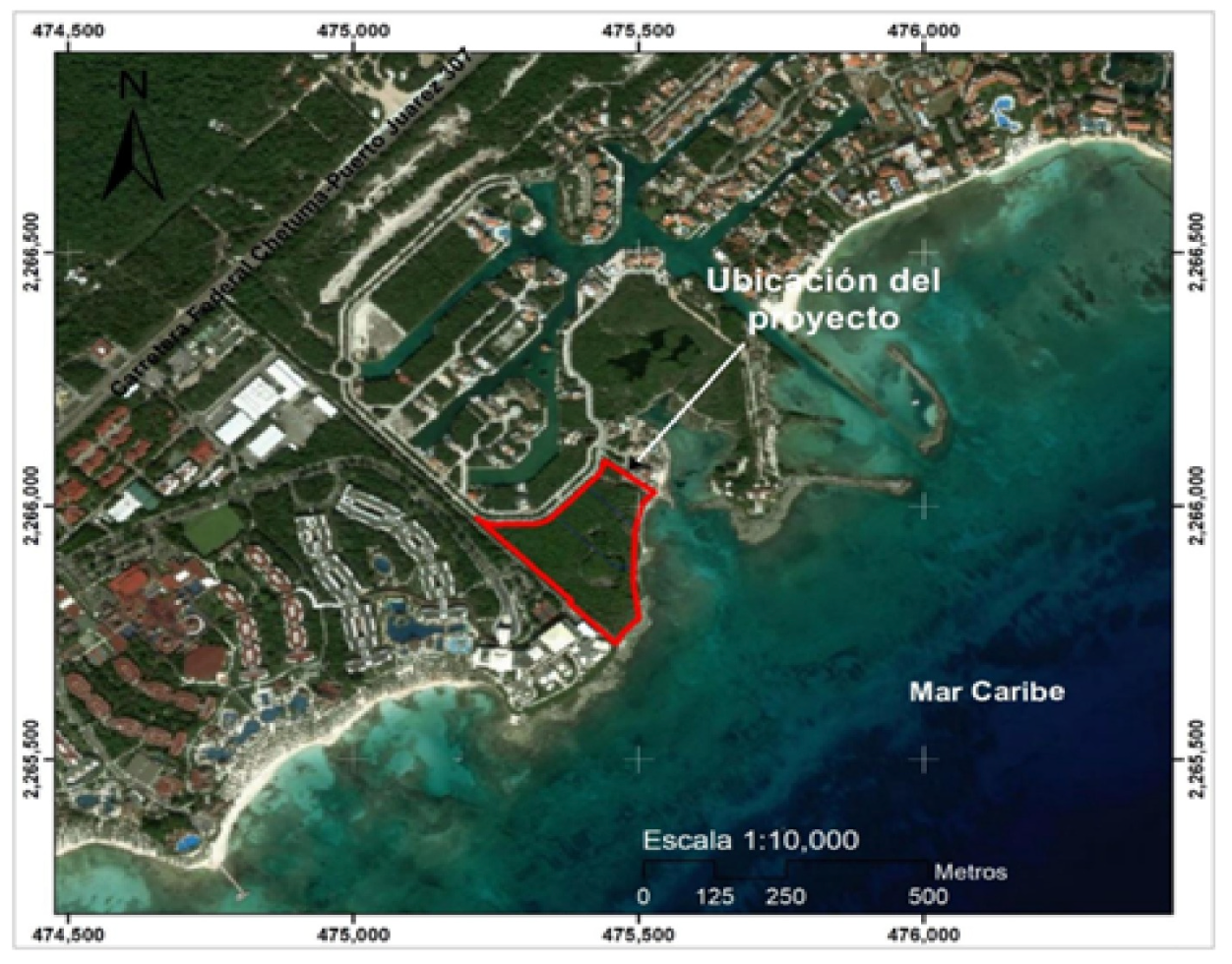
Puerto Aventuras, Quintana Roo — Newly available project documents are providing a clearer picture of the proposed Puerto Aventuras Luxury Resort, while also raising questions about the scale of future development planned for the area locally known as Fase 4.
The project, filed with Mexico’s Secretariat of Environment and Natural Resources, SEMARNAT, under number 23QR2024U0095, calls for a mixed hotel and residential development on approximately 4.67 hectares of coastal land between the existing Puerto Aventuras marina area and the Barceló resort complex.
The project was submitted to SEMARNAT by Banco Santander México, acting in its capacity as fiduciary for the Fideicomiso Puerto Aventuras, the trust that has historically served as the legal development vehicle for Puerto Aventuras.
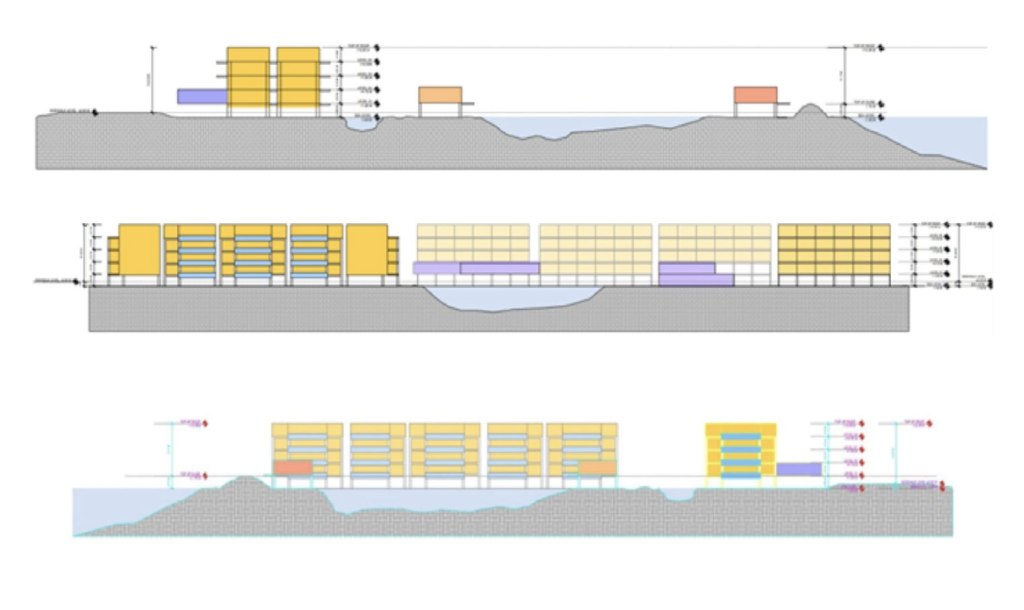
According to the project documents, the proposed development would include 73 apartments, 121 hotel rooms and four additional residential rooms spread across seven four-story buildings, along with covered parking, restaurants, bars, swimming pools, a spa, kids club, decks, landscaped areas and internal water features.
The estimated investment is 900 million pesos, with approximately one percent of that amount earmarked for environmental prevention, mitigation or compensation measures.
But despite reports suggesting the project’s Environmental Impact Statement, or MIA, has already been approved, the latest available information indicates that the proposal remains under review while the developer submits additional documentation requested by environmental authorities.
That distinction is significant. Submission of an MIA does not constitute authorization to build. SEMARNAT may approve a project, impose conditions, request further studies or deny authorization.
The 2,000-Room Figure Needs Context
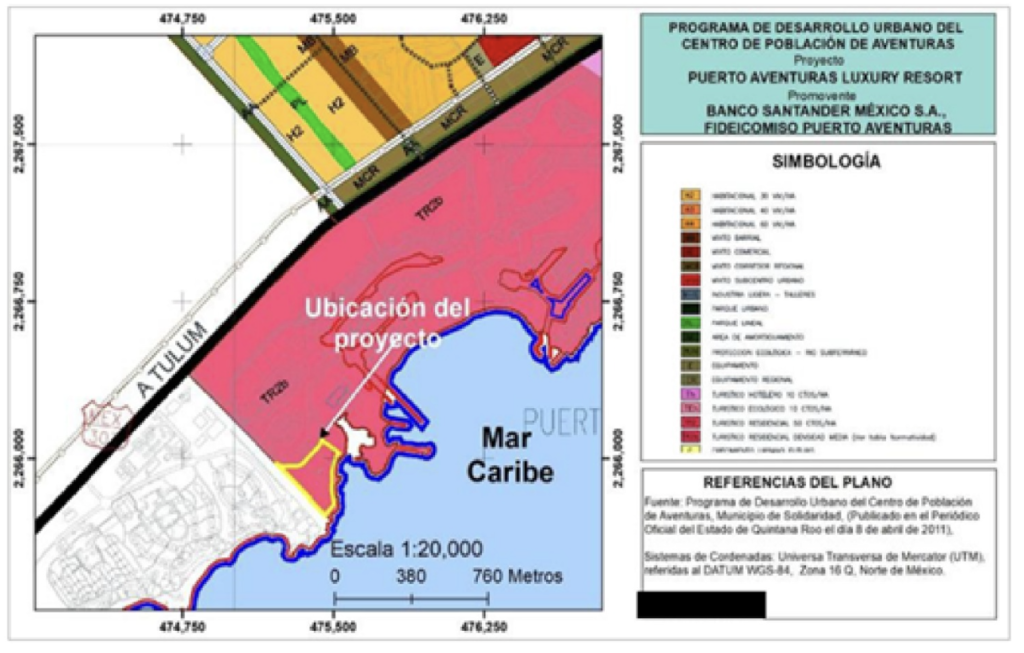
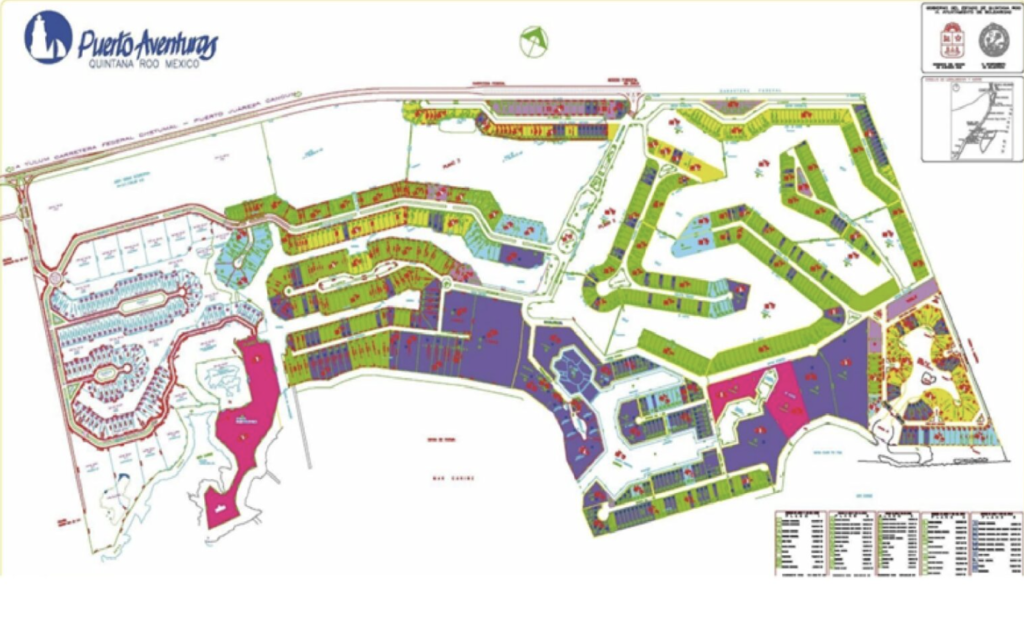
One of the most striking figures appearing in recent reports is a projected capacity equivalent to 2,000 hotel rooms. However, that number does not refer to the Puerto Aventuras Luxury Resort project alone. The 2,000-room equivalent applies to a much larger development framework covering approximately 46.9 hectares in the broader Fase 4 area, referred to as Plano 4 in official planning documents.
That larger area is divided into 122 lots, including tourist-residential, mixed-tourism, condominium tourist-residential and tourist-commercial parcels.The current Puerto Aventuras Luxury Resort is one individual proposal within that larger development framework.
This distinction is important because the seven-building resort now under environmental review is not a 2,000-room development. Rather, the broader planning scheme allows for development across dozens of individual lots that, taken together, could eventually reach an equivalent density of approximately 2,000 rooms.
Future projects within that area would still be subject to their own permitting requirements where applicable.
A Century-Long Development Timeline
The environmental filing contemplates a 100-year project life, including approximately five years for preparation and construction, followed by decades of operation and maintenance. Project promoters say the development is intended primarily to serve buyers seeking residential property in a natural coastal setting, while also attracting tourism through hotel services.
The filing presents Puerto Aventuras as part of the broader Cancún-Tulum tourism corridor and argues that continued population growth and real estate demand have created a need for additional housing, tourism infrastructure and more orderly urban development.
That argument is likely to be closely examined by local residents already concerned about traffic, density, water supply, wastewater treatment and the cumulative environmental effects of continued construction in Puerto Aventuras.
Cenote and Mangroves Identified Within the Site
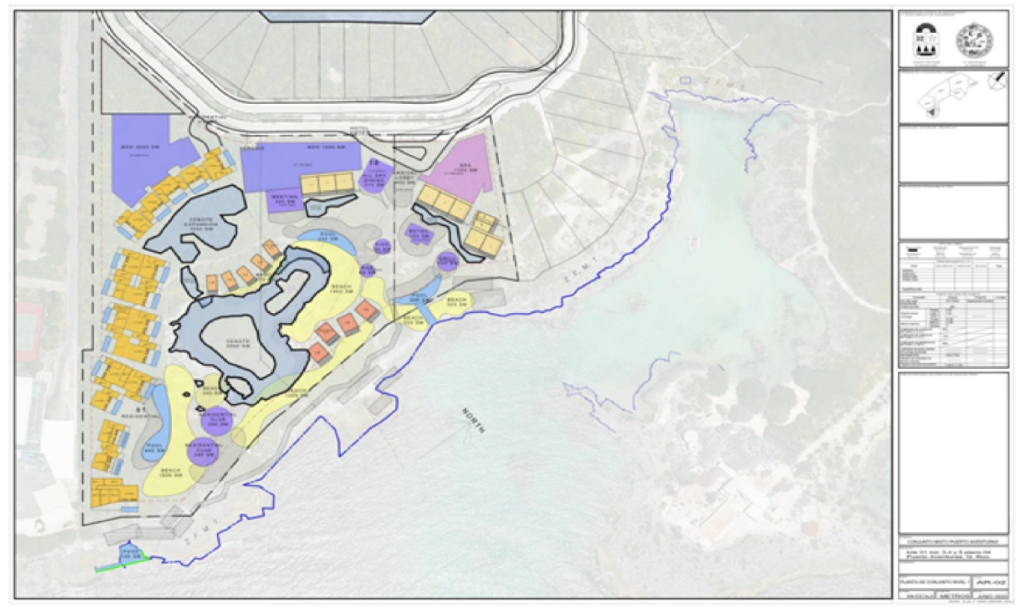
The plans also confirm that the property contains environmentally sensitive features, including a cenote and mangrove vegetation. According to the developer, neither is expected to be directly affected by construction. The cenote is identified as part of a conservation area, while the proposed buildings and amenities are arranged around natural and landscaped open spaces. The project also includes areas of low jungle vegetation and coastal vegetation associated with the dune environment.
Whether those features can be adequately protected while accommodating the proposed development will be one of the issues evaluated during the environmental review process.
In the Riviera Maya, the presence of a cenote is particularly significant because surface features are often connected to a wider underground karst system. Development can affect groundwater not only through direct excavation but also through drainage, wastewater management, runoff and changes to the surrounding land.
Plans Show a Much More Detailed Development Footprint
The newly available plans offer a more detailed look at how the project could be laid out. Architectural elevations show clusters of four-story structures rather than a single large resort tower. Buildings appear to be arranged around pools, landscaped areas and internal water features, with the cenote incorporated into the design as a protected natural element.
The site plan also shows residential and hotel buildings distributed across the property, along with circulation roads, parking, restaurants, service areas and recreational spaces.
For local residents, the plans make clear that while the project is limited to 4.67 hectares, it represents a substantial intensification of land use on a prominent waterfront parcel.
Previous Environmental Enforcement Remains Relevant
The project documentation also acknowledges a prior environmental enforcement history connected to part of the property. One of the maps identifies an “Área desmontada (Sancionada),” or “Cleared area (sanctioned),” and references a PROFEPA resolution linked to a 2019 environmental proceeding.
Federal records show that authorities previously imposed a closure on certain construction activities in the Chac-hal-al inlet area after those responsible failed to demonstrate the necessary environmental authorization or exemption. The available records do not establish that the present Puerto Aventuras Luxury Resort proposal is identical to the project involved in that earlier enforcement action.
Still, the history is relevant because the current environmental filing itself acknowledges the sanctioned area and incorporates it into the project’s documentation.
What Happens Now
For now, the project remains in the environmental review process. The most important questions are no longer simply how many rooms or apartments are planned, but whether the proposed density is compatible with the site’s natural features, whether the cenote and mangroves can be effectively protected, and how the development would fit into the broader expansion envisioned for Fase 4.
The documents now available make one thing clear: Puerto Aventuras Luxury Resort is not an isolated project. It is part of a much larger, long-term development framework that could significantly transform one of the community’s last major waterfront areas.
The immediate proposal involves 73 apartments, 121 hotel rooms and seven four-story buildings. The broader Fase 4 plan, however, points to a far more significant long-term expansion.
More Development
- Selvame MX Calls HAZUL Project With Artificial Beach a ‘Fantasy’ in Playa del Carmen
- Insurers Pull Back Coastal Coverage as Category 5 Hurricanes Multiply
- Cancún Mayor Says Federal Permits Covered Playa Delfines Fiber Optic Work
- Mahahual Faces Economic Uncertainty as Perfect Day Fallout Chills Investment
- Yucatán Draws 11,566 Million Pesos in Tourism Investment, Creating 15,508 Jobs
More Puerto Aventuras
- Authorities Impound Four Mototaxis in Puerto Aventuras Crackdown
- Sargassum Barrier Reaches Puerto Aventuras as Navy Support Takes Shape
- Dolphin Swims Continue in Puerto Aventuras as Cancún Dolphin Debate Simmers
- Seven Arrested in Puerto Aventuras Taxi Extortion Ring Bust
- Gunmen Shoot Up BBVA Bank Branch in Puerto Aventuras, Quintana Roo