Valladolid, Yucatán — Grupo Xcaret’s long-delayed Xibalbá project may finally be approaching an opening, potentially bringing one of the company’s largest nature-based attractions to eastern Yucatán after years of environmental and permitting disputes.
Darío Flota Ocampo, head of Yucatán’s tourism promotion agency, said he recently discussed the project with Grupo Xcaret founder Miguel Quintana Pali. According to Flota Ocampo, Quintana Pali indicated that the company was close to resolving the remaining formalities required to open the park.
No opening date has been announced by Grupo Xcaret, and tickets are not currently being offered through the company’s website. Flota Ocampo said a formal announcement could come within the next several months, but that estimate remains preliminary. If it opens, Xibalbá would represent a significant expansion of Grupo Xcaret beyond its established base in Quintana Roo.
Eight cenotes at the center of the park
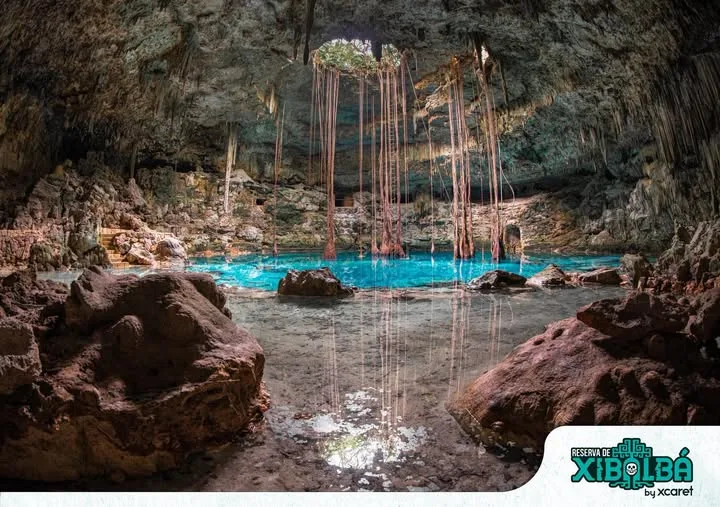
Xibalbá was designed around a network of eight natural cenotes located in a rural area near the communities of Yalcobá, X-Tut and Sisbichén, north of Valladolid.
Plans presented before construction was suspended described a 250-hectare attraction built around swimming, snorkeling, zip lines and tours through caves and cenotes. The concept also included jungle trails, cultural exhibits, a recreated Maya community and workshops devoted to regional crafts and traditional medicine. The cenotes were intended to form a guided circuit, allowing visitors to move between underground and open-water environments during a full-day excursion.
When the project was publicly presented in 2020, Grupo Xcaret described it as a 1-billion-peso investment and one of its most ambitious developments to date. At the time, the park was scheduled to open on Dec. 12, 2020. The pandemic delayed that plan, and subsequent opening targets also passed without the park receiving visitors. Early plans described an eight-cenote attraction combining nature, adventure and Maya culture.
Those plans are now several years old. Grupo Xcaret has not confirmed whether the attractions, investment, hotels or operating model will remain the same when the project eventually opens.
Why the name Xibalbá matters
In Maya tradition, Xibalbá is associated with the underworld and the journey into the world beneath the earth. Caves and cenotes carried practical and spiritual importance as sources of fresh water and as entrances to sacred spaces. The name therefore reflects the park’s underground setting, but it also raises questions about how Maya heritage will be presented inside a commercial attraction.
Grupo Xcaret has built its tourism model around natural landscapes and large-scale interpretations of Mexican history and culture. Its portfolio includes Xcaret, Xel-Há, Xplor, Xenses, Xoximilco and several hotels in the Riviera Maya.
The company’s origins are also closely tied to underground formations. According to Grupo Xcaret’s corporate history, Quintana Pali originally acquired land south of Playa del Carmen to build a home, but changed his plans after discovering cenotes and underground rivers on the property. That land became Xcaret Park. Xibalbá would apply a similar concept to the interior of Yucatán, where cenotes rather than the Caribbean coastline would form the central attraction.
Environmental violations stopped the project
The park was nearing completion when the Federal Attorney for Environmental Protection, or Profepa, closed the site in 2022. Federal authorities said work had been carried out without all required environmental authorizations and identified damage involving the property’s caves and cenotes. The project’s plan to alter or connect natural underground features became a particular point of concern.
Cenotes are part of a highly sensitive limestone aquifer. Contamination or physical alterations can affect water beyond the immediate property because underground channels may connect multiple caves, wells and communities. The shutdown demonstrated the tension at the center of the project: Xibalbá was marketed as an attraction based on the appreciation of cenotes, but building visitor infrastructure around those same formations required careful environmental review.
The park has remained closed to the public while its developers worked through environmental and administrative requirements. Neither Profepa nor Grupo Xcaret has publicly released a complete, current account of the corrective work, environmental conditions or permits still required. Why Valladolid sees an economic opportunity
For Valladolid, the project could create a major new reason for visitors to spend more time in eastern Yucatán. The city already attracts travelers with its colonial center, regional cuisine and surrounding cenotes. It is also commonly used as a base for visits to Chichén Itzá. Many travelers, however, pass through for only a day or a single overnight stay.
A large park operating under the Xcaret name could encourage longer visits and generate demand for hotels, restaurants, transportation, guides and other local services. It would also create direct employment at the attraction, although no updated job estimate has been released.
The opening of the Tren Maya station serving Valladolid has given the area another connection to Cancún, the Riviera Maya and other destinations across the peninsula. Xibalbá could help turn some of that passenger traffic into overnight tourism, particularly if Grupo Xcaret offers transportation or packages connecting the park with its Riviera Maya hotels. Flota Ocampo said the benefits for Valladolid were clear, particularly in terms of formal employment and the number of visitors drawn to the region.
An opening still requires official confirmation
Despite the renewed optimism, several important questions remain unanswered. Grupo Xcaret has not published an opening date, admission prices, operating hours or a final list of attractions. It has not said whether the three boutique hotels discussed in earlier plans remain part of the development. More importantly, federal environmental authorities have not publicly confirmed that all sanctions have been resolved or explained what changes were required before the park could operate.
For now, Xibalbá is closer to a possible announcement, but it is not yet an attraction travelers can book. After several missed opening dates and four years of regulatory uncertainty, confirmation will require more than assurances that the obstacles are being cleared. It will require formal permits, the removal of the closure and an opening announcement from Grupo Xcaret itself.
More Local News
- Paseo de las Sirenas Becomes a New Isla Mujeres Attraction
- Mexico Drill Saturday Will Sound Alerts on 80 Million Phones
- Playa del Carmen Opens One-Stop Shop to Streamline Business Permits
- Cancun Hotels Look to 2027 for Rate and Occupancy Rebound
- Cancún Airport Logs Just 286 Flights in a Day, Its Lowest Level in Two Decades
