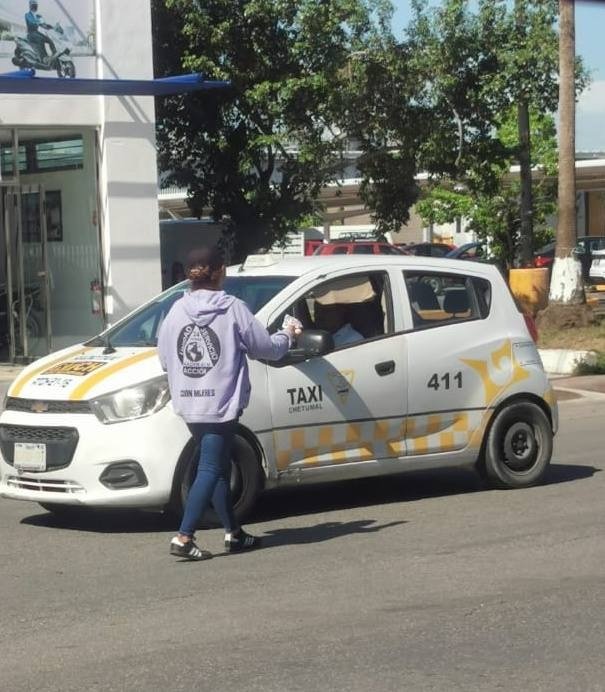
CHETUMAL — The transformation of the Luna Caribe hotel, a building marked by a history of kidnappings, homicides, and illicit cigarette manufacturing, into a space of hope has clashed with harsh financial reality. Just over a week after prosecutor Raciel López Salazar justified handing over the property on loan as a "good cause," men and women in rehabilitation have taken to the main intersections of Chetumal to ask motorists for financial support.
With cans in hand, the residents walk through lines of vehicles during traffic light changes, seeking the necessary resources to guarantee the maintenance of the building and, above all, the food for those seeking to leave addictions behind. This activity occurs in a context of tension with police forces, which maintain ongoing operations to prevent the proliferation of people begging on street corners in the capital.
However, the urgency of sustaining the operation of the Love for the Difficult and Repeat Addict Rehabilitation Center (CRAADYR) has led its members to the streets. This civil association, founded in 2011 in Mazatlán by Alejandro Guadalupe Buenrostro León, already has more than 50 branches in the country and claims to prevent thousands of crimes daily by serving more than 5,000 users nationwide, including now its new headquarters in the controversial confiscated building.
Prosecutor López Salazar has been emphatic that the use of this property will serve to help a vulnerable sector of the population of Quintana Roo; however, the legal process for the building is not yet final. The State Attorney General's Office is keeping the asset forfeiture process active, although it is not ruled out that Luna Caribe could be returned to its original owner if he manages to prove that the building was rented and that there was no direct link with the criminal activities that motivated its seizure.
While the legal fate of the walls that once housed violence is being defined, its new tenants now depend on the money that the people of Chetumal deposit in their jars. The analysis of this situation reveals an institutional paradox: the State provides the physical space but seems to leave the operation and basic sustenance to the whims of public charity.
While the CRAADYR model has demonstrated expansion in much of the Republic, its arrival in Chetumal begins with the challenge of demonstrating that a site with such a dark past can be sustained by the light of rehabilitation. For now, the success of this "good cause" depends not only on the residents' willingness but also on the association's ability to manage funds without undermining the image of order that the authorities are trying to project on the city's main avenues.
Discover more from Riviera Maya News & Events
Subscribe to get the latest posts sent to your email.