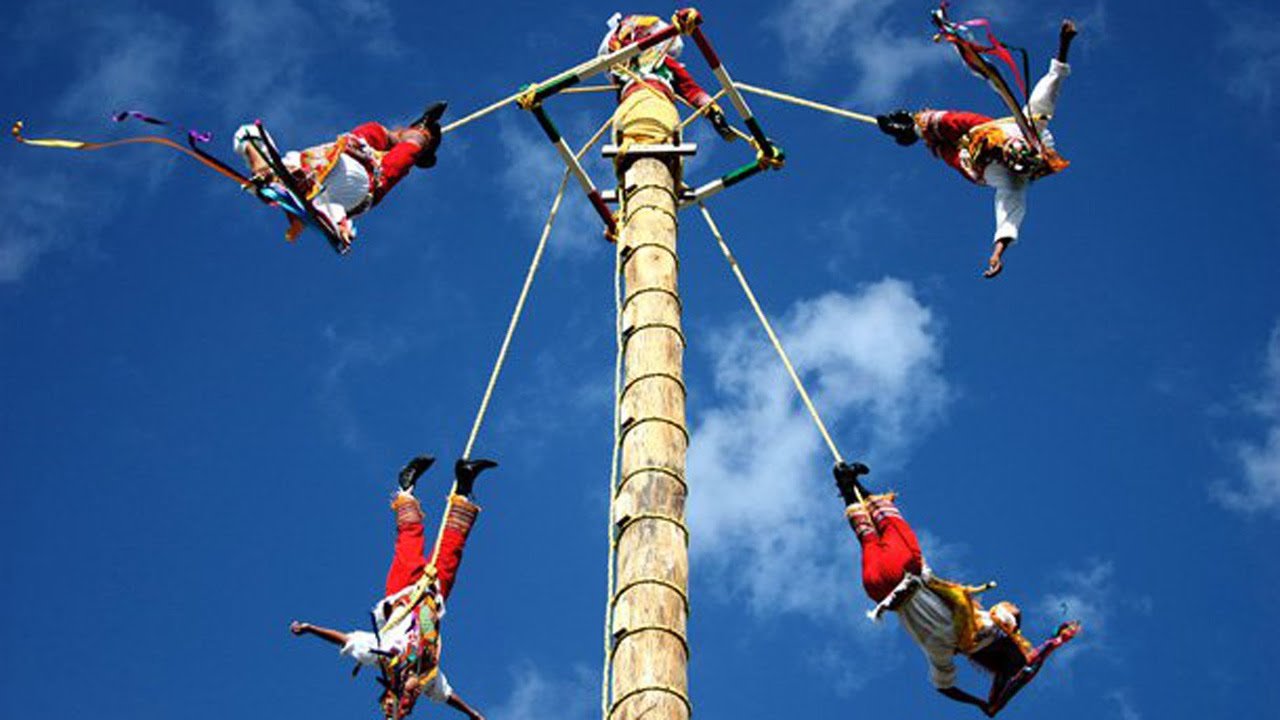
Tulum, Quintana Roo — After more than three decades of continuous performances at the Tulum Archaeological Zone, performers of the Voladores de Papantla have announced their withdrawal from the site due to declining visitor numbers, which has directly impacted their economic livelihood.
Juan García, a member of the group originally from Papantla, Veracruz, explained that the decision responds to low audience turnout, which has made continuing performances unviable. He noted that with the lack of spectators, the dancers themselves must cover expenses like food, transportation, and rent without sufficient income.
For approximately 30 years, various groups of voladores formed part of the cultural environment of this tourist destination, offering a traditional spectacle appreciated by domestic and international visitors. However, in recent years, reduced tourism has caused a drop in income, leading to the gradual departure of members.
The dancer emphasized that while this activity represents additional income for some participants, its value transcends economics as it is an ancestral practice that forms part of their cultural identity. He added that the group has sought to transmit this tradition to new generations with the goal of preserving it.
The Voladores de Papantla is a cultural manifestation of pre-Hispanic origin, widely associated with the Totonac people of Veracruz, though similar rituals existed in other Mesoamerican cultures. The ceremony is believed to date back more than 1,500 years and is linked to agricultural fertility rites and petitions for rain. In 2009, UNESCO inscribed the Ritual Ceremony of the Voladores on the Representative List of the Intangible Cultural Heritage of Humanity, recognizing its deep spiritual and cultural significance.
The ritual begins with five participants climbing a pole that can reach 20 to 30 meters in height. One performer, known as the caporal, remains at the top, playing flute and drum to honor the cardinal directions and the sun. The other four voladores tie ropes around their waists and descend headfirst in a slow, circular rotation, symbolically representing the elements and the cycles of nature. Traditionally, each flyer makes 13 rotations, totaling 52 turns, which correspond to the 52-year Mesoamerican calendar cycle.
The performance demands strength, balance, coordination, and absolute trust among participants. Beyond its physical demands, it carries ceremonial meaning tied to harmony between humanity and the natural world.
The withdrawal of this practice from the archaeological site represents the absence of one of the most representative cultural expressions of the area, while group members seek new venues where they can continue their performances and ensure their livelihood.
The departure of the voladores not only impacts those who participate in this activity but also Tulum’s cultural offerings, which loses one of its most visible traditional manifestations for tourism.
Discover more from Riviera Maya News & Events
Subscribe to get the latest posts sent to your email.