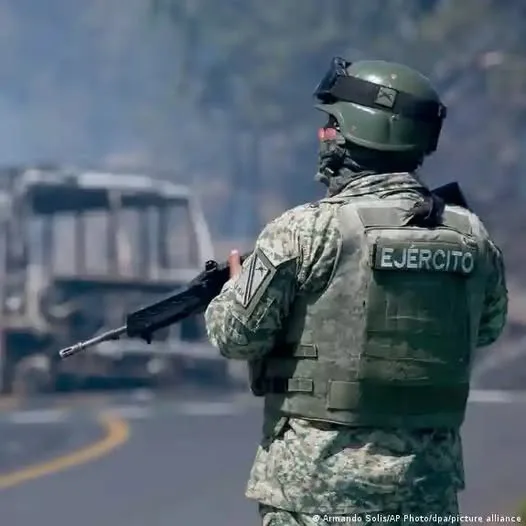
WASHINGTON, D.C. — The United States has designated two additional Mexican criminal groups, the Juárez Cartel and Los Viagras, as Foreign Terrorist Organizations, escalating Washington’s use of terrorism-related legal tools against organized crime groups operating in Mexico.
The designations were published in the Federal Register and add the two organizations to a growing list of Mexican cartels and transnational criminal groups the U.S. government has labeled as terrorist organizations since 2025. U.S. Secretary of State Marco Rubio said the groups either carry out terrorist activity or pose a significant threat to U.S. national security.
The move follows earlier U.S. actions against groups including the Sinaloa Cartel, Jalisco New Generation Cartel, Gulf Cartel, Northeast Cartel, United Cartels and La Nueva Familia Michoacana, among others.
What the Designation Does
A Foreign Terrorist Organization, or FTO, designation is one of the U.S. government’s strongest legal labels for a foreign group. It can make it a federal crime for people under U.S. jurisdiction to knowingly provide “material support or resources” to the organization, and it can trigger immigration consequences for members or supporters. It also gives U.S. authorities broader tools to pursue financial networks, collaborators and intermediaries.
The financial side is handled through U.S. sanctions authorities. The Treasury Department’s Office of Foreign Assets Control, or OFAC, administers and enforces economic sanctions tied to U.S. national security and foreign-policy goals, including sanctions against terrorists, narcotics traffickers and other national-security threats.
In practical terms, assets under U.S. jurisdiction can be frozen, and U.S. citizens, companies and financial institutions are generally prohibited from doing business with designated groups or their sanctioned associates. The State Department says Executive Order 13224 is intended to disrupt financial support networks for terrorists and terrorist organizations.
For banks, logistics companies, money-transfer businesses and companies with cross-border exposure, the designations also increase compliance pressure. Even indirect or seemingly routine transactions can become legally risky if they involve entities, front companies or individuals tied to a designated organization.
Why the Juárez Cartel Matters to the U.S.
The Juárez Cartel is one of Mexico’s oldest criminal organizations and has long been associated with the strategic border region around Ciudad Juárez, Chihuahua, across from El Paso, Texas. Control of that corridor has been important because it sits along one of the busiest and most valuable smuggling routes between Mexico and the United States.
U.S. and Mexican authorities have long linked the organization and its factions to drug trafficking, extortion, kidnapping, human trafficking and armed violence. The group’s influence has shifted over time as rival organizations fought for control of border routes, but its historical importance in northern Mexico has made it a continuing concern for U.S. law enforcement and national security agencies.
Who Are Los Viagras?
Los Viagras operate primarily in Michoacán, a state that has been at the center of violent disputes involving drug trafficking, extortion and control of agricultural economies.
The group has been linked to methamphetamine and cocaine trafficking, kidnapping, extortion against producers and attacks on security forces. U.S. authorities had already sanctioned Los Viagras under counternarcotics and counterterrorism authorities in 2025, alongside Carteles Unidos and several affiliated individuals.
Michoacán has been especially important to U.S. investigators because criminal groups there have been accused not only of drug production and trafficking, but also of embedding themselves in local economies through extortion. In 2025, U.S. authorities described Carteles Unidos as a major methamphetamine producer and said drug proceeds were being used to fund weapons, mercenaries and corruption. Los Viagras have been treated by U.S. authorities as part of that broader Michoacán criminal landscape.
A New Stage in U.S. Cartel Policy
The new designations are part of a policy shift that began in 2025, when President Donald Trump ordered U.S. agencies to evaluate certain cartels and transnational criminal organizations for possible designation as Foreign Terrorist Organizations and Specially Designated Global Terrorists.
That approach moves beyond traditional counternarcotics policy. Instead of treating cartels only as drug-trafficking organizations, Washington is increasingly using terrorism-related sanctions and criminal statutes to target the networks that move money, weapons, chemicals, drugs and people across borders.
Supporters of the strategy argue that cartel violence, fentanyl trafficking, human smuggling and attacks on authorities have reached a level that justifies stronger legal tools.
Critics warn that terrorism designations can blur the line between organized crime and terrorism and may create new diplomatic friction with Mexico, particularly if U.S. officials use the designations to justify more aggressive actions tied to Mexican territory or Mexican citizens. AP noted that the designations have already increased pressure on Mexico amid debates over corruption allegations and the limits of U.S. involvement in Mexican security matters.
Mexico-U.S. Tensions Remain a Key Factor
The move comes as Mexico and the United States continue to clash and cooperate over fentanyl trafficking, arms flows, extraditions and intelligence sharing.
Mexico has historically resisted any framing that could imply U.S. authority to take unilateral security action inside Mexican territory. At the same time, Mexican authorities have continued cooperating with the United States on certain high-profile extraditions and organized-crime cases.
The result is a delicate balance: Washington wants more tools to pursue cartel finances and cross-border networks, while Mexico remains sensitive to anything that appears to undermine sovereignty.
What Comes Next
The practical impact of the designations will depend on how aggressively U.S. authorities use them.
Possible next steps include additional OFAC sanctions against individuals, businesses or front companies accused of supporting the Juárez Cartel or Los Viagras; expanded criminal investigations into material support; tighter scrutiny of cross-border financial activity; and more pressure on foreign banks and companies to identify cartel-linked transactions.
The designations do not, by themselves, dismantle either organization. They do, however, make it riskier for anyone with exposure to the U.S. financial system to move money, provide services or knowingly assist the groups.
For Mexico, the announcement adds another layer to an already complicated security relationship. For the United States, it signals that cartel policy is being pulled further into the legal framework of counterterrorism, with all the financial, criminal and diplomatic consequences that come with it.
More Law Enforcement
- Man, 25, Killed Outside Cancun Home; Dog Shot, Suspect Caught
- Uber Driver Murdered in Cancun’s La Joya: What We Know
- Ejido Residents Block Federal Highway in Quintana Roo Over Unpaid Land Compensation
- 23 Tulum Police Officers Complete Initial Training Course
- Four Cuban Nationals Arrested in Cancún Over Counterfeit Banknotes