Cancún, Quintana Roo — The Universidad del Caribe has launched a pioneering manual aimed at ensuring safe, harmonious coexistence between its campus community and the crocodiles that inhabit the campus’s waterways and mangrove areas.
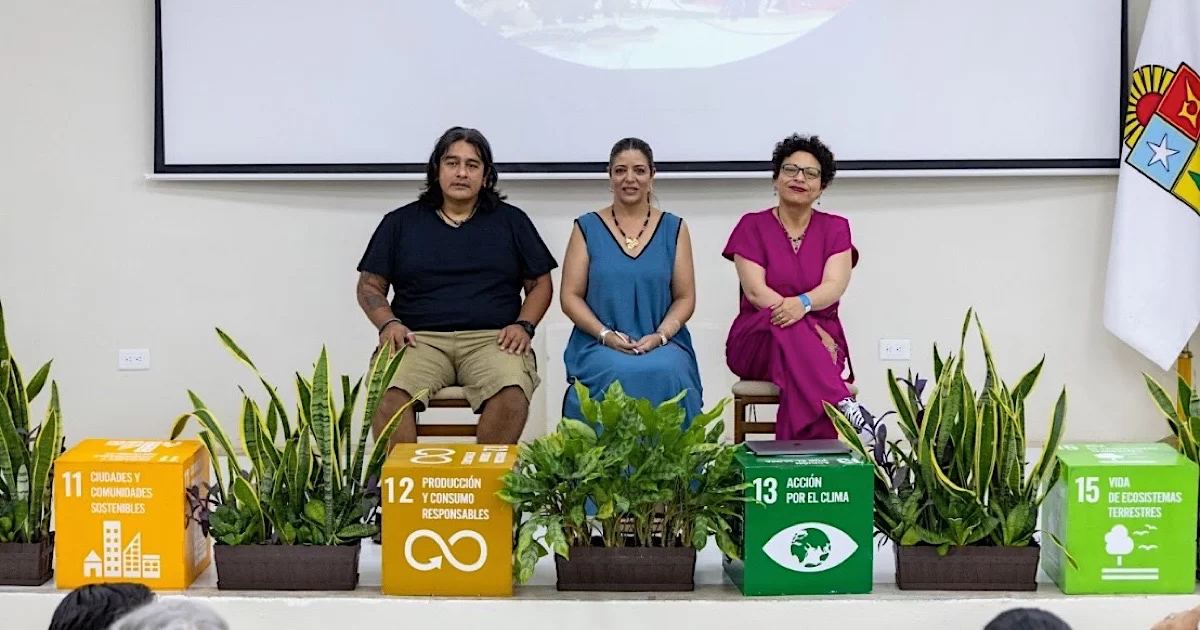
The Crocodile Coexistence Manual was presented during the university’s 19th Environmental Culture Week, held in Cancún, in the municipality of Benito Juárez.
Relocation Not a Viable Option, Expert Says
Gonzalo Merediz Alonso, a representative of the nonprofit Amigos de Sian Ka’an, presented the document and stressed that relocating the animals is not a viable alternative because of legal restrictions, health risks and the territorial nature of the species, which returns to its original range.
The manual was coordinated technically by Leonildo Tun Camal and Daniela Juárez Castillejos of the university’s Sustainability Department, working with the Interinstitutional Center for Applied Research and students from the Entrepreneurship Innovation and Sustainable Tourism and Hotel Management programs.
It comes in two versions: an internal edition with technical protocols covering infrastructure and safety, and a public guide for visitors.
New Rules for the Campus
The guidelines prohibit feeding crocodiles and coatis (tejones), require people to keep a minimum safety distance without chasing or cornering the animals to take photos or videos, and ban throwing objects at them. Sightings must be reported through institutional digital channels and to campus authorities.
409 Monitoring Records, 69 Confirmed Sightings
A scientific monitoring program on campus logged 409 records — three times a day from Monday to Friday — and confirmed 69 crocodile sightings, or 16.9 percent of the total. Forty-five were recorded in the El Deck area (65.2 percent), 12 in front of Building B (17.4 percent) and six at Gatehouse 2 (8.7 percent). The animals were at various stages of growth, most measuring more than 1.5 meters and moving over dry land between Gatehouse 2 and Building B.
What the Campus Community Thinks
A survey of 299 members of the university community — students, faculty, administrative staff and operational and security personnel — found that 88.6 percent had seen a crocodile on campus. Of those surveyed, 40.5 percent said they reacted with excitement or enjoyment, 12 percent expressed fear, 32.5 percent said the animals project an attractive image tied to conservation, and 16.8 percent described them as a symbol of university identity.
Merediz said: “We are trying to raise awareness that having crocodiles is not a problem, but an operational challenge that requires management and respect for the ecosystem.”
More Environment
- Tulum Ranks Second as Mexico Claims Six Spots on Best Beaches List
- Quintana Roo Braces for Record Sargassum Season as 2027 Forecast Tops 86 Million Tons
- Puerto Morelos to Expand Sargassum Barrier and Restore Six Kilometers of Beach
- Playa del Carmen Residents Blast Six-Year Illegal Dump
- Cozumel to Host 18th Island Bird Festival Oct. 7-11