Chetumal, Quintana Roo — Quintana Roo could face an unprecedented sargassum season in 2027, with as much as 86 million tons of the seaweed projected to wash ashore, the state’s environment secretary told lawmakers.
Óscar Rébora, head of the state Environment Department, delivered the warning during an appearance before the Ecology Commission of the Quintana Roo Congress, where he outlined the government’s response to a problem he described as global in scale.
“We have a global problem, and the Gulf of Mexico will be a receptor of sargassum in the coming years,” Rébora said.
He said rising ocean temperatures in recent years have intensified the arrival of sargassum along Quintana Roo’s coast, hitting the municipalities of Benito Juárez, Tulum and Solidaridad — home to Cancún, Tulum and Playa del Carmen — hardest because of their geographic location.
The first atypical landfall came in 2018, when between 15,000 and 18,000 tons reached the shore. By 2026, that figure had climbed to nearly 60,000 tons, Rébora said. He added that he places confidence in the measures announced by the federal government through the Mexican Navy.
Barriers, Budgets and Pending Permits
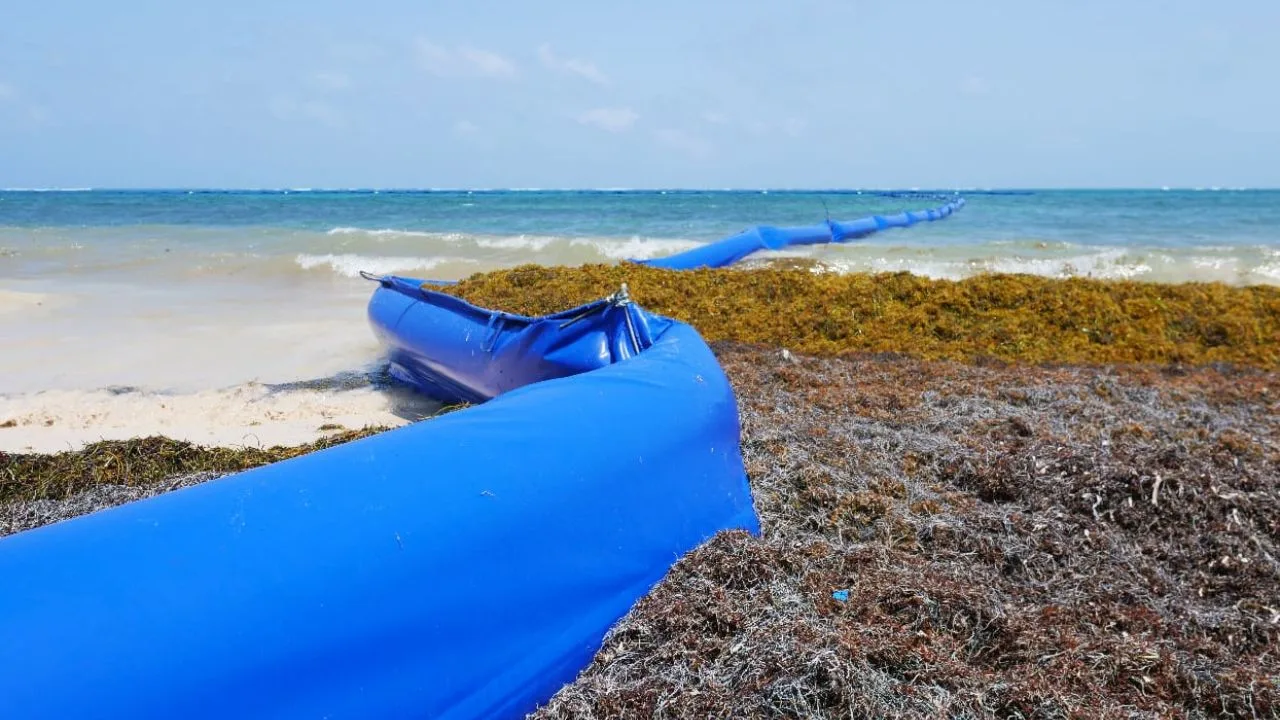
Monitoring at 150 beach points led officials to install 16 kilometers of anti-sargassum barriers, with another 2.5 kilometers still pending. Rébora acknowledged that the barriers have failed at some sites because of sea currents, forcing authorities to redesign their strategy.
More than 765 million pesos will go toward addressing the problem, including 485 million pesos for the coordination of the response strategy and 280 million pesos for a comprehensive cleanup program. The state government has also supplied vehicles, insurance and maintenance for 11 sargassum-collecting vessels.
Officials are also exploring ways to turn the seaweed into an economic resource. Rébora said more than 200 projects have been proposed to add value to the macroalgae, but their feasibility studies now rest with the Health Secretariat and Cofepris, Mexico’s federal health regulator.
A federal Circular Economy Welfare Hub, planned across 38 hectares of industrial land, has drawn interest from at least 19 companies seeking to commercialize sargassum, though none have yet obtained federal permits. The hub offers tax incentives to participating firms.
On the insurance front, Rébora said the state has purchased parametric policies, including one covering 1,100 kilometers of coastline and another worth 40 million pesos that was paid out after the hurricane that struck the state in 2024. A further policy worth $4 million covers Xcalak, Banco Chinchorro and Cozumel, at a premium of $60,000.
He also cited programs championed by Governor Mara Lezama, including the recycling initiative Recicla por tu Futuro and efforts to protect animals, such as the rescue of exotic species.
Lawmakers asked no questions after Rébora’s presentation, saying the state had complied with its environmental commitments.
More Environment
- University of the Caribbean Unveils Crocodile Coexistence Manual in Cancún
- Puerto Morelos to Expand Sargassum Barrier and Restore Six Kilometers of Beach
- Playa del Carmen Residents Blast Six-Year Illegal Dump
- Cozumel to Host 18th Island Bird Festival Oct. 7-11
- MarAlliance Launches Free MARAP App to Track Marine Wildlife in the Mexican Caribbean
More Quintana Roo
- Quintana Roo Sends Para-Dance and Para-Athletics Teams to National Paralympiad
- Five Quintana Roo Mayors Seek Morena Federal District Posts
- Quintana Roo Cyber Police Handle 235 Complaints and Remove 278 Posts and Profiles
- Former Quintana Roo Tourist Police Chief Bound Over for Trial in Human Trafficking Case
- Quintana Roo Gains Power to Inspect Tourism Service Providers