
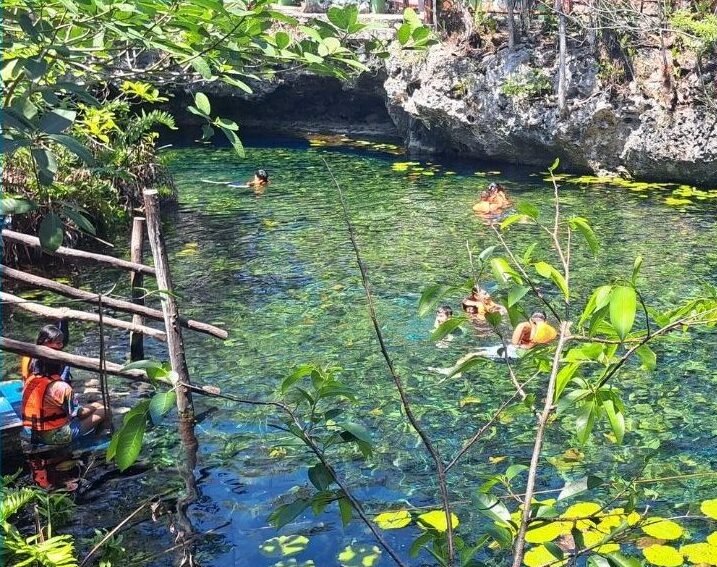
Tulum, Quintana Roo — With Easter holidays approaching, tourism operators at Tulum’s cenotes report moderate visitor numbers but expect a significant increase as vacationers seek alternatives to sargassum-affected beaches.
From the Jaguar cenote within the Dos Ojos park, Alejandra Castro noted that tourist activity remains calm for now, with small groups of domestic and international visitors arriving gradually.
“It’s still quiet at the moment, but small groups are starting to come in. We’re in the pre-peak stage before the main visitor flow,” she explained.
Regarding the upcoming high season, Castro expressed high expectations while acknowledging uncertainty about exact visitor numbers. She suggested that external factors like sargassum on Mexican Caribbean beaches could influence visitor preferences.
“The sargassum situation actually benefits us because people are looking for places where they can swim and enjoy time with family. Cenotes are an excellent option since we don’t have sargassum here,” she commented.
Regarding conservation of these water bodies, Castro assured that in the Dos Ojos park area, there haven’t been significant changes in recent years. She emphasized that the cenotes maintain their natural coloration and characteristics despite proximity to infrastructure projects like the Maya Train.
“The color hasn’t changed. They remain as beautiful as they were years ago. Sometimes there are slight variations, but those are due more to factors like rainfall than other issues,” she specified.
Regarding visitor origins, she detailed that domestic tourists predominate, along with international visitors from countries including Canada, France, and the United States, who continue choosing this area for its natural richness.
Finally, she encouraged tourists to consider cenotes as an option during their vacations, noting that these spaces remain open year-round from 8:00 a.m. to 5:00 p.m.
With the holiday season just around the corner, Tulum’s cenotes are emerging as primary natural refuges for visitors seeking alternatives to variable beach conditions.
More Environment
- Cold Front 6 and Low-Pressure Channel to Bring Rain and Showers to Quintana Roo on November 19
- Riviera Maya Beaches Recover as Sargassum Season Winds Down
- Heavy Rain Floods Cancún Streets, Disrupts Traffic and School Commutes
- Beekeepers in Mexico’s Maya Zone Report Damage From Badgers, Beetles and Ants
- Bull Sharks Return to the Mexican Caribbean as Officials Urge Respect for Their Space
More Tulum
- Tulum Adds Two Specialized Wildfire Brigades Ahead of Dry Season
- Tulum to Host Free Community Dinner for 1,000 People
- Advisory Council Begins Work to Protect 53,000 Hectares of Jungle in Playa del Carmen, Tulum and Cozumel
- Sian Ka’an Ranked Among Most Flood-Exposed Coasts as NASA Maps Project Sea-Level Rise
- Tulum, Chacchoben and Cobá Lead Quintana Roo Archaeological Visits in 2025
