
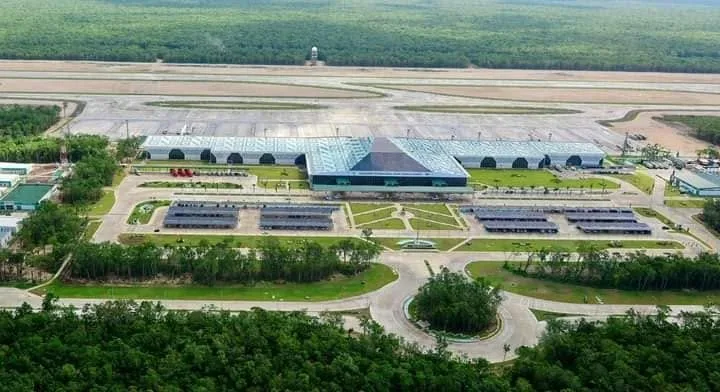
Tulum, Quintana Roo — Tulum International Airport is rolling out a package of economic incentives to attract airlines and reverse a sharp decline in flights and passenger numbers, state and federal authorities announced.
In the first quarter of 2026, the airport saw a 34% drop in international passengers and a 25% drop in domestic passengers compared to the same period in 2025. Daily international departures have fallen from 10 two years ago to just three, serving only Atlanta, Dallas, Houston and Miami via American, Delta and United airlines. Total daily flights, including domestic routes, now range between nine and 13.
Quintana Roo Tourism Secretary Bernardo Cueto Riestra said officials are working with the federal government and the Mundo Maya group to promote the airport’s incentives and restore connectivity.
The main incentive is a discount on the Airport Use Fee (TUA), which is passed directly to passengers but retained by the airline. The discount is staggered over three years: 40% in the first year of a new route, 20% in the second year, and 0% in the third year. Currently, the TUA at Tulum is 300 pesos for domestic flights and 582 pesos for international flights. With the discount, a new airline could save up to 232 pesos per international passenger in the first year.
Additional discounts cover landing and takeoff fees, apron parking, baggage handling, airline module rentals, and leases for offices, warehouses and commercial spaces — all offered for three years to both business partners and airlines.
“The idea is to ‘warm up’ new routes, allowing airlines to lower ticket prices for passengers while still making the frequency profitable, even if flights are only 60-70% full,” Cueto said. “But obviously, as the global economic situation improves, we are convinced that Tulum will see a rebound in connectivity, likely by the end of this year.”
The incentive program has been in place since the airport opened in December 2023, with annual benefits for tenants and airlines. In July 2025, authorities expanded and extended the program for three more years after detecting the decline in routes.
More Tourism
- Hurricane Simon Threatens Puerto Vallarta as Category 4
- Sargassum Closes In on 53 Quintana Roo Beaches as Tulum and Puerto Morelos Take the Worst Hit
- Cozumel Officials Review Malecón Remodel Plans at Tourism Development Workshop
- Mexican Caribbean to Lose 435,000 US Airline Seats by End of 2026
- Tulum Tour Guides Train to Protect Ecosystems Visited by Tourists
More Tulum
- Airline Seat Cuts Threaten US Connections to Mexico’s Caribbean Coast
- Akumal Residents Say Tulum’s Garbage Collection Is Failing
- Tulum Foundation Runs Short on Medicines as Demand from Irregular Settlements Grows
- Sargassum Hits Southern Quintana Roo Hardest as 25 Beaches Report Excessive Levels
- Hundreds of Riders Expected for Tulum’s Fourth Federated Horseback Ride