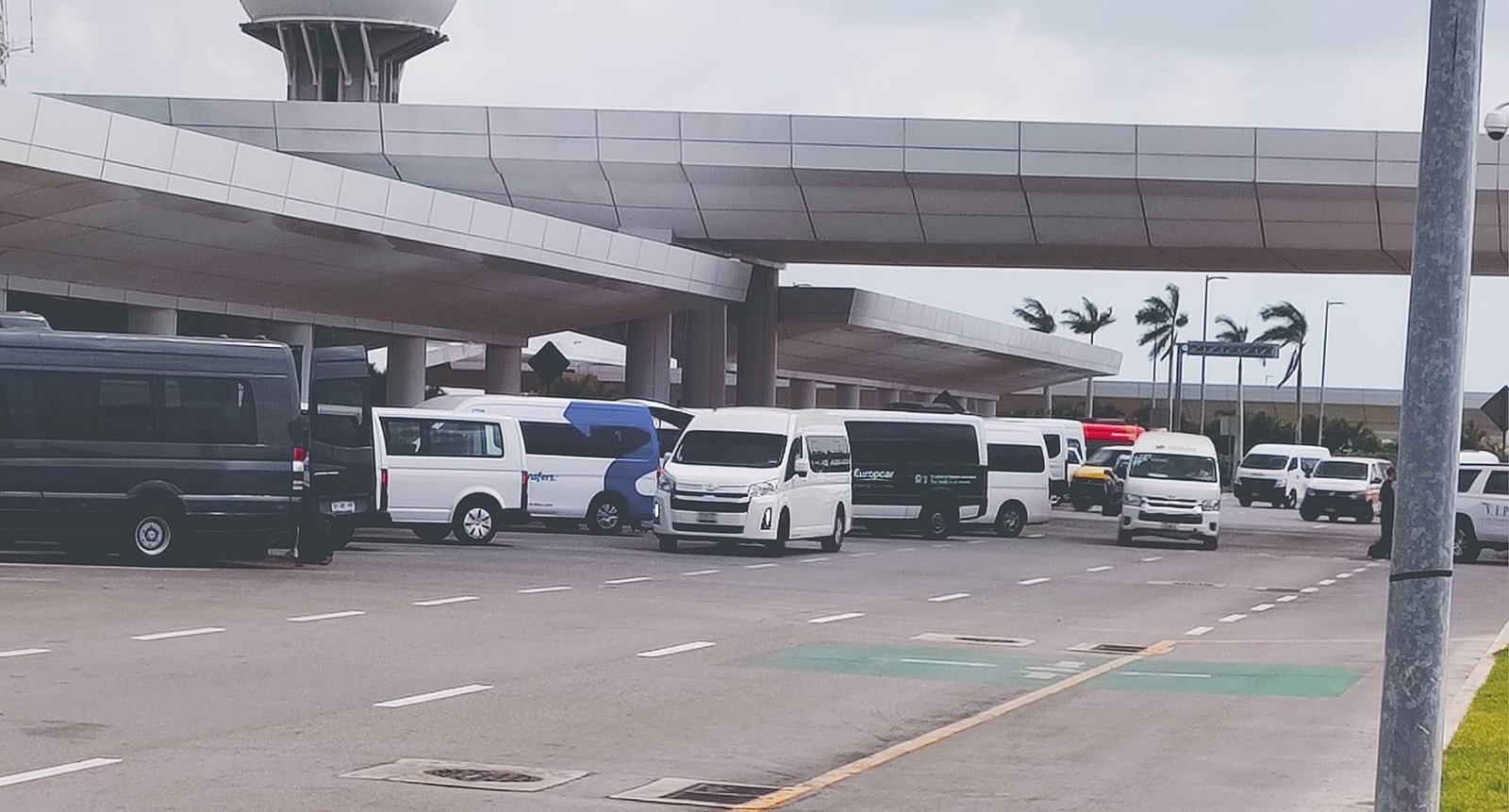
Cancún, Quintana Roo — A tourist has accused a transportation company operating at Cancún International Airport of failing to provide a prepaid, confirmed transfer, forcing her to hire another taxi at the last minute to avoid missing her flight.
The complaint, filed with Mexico’s Federal Consumer Protection Agency (Profeco), adds to a growing list of grievances from visitors against ground transportation providers at the airport and raises fresh questions about how ASUR, the company that runs the terminal, oversees the businesses it authorizes to serve passengers.
The tourist, identified as Y. Peña, said she booked two services with Xelbor Transfer: an arrival transfer for $128, which she received, and a return trip for $72 scheduled for 2:00 a.m. on September 6 from the BlueBay Grand Esmeralda hotel to the airport.
She said she asked the company the day before whether a driver would pick her up at 2:00 a.m. and was told yes. The vehicle never arrived. After waiting until about 2:30 a.m. and getting no answer by phone, she hired another taxi for $69.53 so she would not miss her flight.
Peña is now seeking a refund of $141.53, covering the transfer that was never provided and the emergency taxi she had to pay for.
She said she submitted WhatsApp conversations, phone records, receipts and proof of the second taxi payment to Profeco as evidence supporting her claim.
Questions Over Authorized Operators
The case has drawn attention because Xelbor Transfer currently advertises itself as an authorized operator at Terminals 2, 3 and 4 of Cancún International Airport, offering private and shared transfers from the terminal.
That means the dispute goes beyond whether the company should return the $72. It also puts pressure on ASUR, which acknowledges that it earns revenue from ground transportation operators, including taxis, and that access fees charged to permanent ground transport providers are regulated activities.
The airport receives millions of visitors each year, yet questions remain about whether companies labeled as authorized or tolerated are actually delivering the services they sell, and what mechanisms exist to sanction or remove operators that accumulate complaints.
The issue is compounded by the restrictions and conflicts facing users of digital ride-hailing platforms. In March, the federal government said it was working with the airport concessionaire to bring order to the taxi situation and establish a transparent fare scheme so tourists would know the cost of their transfers from the airport. ASUR, meanwhile, maintains a ground transportation section on its official website listing services available inside the terminal.
For visitors, the dispute over who is contractually responsible matters little: if they pay for a service advertised and operating inside the airport and it fails, the experience they take home is that of Cancún and its airport.
More Tourism
- Tulum Targets Sports Tourism With 350-Athlete Event and 4.7 Million Peso Boost
- Playa del Carmen Courts French Tourists With Experiences Beyond All-Inclusive Resorts
- Quintana Roo Aims to Close 2026 Near 20 Million Overnight Tourists With High Hotel Occupancy
- Power and Water Outages to Hit Mahahual and Xcalak This Weekend
- PROFEPA Inspectors Denied Access to Jaguar at Cancún’s Pepe Tigre
More Cancun
- Social Run Brings 3, 5 and 10K Routes to Cancún’s Nichupté Bridge
- Demolition Begins on Cancún’s Old General Hospital to Make Way for Maternal and Child Hospital
- Group Proposes Migrant House to Help Indigenous Arrivals in Cancún
- IMSS Hospital Deputy Director in Cancún Reports Death Threats After Viral Video
- Judge Binds Over Driver in Fatal Cancún Motorcycle Crash