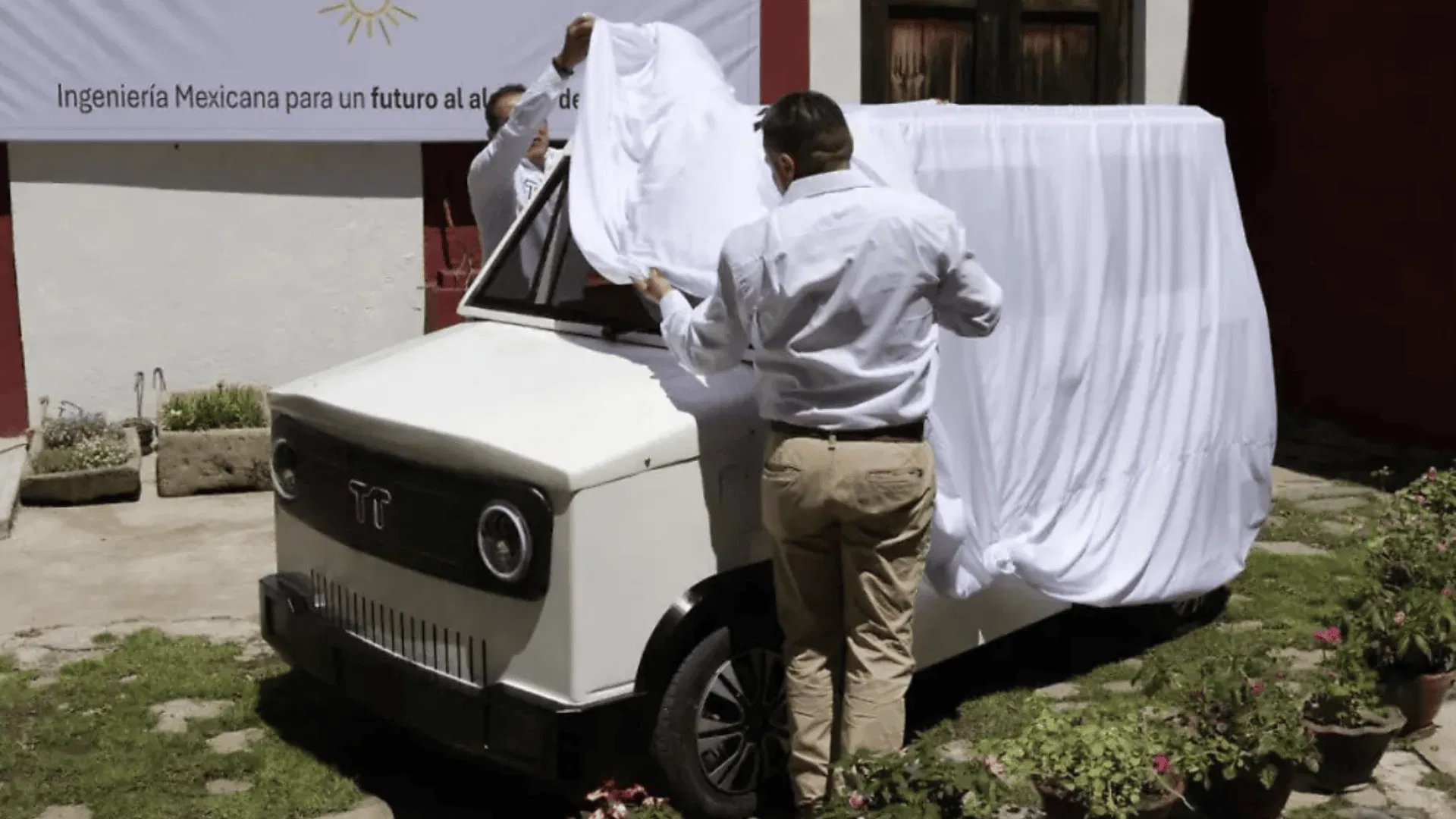
Tlaxcala, Mexico — The Totalmente Tlaxcalteca TT, a compact electric microbus assembled in the central state of Tlaxcala, is positioning itself as one of the most affordable electric vehicles in Mexico, with prices starting at 40,000 pesos (about $2,000).
Classified as a quadricycle or microbus, the TT is designed for short-distance urban travel, particularly last-mile trips within neighborhoods where speed limits do not exceed 50 km/h (31 mph). Its simple architecture aims to keep acquisition costs to a minimum, differentiating it from global brands.
The vehicle is built on a reinforced steel chassis with a high-resistance polymer body, making it lightweight and energy-efficient. Assembly takes place in specialized workshops in Tlaxcala, using locally sourced components to reduce reliance on imported parts from Asia or Europe.
Specifications and Performance
The TT is powered by a permanent-magnet electric motor delivering 3 to 5 kW, depending on the version, with a top speed limited to 45–50 km/h. The low-power motor generates minimal heat, simplifying the cooling system and reducing maintenance needs.
Battery options include lead-acid or lithium packs, with real-world range of 60 to 80 kilometers (37–50 miles) on flat terrain with moderate load. Charging is done via a standard 110–120V household outlet, requiring 6 to 8 hours for a full charge.
The vehicle measures under three meters in length, making parking easy in tight spaces. It has a payload capacity of approximately 300 kilograms (660 lbs), including passengers and light cargo, making it suitable for local delivery services or personal transport in dense traffic.
Pricing and Versions
Prices range from 40,000 to 70,000 pesos ($2,000–$3,500), depending on battery type and additional equipment. This places the TT in the same price bracket as work motorcycles but with the advantage of an enclosed cabin and four-wheel stability.
To operate legally, owners must register the vehicle with state authorities and obtain license plates. Due to its low speed, the TT is restricted to secondary streets and local avenues; it is prohibited on highways and federal roads. Drivers need a valid license and mandatory liability insurance.
Safety and Maintenance
Safety equipment includes three-point seat belts, front disc brakes, and rear drum brakes. The cabin provides basic impact protection for low-speed collisions. Maintenance is minimal compared to gasoline vehicles: no oil changes, spark plugs, or timing belts. Routine checks include tire condition, suspension lubrication, and battery health. Lithium batteries are expected to last 3–5 years before replacement.
Comparison with Olinia
Unlike the Olinia, a government-backed prototype still in development, the Totalmente Tlaxcalteca TT is already in production and available for purchase. While Olinia aims for federal certification and mass production, the TT operates as a regional manufacturing solution serving local demand for immediate, affordable electric transport.
The TT is not designed for extreme climates or steep inclines; its motor may overheat under prolonged stress. It is a functional urban vehicle prioritizing low operating costs over dynamic performance.
Interior features include a basic digital dashboard showing speed, battery level, and odometer. Some models offer Bluetooth audio and USB ports. Air conditioning is omitted to preserve battery range, replaced by natural ventilation and low-power electric fans.
Because the TT is assembled in Tlaxcala, critical chassis and body parts are available directly from the manufacturer. Electrical components such as the controller and motor are standard in the micro-mobility industry, ensuring easy replacement and reducing downtime.
More Lifestyle
- Tulum’s Mureco Museum Adds 53 Mesoamerican Pieces for Second Anniversary
- Chetumal Entrepreneur Develops Automatic Hammock Rocker for Mexico
- Cancún Prepares Janal Pixán 2026 at Puerto Juárez, Aims to Double Attendance
- Mental Health and Addiction Top Concerns Among Playa del Carmen Youth, Survey Finds
- Cancún Opens Registration for Janal Pixan 2026 Catrina and Altar Contests