Chetumal, Quintana Roo — The massive arrival of sargassum on the beaches of the Mexican Caribbean threatens more than 200 marine species and is altering natural coastal ecosystems, the state’s Secretariat of Ecology and Environment (SEMA) warned.
SEMA director Óscar Rébora Aguilera said that while sargassum plays an essential ecological role in the open ocean, its accumulation along the coastline causes environmental impacts that degrade water quality, harm wildlife, and damage coastal habitats.
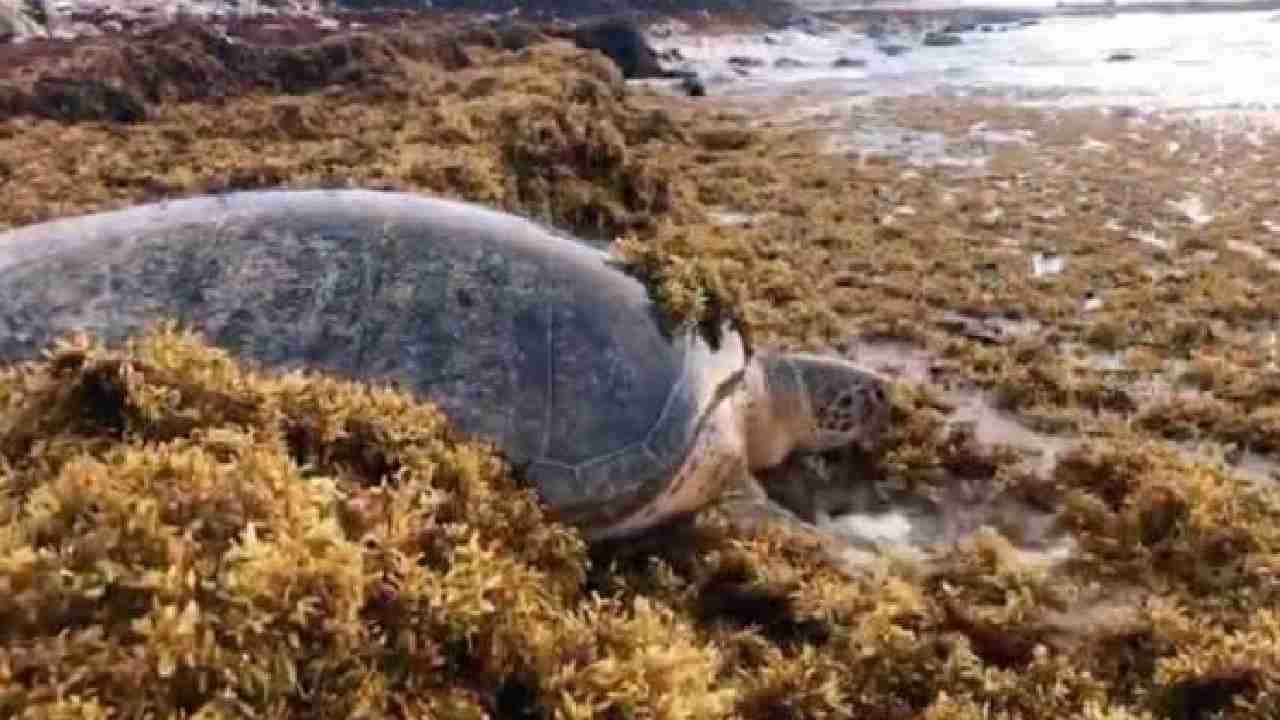
In the Atlantic, sargassum forms floating ecosystems that serve as refuge and food for fish, crustaceans, mollusks, and invertebrates. But when large amounts wash ashore, they begin to decompose, releasing leachate and greenhouse gases that deteriorate the coastal environment and disrupt feeding and breeding areas for various species, Rébora explained.
Sea turtles are among the most affected animals, he noted. Thick mats of sargassum hinder nesting and make it difficult for hatchlings to reach the ocean.
The excessive seaweed also accelerates beach erosion and harms ecosystems linked to reefs and seagrass beds.
Rébora attributed the extraordinary proliferation of sargassum to climate change factors, including rising ocean temperatures, acidification, and shifts in water pH. The macroalgae can double in size approximately every three days during its Atlantic cycle, and its arrival in the Mexican Caribbean depends on ocean currents, winds, and tides, he said.
SEMA reiterated that the goal is to prevent massive accumulation on the coast without undermining the ecological function sargassum serves in the open ocean.
More Environment
- Sargassum Leaves 60 Boats Damaged and Millions in Losses in Playa del Carmen
- Bird Populations Decline in Quintana Roo’s Maya Zone, Academics Warn
- Deer Trapped in Playacar Fence Rescued After Social Media Reports
- Tulum Beaches Recover as Sargassum Arrivals Ease, Cleanup Work Continues
- First Monarch Butterfly of the Season Sighted at Cozumel’s Kuzá Park
More Quintana Roo
- Playa del Carmen Offers 21,000 Flu Vaccine Doses to Older Adults and Young Children
- Mexican Caribbean Must Overhaul Its Tourism Model, STARC Director Says
- Hotel Occupancy in Quintana Roo Drops Below 60 Percent
- Quintana Roo Wills at 3,000 Pesos as Notary Campaign Deadline Nears
- Belize Launches Free Border Card for Mexican Travelers From Five Southeastern States