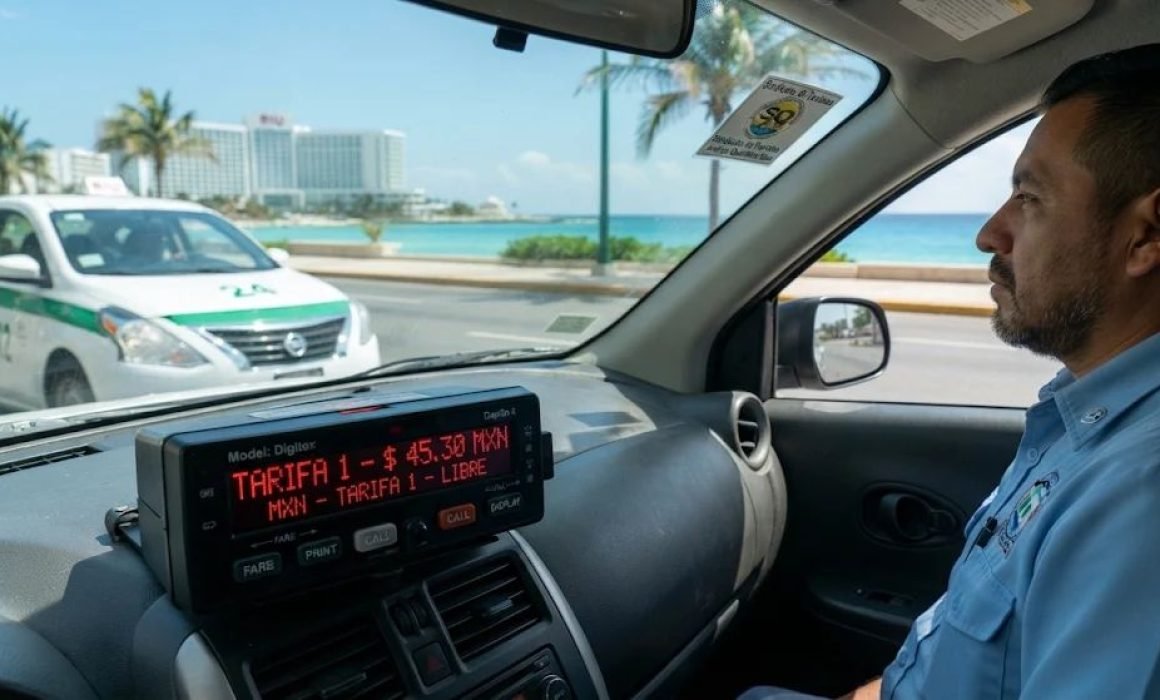
Cancún, Quintana Roo — Taxis across Quintana Roo will have to install digital taximeters under new state regulations aimed at standardizing how drivers charge for rides, with the first phase expected to begin in March 2027 and cover about 3,000 vehicles in Cancún.
The rules, published Oct. 30 in the state’s official gazette, make the devices mandatory for taxis operating from designated stands (sitio), as well as for street-hail cabs and economy street-hail cabs. Collective transport vehicles are excluded from the requirement.
Each unit must include GPS geolocation, a digital screen, a terminal for electronic payments and a panic button connected to the C5 state command and communications center. The devices will calculate fares using an initial flag-drop charge plus fees based on distance traveled and trip time.
Pilot tests under way in Cancún
In Cancún, Rubén Antonio Carrillo Buenfil, secretary general of the Sindicato de Choferes, Taxistas y Similares del Caribe, said pilot testing has already started and the union is reviewing four suppliers. Depending on their features, the devices are estimated to cost between 1,500 and more than 3,000 pesos.
Carrillo Buenfil said drivers themselves would likely have to cover the cost of the equipment, though the union is looking at financing plans with monthly payments and alternatives such as advertising sponsorships. The first stage would cover roughly 3,000 units before expanding to other taxi stands in the city and to the Hotel Zone.
Playa del Carmen waits on technical details
In Playa del Carmen, Nayeli Molina, director of municipal transport, said March 2027 is also being considered as a tentative start date. However, technical details and coordination and oversight agreements between the municipality and the Quintana Roo Mobility Institute (IMOVEQROO) still need to be settled.
The rollout depends on the publication of fare agreements for each municipality. Once an agreement is issued, concession holders will have 90 calendar days to buy, install, verify and register the devices.
More Government
- Aguakan Details Chlorine Gas Controls in Quintana Roo Water Treatment
- Playa del Carmen Tests Technology to Recover Sand Lost to Sargassum
- Quintana Roo Reports 8,631 Diabetes Cases, Urges Free Glucose Testing
- Quintana Roo Records 570 Dengue Cases in 2026 as Fogging Brigades Fan Out
- PRI Quintana Roo Says Taddei Allies Using ‘Smoke Screen’ to Dodge Media Reports
More Quintana Roo
- Researchers Unveil 3D Replica of Ice Age Bear Skull Found in Quintana Roo Cave
- Quintana Roo Hands Out First Rural Sector Merit Awards to Three Workers
- Quintana Roo Joins Noche de las Estrellas 2026 With Free Astronomy Events in Five Cities
- Fewer Than 20% of Young People in Quintana Roo Use Condoms, Advocacy Group Warns
- Quintana Roo Real Estate Slows but Is Not in Crisis, Says AMPI Cancún Chief