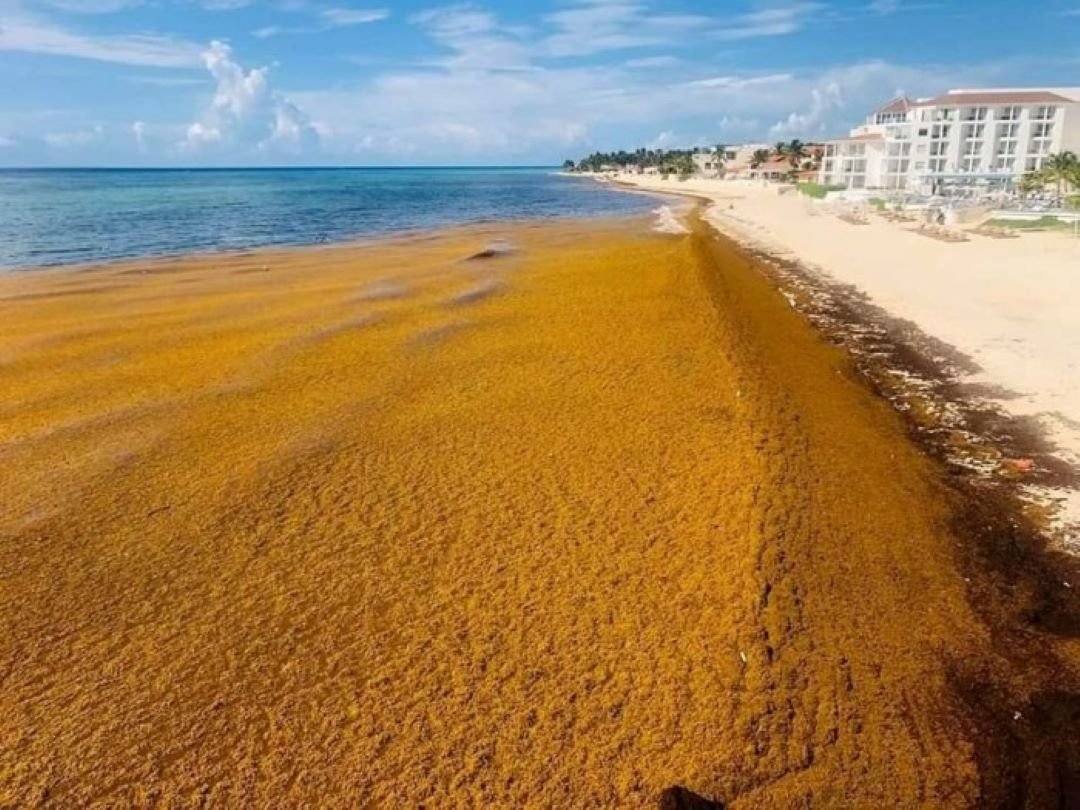
Chetumal, Quintana Roo — With less than 60 days left in the sargassum season, Playa del Carmen accounts for the largest share of the seaweed cleared from Quintana Roo’s coastline, followed by Cancún, Puerto Morelos, Tulum and Mahahual.
A report from the state Environment Department (SEMA) shows that crews removed 124,852 tons of sargassum between April and August, an increase of 29,069 tons over the same period last year.
The seaweed has reached 1,176 kilometers of beach, according to the report. The Mexican Navy has installed 12,855 meters of barrier at strategic points and expects to reach 16,030 meters as part of the National Strategy Against Sargassum 2026 announced by the federal government.
Federal and state agencies working together have removed 42,063 tons from the Playa del Carmen coastline and 29,899 tons in Cancún, while Puerto Morelos accounts for 17,111 tons.
Tulum follows with 16,471 tons and Othón P. Blanco with 14,013 tons. Isla Mujeres has reported 3,877 tons removed, Cozumel 1,375 tons and Lázaro Cárdenas 39 tons.
Of the total, the state government and municipalities removed 71,864 tons, while the Mexican Navy (Semar) accounted for 52,988 tons.
The sargassum season began on April 1 and runs through October 30, though the algae washes ashore year-round.
More Environment
- Cancún’s Benito Juárez Recycling Drive Recovers 6.8 Tons of Waste
- US Releases 1 Billion Sterile Flies to Stop Screwworm’s Return
- Delphinus Blue Planet Pulls Out of Deal to Buy The Dolphin Company, Leaving 101 Marine Animals in Limbo
- New Pemex Oil Spill in Gulf Won’t Reach Campeche Beaches, Company Says
- Cozumel Beach Club Kuzá Targets 4,000 Daily Visitors in Protected Area With CONANP Backing
More Playa del Carmen
- Mexico’s Supreme Court Denies Calica Amparo, Upholds Navy’s Coast Guard Role
- Xcaret Marine Animal Hospital Gives Sea Turtles a Second Chance in Quintana Roo
- Constituyentes Residents Demand Electricity and Drinking Water in Lázaro Cárdenas
- Mexico’s Semarnat Approves Three-Breakwater Project to Restore Playa del Carmen Beach
- Playa del Carmen Activists Blast Urban Sprawl in the Jungle