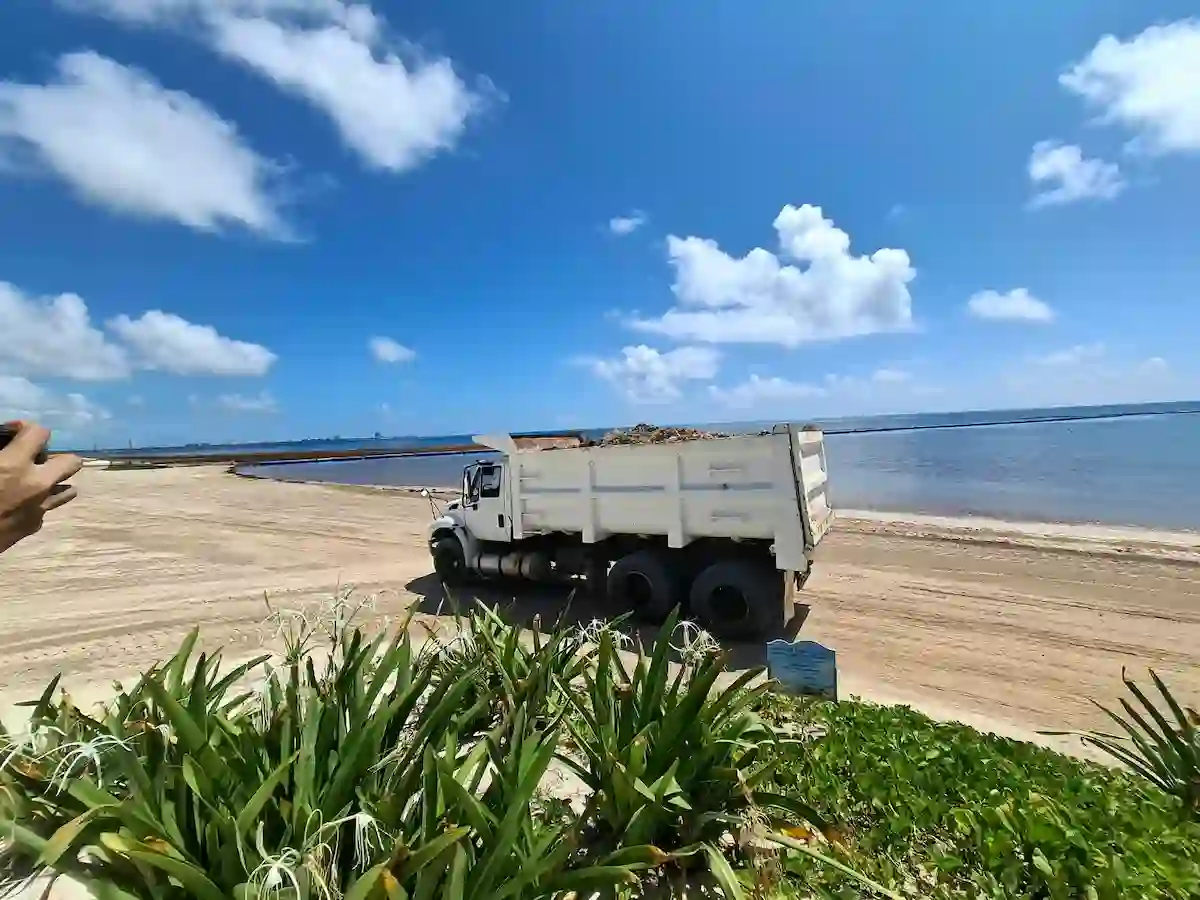
Cancún, Quintana Roo — Hotel groups based in Quintana Roo have spent years developing their own technology, programs and research to confront the mass arrival of sargassum on the Mexican Caribbean coast, and one company says its efforts are now producing results that other destinations are starting to copy.
Grupo Palace has run its Earth Inclusive strategy for more than 11 years, aimed at reducing and mitigating the environmental impacts generated at its destinations. The company says the approach has moved it toward full environmental sustainability and that its results are being used as a basis for programs and public policy in other destinations, drawing on research and on lessons learned along the way.
The group is among the first companies internationally to achieve tighter control over a phenomenon such as sargassum. Officials acknowledge the investments have been in the millions, but say the returns benefit the destination, visitors and the ecosystem.
Purpose-Built Machinery
The group has designed specialized equipment for the task, including sargassum barges that can operate offshore and at the shoreline, fitted with blades that remove the seaweed more efficiently than manual labor. A sand-sargassum separation screener recovers sand during the cleanup process and reintroduces it at critical sites, helping restore the balance of the beaches. Constant monitoring tracks the square meters recovered along stretches of coastline where erosion had already been severe.
“One of the central points is to prevent the removal of sargassum from causing a greater loss of sand,” said Gerardo Castañeda Ramírez, Grupo Palace’s operational environmental manager. The model he described includes barriers, machinery built specifically for the job and vessels, along with a specialized workforce trained for the work.
Volumes Removed
Through August of this year, crews had removed 113,165 cubic meters of sargassum from a 2.2-kilometer stretch of coastline, compared with 122,000 cubic meters collected the previous year.
Between 2015 and 2024, the program removed a total of 713,191 cubic meters of sargassum and seagrass, a figure that illustrates the scale of the effort over nearly a decade.
On the dunes, the company reports restoring 4,400 square meters using 17 plant species and eradicating a plant identified locally as beach lettuce. It also created a recreational sand area using 5,000 cubic meters of screened sand recovered from the beach-cleaning process.
From Collection to Reuse
Collected material is also managed after removal. Sargassum taken from designated sacrifice areas is moved to a collection center, where it is dried before being sent to a plant for sand recovery. Material gathered by boat is hauled in trailers to platforms, where it is spread out, dried and ground down.
Sargassum management forms part of a broader environmental strategy. Used cooking oil from across the hotel chain is processed at a biodiesel plant that has operated since 2016 to fuel machinery, with a reported capacity of 100 liters a day and raw material collected from seven properties. The project has produced 16,327 liters of biodiesel in total.
The group’s sustainability programs also cover sea turtle nesting, composting, an organic garden, and a falconry and bird-control department. Together, they generate more than 62 specialized direct jobs.
With the model, Grupo Palace aims to push sargassum response beyond simply clearing the beach. The strategy incorporates sand recovery, restoration of coastal ecosystems and reuse of materials, framed around ecosystem-based adaptation and a circular economy.
More Environment
- Cozumel Park Secures 25-Year Protection for 22 Hectares of Mangrove
- Mexico’s Semarnat Approves Three-Breakwater Project to Restore Playa del Carmen Beach
- Quintana Roo Removes More Than 124,000 Tons of Sargassum as Season Nears End
- Playa del Carmen Activists Blast Urban Sprawl in the Jungle
- Mahahual Groups Build Reinforced Dog Shelters to Shield Pets From Jaguar Attacks
More Cancun
- Thunderstorm Halts Mexico City Airport; Cancún Flight Canceled, Two International Flights Diverted
- Inmate Found Hanged in Cancún Prison Days After Her Arrest
- Sheinbaum to Give Second Government Report in Cancún
- Cumbia, Rock and Pop Headline Plaza de Toros Cancún Concert Series
- Cabaret Show Brings 1920s Glamour to Cancún’s Teatro de la Ciudad