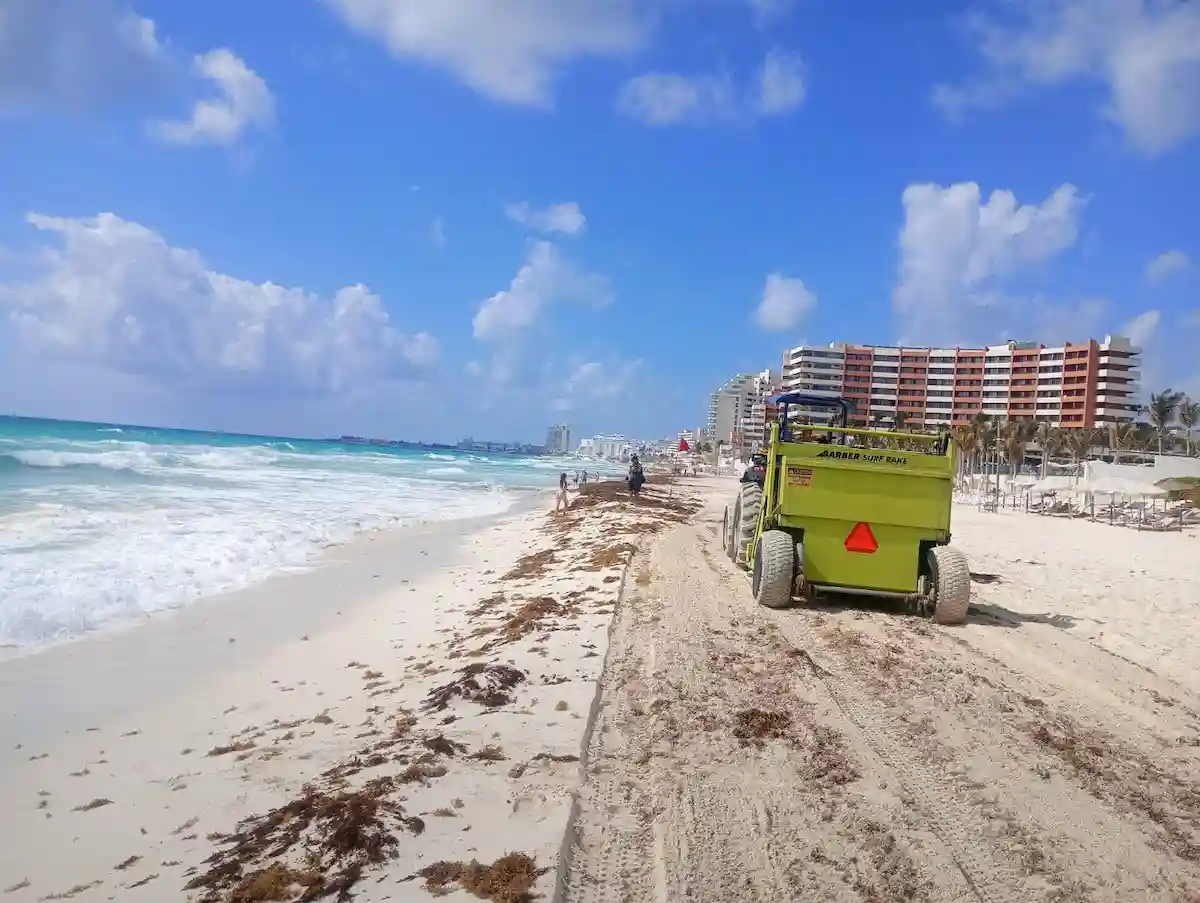
Cancun, Quintana Roo — The state government is developing guidelines that could become Mexico’s first coastal zoning plan, aimed at speeding up beach restoration projects along the Quintana Roo coastline, according to the head of the state’s Ecology and Environment Department (SEMA).
Oscar Rébora Aguilera, SEMA secretary, said the instrument would define specific zones based on each shoreline’s natural characteristics, including geomorphology, sand type, and erosion conditions. This would streamline environmental impact assessments (MIAs) needed for coastal recovery projects.
“We are working on guidelines that could lead to the first coastal zoning plan in the country,” Rébora said. “It’s practically like a local ecological zoning plan, where we can define certain cells based on their geomorphology, grain size, and the conditions of the beaches in the state.”
The official explained that having pre-existing studies within the zoning plan would simplify technical and administrative processes for environmental impact statements. “Environmental impact statements would be much simpler because this zoning would already have much of the preliminary work done. We would save a lot of time,” he said.
Rébora emphasized that erosion is not limited to Cancun or the municipality of Benito Juárez but affects various parts of the Quintana Roo coastline, with some beaches losing sand faster than others. “It’s not just Benito Juárez; we have an erosion issue across the entire state. There are places where we are losing much more beach than others, and we need to find an integrated solution,” he stated.
The goal is to move beyond temporary fixes like sand replenishment and adopt long-term ecological restoration strategies. “You can’t just grab sand, dredge it, and repave the beaches. That’s a quick fix, but what we’re looking for now is to rebuild coastal dunes, seagrasses, and even have a regenerative vision for the corals themselves,” Rébora said.
The project has required more than 18 months of technical work involving academics, scientists, and specialists to build a robust model for sustainable coastal erosion management. “It’s a lot of technical work and also getting many specialists to agree so we can make joint decisions, but these guidelines will give us a path forward on how beaches should be restored,” he concluded.
More Environment
- Cozumel Coral Restoration Program Cares for 1,500 Fragments at Chankanaab
- Puerto Morelos launches weekly sargassum watch until 2026
- Quintana Roo Seeks Geographic Indication to Protect Melipona Honey
- Dengue Cases in Quintana Roo Jump 152 Percent
- Quintana Roo Hoteliers Push Regenerative Tourism Amid Beach Access Disputes
More Quintana Roo
- Quintana Roo Builders Pin 2026 Hopes on Public Works
- Hells Angels Arrest in Cancún: Mexico’s Cartel Link?
- Quintana Roo Green Leader Hands Over 80K-Member Party
- Quintana Roo Expands Free Mental Health Care Network Across the State
- Quintana Roo to Bar Cellphones for Teachers as Well as Students Starting Nov. 3