Cancún, Quintana Roo — The 11 municipalities of Quintana Roo will take over tax collection and regulation of vacation rentals offered through digital platforms and will determine how they operate legally starting in 2027, state Tourism Secretary Bernardo Cueto Riestra said.
Currently, vacation rental platforms in Quintana Roo—such as Airbnb, Vrbo and Booking—are regulated by all three levels of government: state, municipal and federal, through the state Tourism Department (Sedetur) and the Quintana Roo Tax Administration Service (SATQ).
Cueto said the state government previously established mechanisms to regulate these platforms. Now it will be up to municipal governments to prepare their own work plans and analyze the corresponding tax collection.
He stressed that local authorities must consider recent legal changes and base their plans on each municipality’s needs and the services provided by each property owner who rents through digital apps, in order to reach the necessary agreements.
How the current regulation scheme works
To operate a vacation rental legally in Quintana Roo, owners must first obtain a land-use certificate, a civil protection clearance and a municipal operating license from the local government, while also verifying that the condominium’s rules allow short-term rentals.
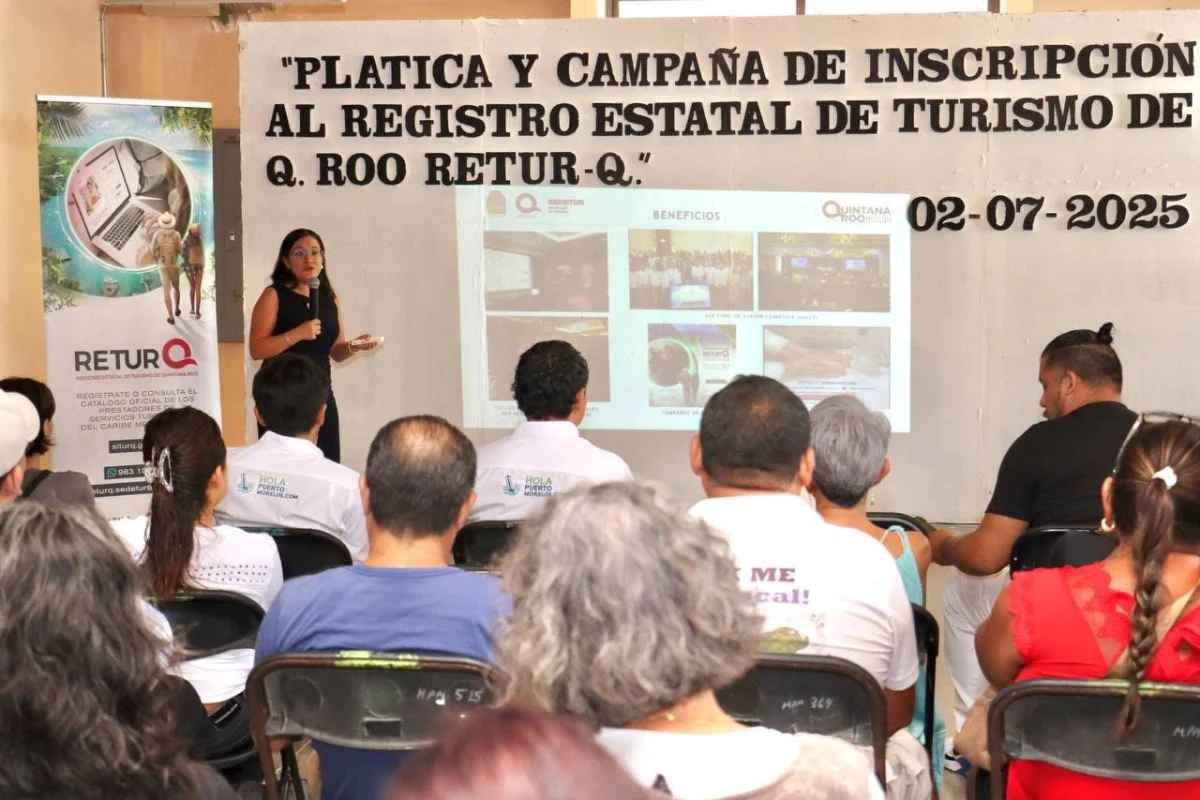
They must then obtain a state operating license from SATQ and register the property in the Quintana Roo State Tourism Registry (RETUR-Q) through Sedetur’s portal, displaying the registration number in digital listings. They must also complete the National Tourism Registry (RNT) online with the federal Tourism Department (SECTUR) using a Llave MX account.
For tax purposes, vacation rentals are considered lodging services and generate obligations with three tax authorities. At the federal level, owners must register with the SAT under a lodging activity and issue electronic invoices, with 4% income tax and 8% VAT withheld. At the state level, the Lodging Tax applies, which platforms such as Airbnb or Booking withhold directly if declared monthly.
Some municipalities have proposed adding the Sanitation Fee to platform collections next year, and others already do so. Benito Juárez (Cancún) has explicitly required digital lodging platforms to act as withholding agents for that fee since 2024, leveling their burden with hotels.
Playa del Carmen recently announced that starting next year, lodging platforms will also begin paying the Environmental Sanitation Fee, following a reform to the municipal Revenue Law approved by the City Council.
Official platform registrations decline
As of January 23 this year, Sedetur reported 30,570 active rentals. Playa del Carmen alone had 10,404, Tulum had 7,314 and Cancún had 7,306. But this week, according to the Quintana Roo Tourism Information System (SITURQ), the state has 20,323 active rentals registered—33.52% fewer than at the start of the year.
Of those, 6,601 are in Playa del Carmen; 5,773 in Cancún; 3,553 in Tulum; 1,243 in Cozumel; and the rest in Akumal, Bacalar, Chetumal, Felipe Carrillo Puerto (17), Holbox, Isla Mujeres, Mahahual, Puerto Aventuras, Puerto Morelos, Kantunilkin (three) and José María Morelos (four).
On average, rentals have a 4.4-night stay and an average rate of 2,465 pesos, mostly for entire properties.
Beyond official records, data from Inside Airbnb estimates 14,963 vacation rentals in Playa del Carmen, 12,142 in Tulum and 8,872 in Cancún—suggesting the official count is more than triple the actual number in Playa del Carmen and more than double in Cancún, with a gap of over 40% in Cancún.
Registration modules have been set up in all 11 municipalities of Quintana Roo for property owners to sign up their vacation rentals.
More Business
- CFE’s Riviera Maya-Valladolid Plant Reaches First Grid Synchronization
- Quintana Roo radio pioneer and former gubernatorial candidate Gastón Alegre López dies at 93
- Quintana Roo Invests 133.5 Million Pesos in Social Programs
- Cancún Aims to Sustain Record Property Tax Revenue in 2027 as Collection Shifts to January
- Cold Front 8 Halts Cozumel Water Tours, Costing Operators $8,000 a Day
More Quintana Roo
- Quintana Roo Leads Mexico in Rape Rate With 623 Cases in 10 Months
- Quintana Roo Election Body to Translate Ballot Materials Into Mayan
- Mexican Caribbean Braces for 12.4% Drop in U.S. Seats This Winter
- Deportations to Quintana Roo Rise 22% as Tulum Airport Receives Up to 300 Weekly
- PROFEPA Relocates 17 Wild Animals Found in Urban Areas of Quintana Roo and Campeche