
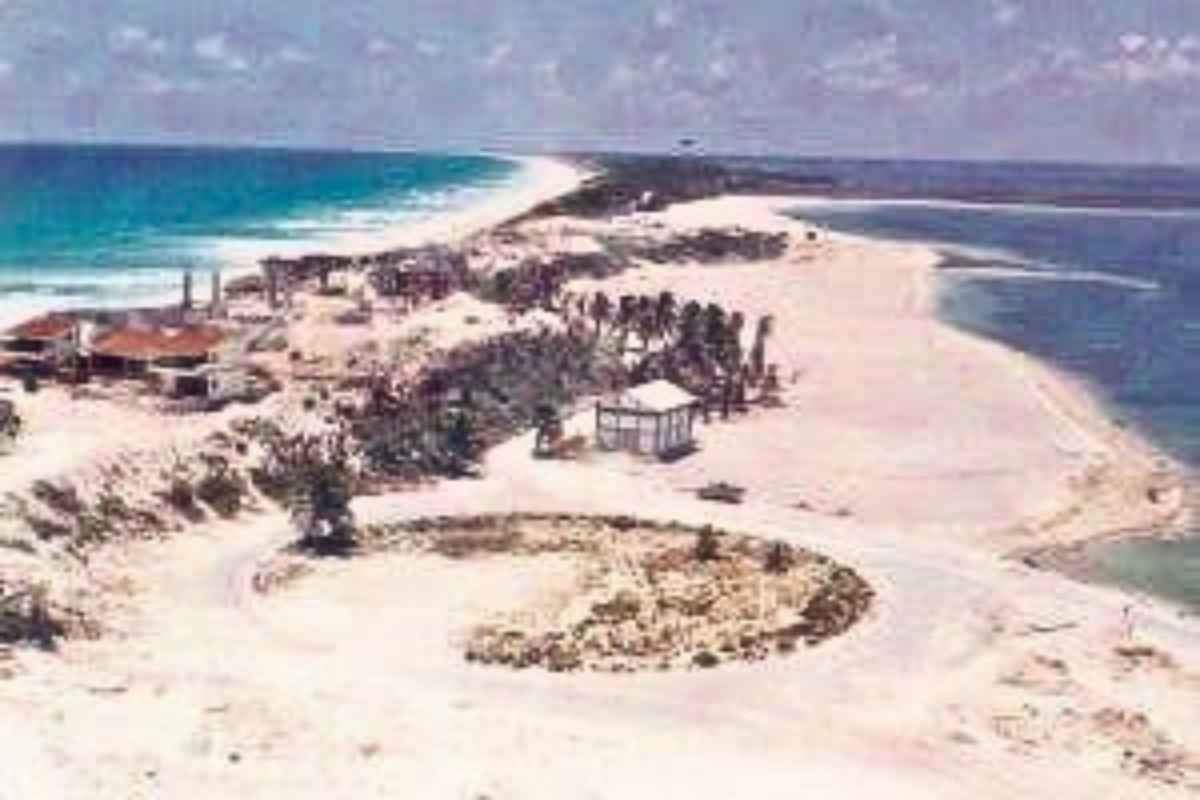
Cancún, Quintana Roo — The Cancún Architects College (Colegio de Arquitectos de Cancún A.C.) marked its 50th anniversary on Friday, five decades after a group of professionals founded the organization to address the rapid, unregulated construction of the nascent city.
The anniversary was celebrated at the National Library of the Chronicle in Cancún with the presentation of the commemorative book Construir Cancún, which documents the institutional, graphic and technical memory of the city’s development from its earliest layouts, and a panel discussion on the urban evolution and architectural challenges of Benito Juárez municipality.
During the ceremony, the college honored Ricardo Horacio Lujambio González, a member of the original group that signed the college’s first founding charter in 1975. Upon receiving the tribute, the founding architect asked for a minute of silence in memory of deceased colleagues who helped build the organization.
Building Cancún with Dynamite
Lujambio González recalled that he arrived in the area hired by the National Tourism Development Fund (Fonatur) to lead hotel infrastructure works and the first residential neighborhoods. “Being an architect back then was a titanic and very dangerous job; to drill through the rocky ground and install the main drainage network we had to clear the way using dynamite,” he said.
The founder explained that the college was born from the urgency to organize, gain institutional recognition and advise the newly created Benito Juárez municipal government in drafting the first building rules and regulations, thus laying the foundations for local urban planning.
Guillermo Alberto Villarreal Zarco, the college’s current president for 2026-2027, recalled that the organization went through complex periods, including a decade of inactivity after its initial founding and ten years without its own headquarters.
Villarreal Zarco stressed that Cancún’s vertical and horizontal growth must prioritize sustainability, care for the natural environment and ecological conservation as essential conditions to guarantee the structural safety of buildings and improve residents’ quality of life.
Cancún’s Architecture: Climate and Heritage
The panel discussion analyzed the city’s architectural language, marked by the functionalist design of the 1970s and the integration of conceptual elements of Maya culture. Cancún’s official chronicler, Fernando Martí, recalled that until a few years ago the prevailing idea was that the city lacked its own history and architectural value.
That perception has changed following the college’s census of buildings with postmodern value in the founding area. Although the center does not yet have formal designation as a Historic Center due to legal age criteria—it is 50 years short of that status—the guild has taken on tasks of registering and protecting the built heritage of the tourist destination’s first stage.
In coastal and urban areas, architecture also responds to the region’s warm, subhumid climate, which turned traditional palapas built with zapote wood beams into a local hallmark, while buildings such as the Municipal Palace reflect the institutional style of the 1970s, combining tropical vegetation with walls inspired by Maya monumentality.
At the close of the meeting, the architects warned about the risk of delaying action against disorderly expansion and questioned the proliferation of closed, disconnected housing developments—which they called “urban ghettos”—that fragment the social fabric. They reiterated their call for active participation in updating the Urban Development Program (PDU) in coordination with Benito Juárez’s Municipal Institute for Urban Development Planning (IMPLAN).
More Development
- CFE’s Riviera Maya-Valladolid Plant Reaches First Grid Synchronization
- Semarnat Denies Environmental Permits for UX Arena Tulum as Clearing Already Visible
- Luxury Resort Project Overlaps 32,000 Square Meters of Xcacel-Xcacelito Turtle Sanctuary in Tulum
- Xcalak Residents Warn Bridge Collapse Could Cut Off Coastal Community
- Cancún to Reassign Retired Buses to Routes Facing Vehicle Shortages
More Cancun
- Cancún Aims to Sustain Record Property Tax Revenue in 2027 as Collection Shifts to January
- Mexican Caribbean Braces for 12.4% Drop in U.S. Seats This Winter
- Cancún Police Add 320 GPS-Equipped Radios to Boost Response
- PROFEPA Relocates 17 Wild Animals Found in Urban Areas of Quintana Roo and Campeche
- Cancún Taco Festival Brings Flavor and Tradition to Yaxchilán Avenue