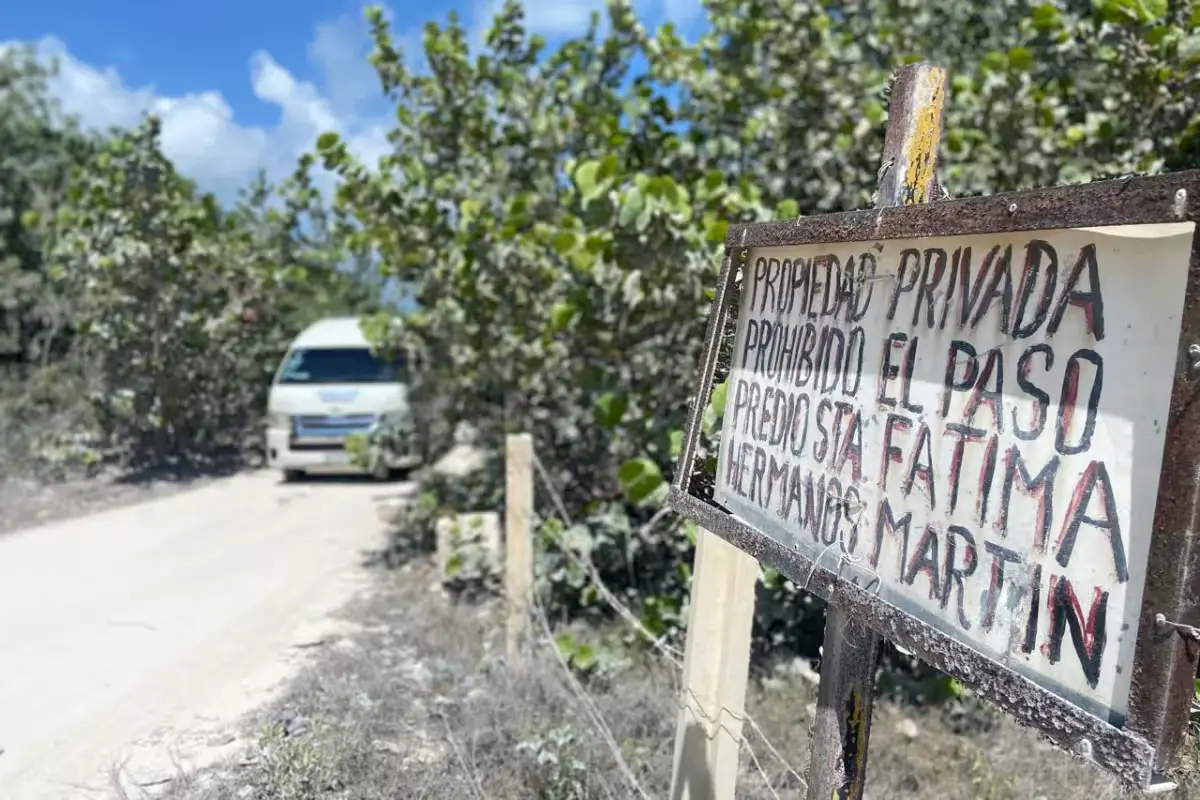
Cancún, Quintana Roo — More than 300 property owners in the Cancún-Isla Blanca tourist expansion zone are denouncing administrative restrictions imposed by the state’s Sustainable Territorial and Urban Development Secretariat (Sedetus), saying they have valid title documents and are preparing a legal defense.
Edson Davison Mendoza, president of the settlers’ organization for the Santa Fátima and Francisco Javier communities, said initial talks with the agency have already begun and that residents are awaiting a follow-up meeting.
Since March, Sedetus has reportedly notified the Public Property Registry and notaries in Quintana Roo to refrain from processing transactions involving the disputed plots, arguing they could be considered “national lands.”
The conflict centers mainly on the Santa Fátima and Francisco Javier parcels, located in a strategic corridor that currently holds more than 11,000 hotel rooms and is projected to expand to 30,000 in the coming years. Housing developments, beach clubs, restaurants, and other commercial projects are also advancing in the area, and at least two properties have open investigation files with the Quintana Roo State Prosecutor’s Office.
“We have no uncertainty; we are confident in our property titles,” Davison Mendoza said.
He called on authorities to act only against those who may have committed illegal acts, without affecting owners who hold valid documentation. Despite the lack of basic services such as drinking water, drainage, and electricity, residents have used their own resources to maintain access roads, he added.
A meeting with the Secretariat of Agrarian, Territorial and Urban Development (Sedatu) is pending to review the legal status of the plots and seek a solution that provides legal certainty to those who can prove ownership. Davison Mendoza said residents will present documents demonstrating legitimate possession and the years they have been established on the land.
The conflict emerged with the start of construction of the Cancún-Isla Blanca road on the mainland area of Isla Mujeres.
Meanwhile, fishermen near the Chacmuchuc lagoon continue their work. María Esther, a resident who says she has lived in the area for more than 20 years, said “the land problems here go back many years.”
More Government
- Polo strengthens to a Category 5 hurricane off Mexico’s Pacific coast in Record Time
- Quintana Roo Climbs 12 Spots to 9th in Competitiveness Index
- Culture Ministry to Inspect Ceremonial Pole Ahead of Voladores de Papantla Return to Tulum
- Cozumel Launches Rabies Vaccination Drive With 3,000 Free Doses for Pets
- Isla Mujeres Collects Over 160,000 Tons of Waste in Five Years
More Cancun
- Cancún: 3 Kidnappers Get 80-Year Sentences Each
- Erasmo Catarino Nearly Drowns at Cancún Beach, Rescued by Raúl Sandoval
- Three Raids in Playa del Carmen and Cancún Net One Detention and Suspected Drugs
- Cancún Enters Final Year With 2.3 Billion Pesos in Public Works
- Benito Juárez to Regulate Cancún Vacation Rental Boom With New Urban Development Plan