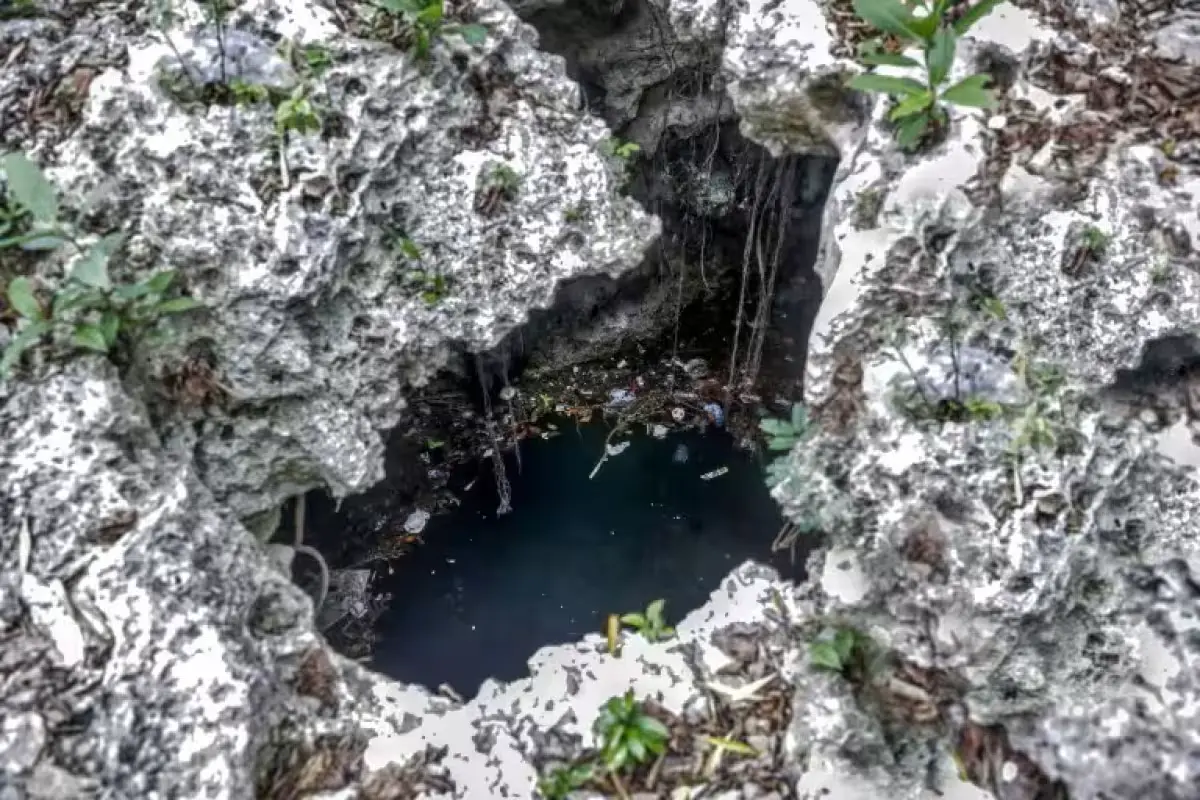
Playa del Carmen, Quintana Roo — Activists and residents of the Luis Donaldo Colosio Murrieta neighborhood are raising alarms over a polluted cenote located along the coastal federal zone, warning that its contamination could spread to nearby coral reefs through the region’s extensive underground river network.
Residents Alan Rivera, David Escudero, and Diana Santos have called on authorities to rescue and preserve the water body, which they say has deteriorated significantly in recent years.
“This cenote used to look clean a few years ago; you could even see small fish. Over time, the water has become murkier and gives off a bad smell. The municipal environmental authorities haven’t implemented any rescue program, not even cleanup drives,” Rivera said.
Activist Cristóbal Carreón explained that cenotes and coral reefs in the Mexican Caribbean are physically connected via extensive subterranean rivers. This interconnection is vital, as cenotes filter freshwater and nutrients into the sea, help protect reefs from erosion, and serve as habitat for migratory species.
Despite the environmental importance of these systems, authorities have shown little interest in their rescue or conservation, Carreón warned. When one of these water bodies becomes contaminated, the damage can spread through the entire underground network.
Carlos Jiménez, another activist, noted that the cenote’s deterioration also impacts coral reefs due to the natural connection between the two ecosystems. Cenotes function as natural nurseries for various fish species, while crustaceans use both cenotes and mangroves as breeding and refuge areas before migrating to the reefs.
David Escudero emphasized that cenotes and mangroves act as natural filters, purifying freshwater before it reaches the sea — a process essential to prevent corals from suffocating. He called restoration a priority.
Diana Santos added that many foreign visitors who reach Playa 72 are surprised to discover the cenote, but lamented that authorities show no interest in recovering it despite its environmental significance.
Residents are urging the creation of an inventory of these cavities to drive recovery and preservation efforts.
More Environment
- Maya Frog and Toad Shell Pendants May Reveal Ancient Trade Routes
- Heavy Rains to Soak Quintana Roo as Unstable Weather Moves In
- Brain-Eating Amoeba Found in Six Artificial Lakes in Mérida; Water Contact Restricted
- Semarnat Approves Artificial Reefs and Sand Relocation for Akumal Hotel
- Chetumal Plans 836 Million Pesos in Stormwater Works to Curb Flooding
More Playa del Carmen
- Playa del Carmen Health Center in Villas del Sol to Close Two Days for Maintenance
- Mara Lezama Delivers 288 Infonavit Homes in Puerto Aventuras as Quintana Roo Targets 76,000
- Playa del Carmen Bars New Developments Without Electrical Investment, Mayor Says
- Student Hospitalized After Alleged Drug Intoxication at Playa del Carmen Middle School
- Selvame MX Calls HAZUL Project With Artificial Beach a ‘Fantasy’ in Playa del Carmen