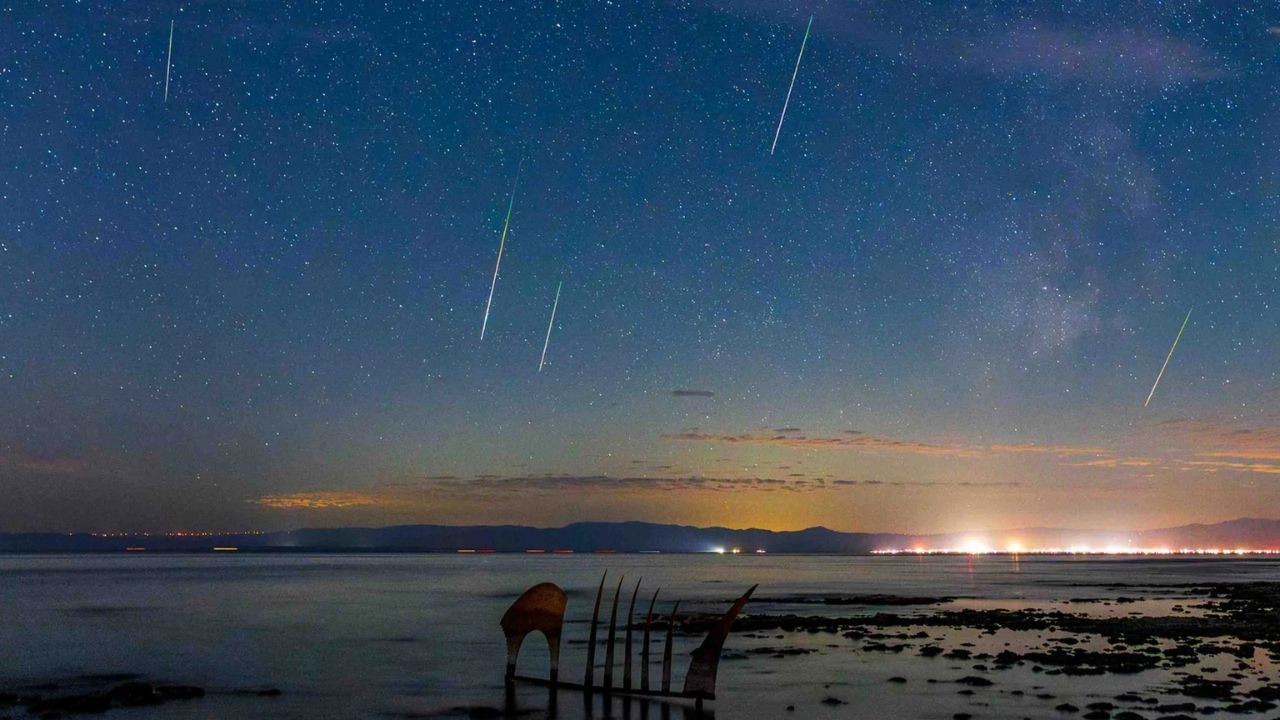
Quintana Roo, Mexico — The Perseid meteor shower, known as the “Tears of St. Lawrence,” will peak over the Mexican Caribbean on the night of Wednesday, Aug. 12, and into the early hours of Thursday, Aug. 13.
This year’s display is expected to be especially vivid, said the Astronomical Society of Quintana Roo (Saqroo). A new moon will leave skies dark and free of natural light pollution, making the meteors visible without any special equipment.
José Jaime Herrera Cortés, president of Saqroo, said the best time to watch is after midnight and before dawn. No telescopes or binoculars are needed, he added.
What causes the Perseids
The shower occurs when debris from comet 109P/Swift-Tuttle enters Earth’s atmosphere and burns up, creating bright streaks across the sky. Herrera Cortés said the particles travel at about 59 kilometers per second — roughly 212,000 km/h. That is fast enough to cover the distance between Cancún and Mexico City in a couple of seconds, he said.
Viewing tips
- Avoid light pollution: Head to beaches or rural areas away from streetlights and urban glow.
- Give your eyes time to adjust: Allow at least 15 to 20 minutes in the dark before looking up.
- Get comfortable: Lie down and scan as much of the sky as possible.
Also in the sky: a solar eclipse
Skywatchers this week will also get a partial view of a total solar eclipse. The path of totality will cross Greenland, Iceland, Russia, and Spain, while parts of North America will see a partial eclipse.
More Events
- Mexican Navy Opens Youth Photography Contest on Ocean Conservation
- Valladolid Hosts Second Edition of La Vid y la Ceiba Wine Festival
- Progreso to Open Historic Muelle de Arcos for Sunset Walk Marking 85 Years
- Seña Fest to Bring Mexican Sign Language Events to Playa del Carmen on Sept. 26
- La Bamba por Playa 2026 Kicks Off With Community Peace Mural in Playa del Carmen
More Quintana Roo
- Quintana Roo Congress Ranks Among Mexico’s Least Transparent
- Riviera Maya Business Groups Push to Block 35.8% Hike in Mexico’s Tourist Entry Fee
- Quintana Roo Climbs 12 Spots to 9th in Competitiveness Index
- Sargassum Collection in Quintana Roo Tops 133,000 Tons, Setting New Record
- Quintana Roo Courts European Airlines to Boost Winter Flights to Cancún