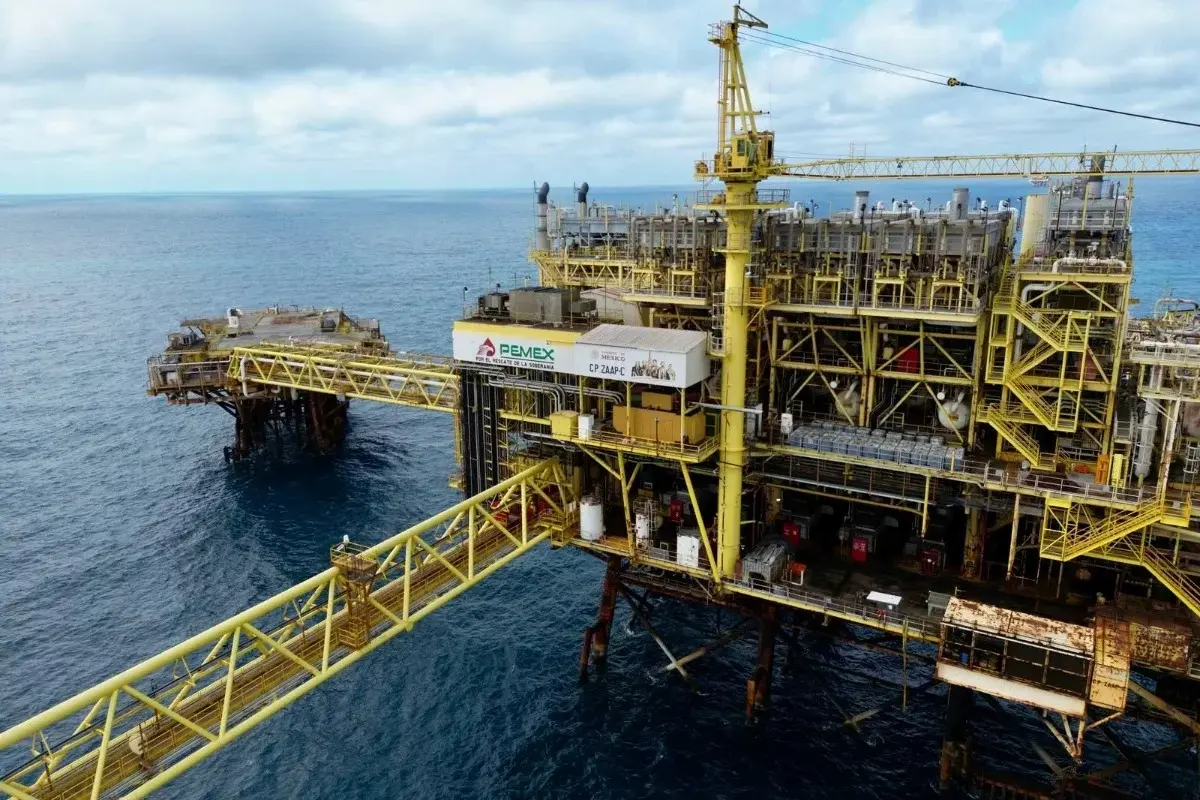
Mexico City — Pemex will need at least $10 billion a year in government support over the next three to five years, and that lifeline could stretch longer unless the state oil company reverses its operating losses and falling production, according to Moody’s Ratings.
Roxana Muñoz, senior vice president of Ratings at Moody’s Ratings, outlined the estimate during the firm’s Inside LatAm: México 2026 event. She said debt maturities act as a “floor” for calculating the company’s budget needs, but that the real figure can run higher because of the deficits generated by its day-to-day operations.
“If there is no operational improvement, we will keep seeing this need for support for longer,” Muñoz said.
Debt Payments Will Climb Again in 2028
After a peak expected in 2026 and several liability-management operations, Pemex’s amortization calendar will ease in 2027. Moody’s estimates maturities of about $4.8 billion that year, before they rise again to roughly $9 billion in 2028.
The rating agency puts Pemex’s adjusted debt at about $97 billion as of June. On top of that, the company carries some $84 billion in pension-related obligations and about $21.5 billion owed to suppliers.
If government support were used to cover maturities without refinancing obligations or taking on new long-term debt, that debt load could fall to about $57 billion by 2030. Even under that scenario, Muñoz said the level would remain high.
The Cost Also Lands on Public Accounts
Cutting Pemex’s debt does not necessarily remove the financial pressure — it may simply shift it to the federal government. Renzo Merino, vice president of Sovereign Risk at Moody’s Ratings, said the way Mexico achieves that adjustment matters greatly for the country’s credit profile.
“If Pemex pays with government transfers, Pemex’s debt falls, but the pressure moves toward the sovereign,” Merino said.
Beyond its financial commitments, Moody’s calculates that the operating deficit the company must cover could average about $10 billion a year through 2028. That need puts daily performance at the center of Pemex’s dependence on the federal budget.
Better Operations Are Key to Cutting the Support
In Muñoz’s view, Pemex’s financial self-sufficiency depends on more than regaining access to markets. The company also has to generate enough cash to meet both its financial obligations and its operating costs.
Several areas remain under pressure. Pemex’s main oil fields are declining at an average annual rate of about 23%, while refining losses could run between $5 billion and $6 billion.
“Self-sufficiency is not just going back to the market, but generating the cash to pay debt and operating expenses,” Muñoz said.
How production, reserves, refining and cash generation evolve will determine how long the recurring government support remains necessary.
More Business
- Playa del Carmen Presses Federal Officials to Halt Wildlife Exploitation Permits
- 22 Hotels in Mexico’s Caribbean Join Dune Restoration Push
- Mexico Proposes 35% Increase in Migration Fee for Visitors With Paid Work
- BBVA México to Open Branches 30 Minutes Later Starting October 5
- Cancún Street Markets See Customers Return in Sign of Economic Recovery