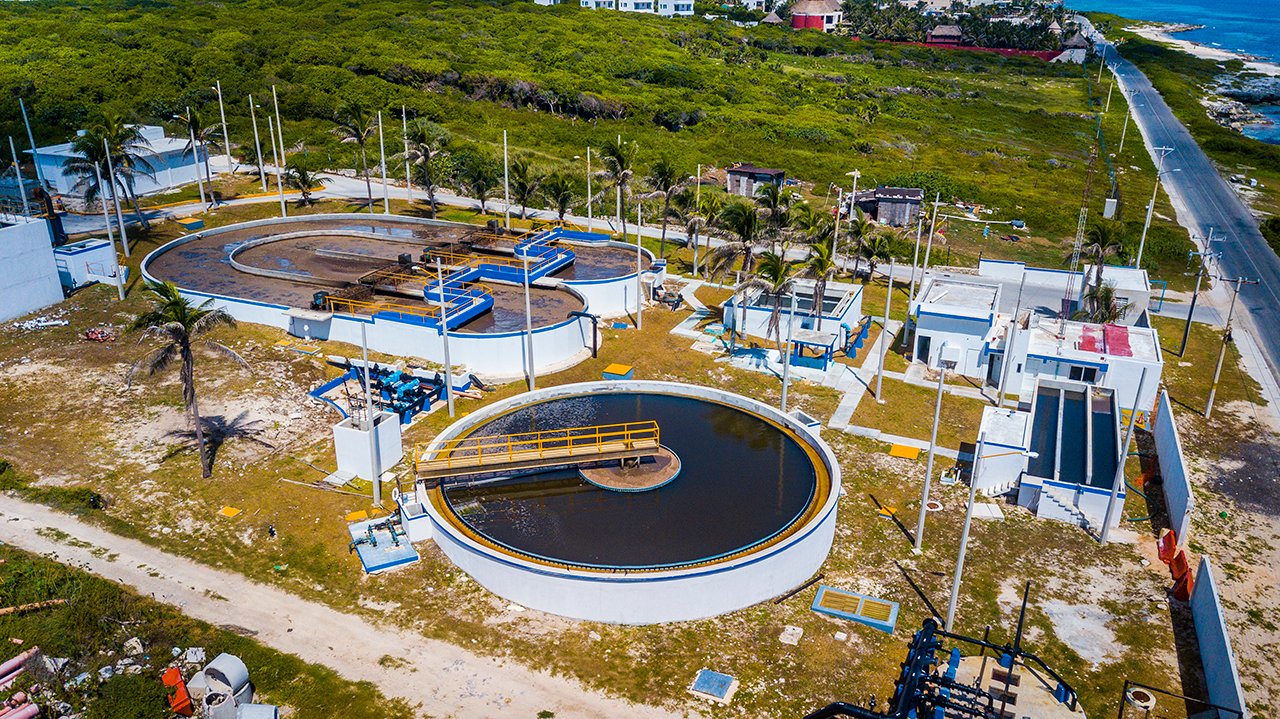
Cancún, Quintana Roo — New projects built in Cancún’s hotel zone should be required to include wastewater pre-treatment systems so they do not overload the collection network now in operation, according to a proposal put forward by the area’s treatment plant operator.
Ricardo Archundia, operational president of Infratur, said the requirement should be established from the planning stage of each project, written into urban development regulations and made a condition for obtaining licenses and the feasibility approvals issued by CAPA, the Drinking Water and Sewerage Commission.
The proposal has already been shared with the relevant agencies, officials said. It has been discussed in working groups and is known among the departments involved.
Existing Plants Have Capacity, but Need Upgrades
Archundia said the three treatment plants now operating in the hotel zone have enough capacity to handle the urban demand generated along the first 17 kilometers of the resort corridor. Even so, he said, their years of service and the volume of water they process make a technological modernization worth studying, potentially including changes to wiring, equipment and other components that need maintenance.
The facilities were taken over with outstanding maintenance needs after they had been operated by Fonatur, the national tourism development fund, and officials are now assessing which interventions would deliver the greatest improvement.
Few emergencies have been reported so far. Some delays in treatment have resulted from failures in the electricity supply, but officials said the plants generally keep running and treatment results remain adequate.
“The plants have the capacity for what we have today. The three plants handle the first 17 kilometers, the highest-density area, perfectly well. Like everything, after so many years and so much water, a change of technology and a modernization is worthwhile,” Archundia said.
Sargassum Project Could Bring New Investment
On new investment tied to treatment plants, he said one of the most important projects currently being developed by the state Environment Department (SEMA) is the so-called Comprehensive Circular Project, whose components include sargassum management, from collection through to the use of the resources that can be extracted from the material. The project also considers potential investment in infrastructure and treatment plants.
One objective under review is whether biogas can be generated from sargassum and other resources, placing the problem within a circular economy model.
Officials said there is a willingness to support the project with whatever technical information is needed, so that adjustments, reinvestments or redesigns can improve collection and the operation of the plants and bring in new technology that would also address other issues, such as sargassum.
More Development
- Scientists Detect Early Signs of Groundwater Contamination in Quintana Roo
- 22 Hotels in Mexico’s Caribbean Join Dune Restoration Push
- Kukulcán Interchange Hits 70% as Cancún Delivery Slips to December
- Quintana Roo Rethinks Tourism Model as Visitor Spending Falls
- Drainage Connection Gap Worsens Pollution of Cenotes and Beaches in Quintana Roo
More Cancun
- Cancún Protesters Demand Answers on Fate of Big Cats Kept by ‘Pepe Tigre’
- Cancún Street Markets See Customers Return in Sign of Economic Recovery
- MOBI Route 27 in Cancún Ends Free Service Monday as Paid Fares Begin Tuesday
- Cancún’s Nichupté Bridge Draws 3,500 for Third Puenteando Nichupté Edition
- Cancún Launches Operation to Protect Blue Land Crabs During Migration to the Sea