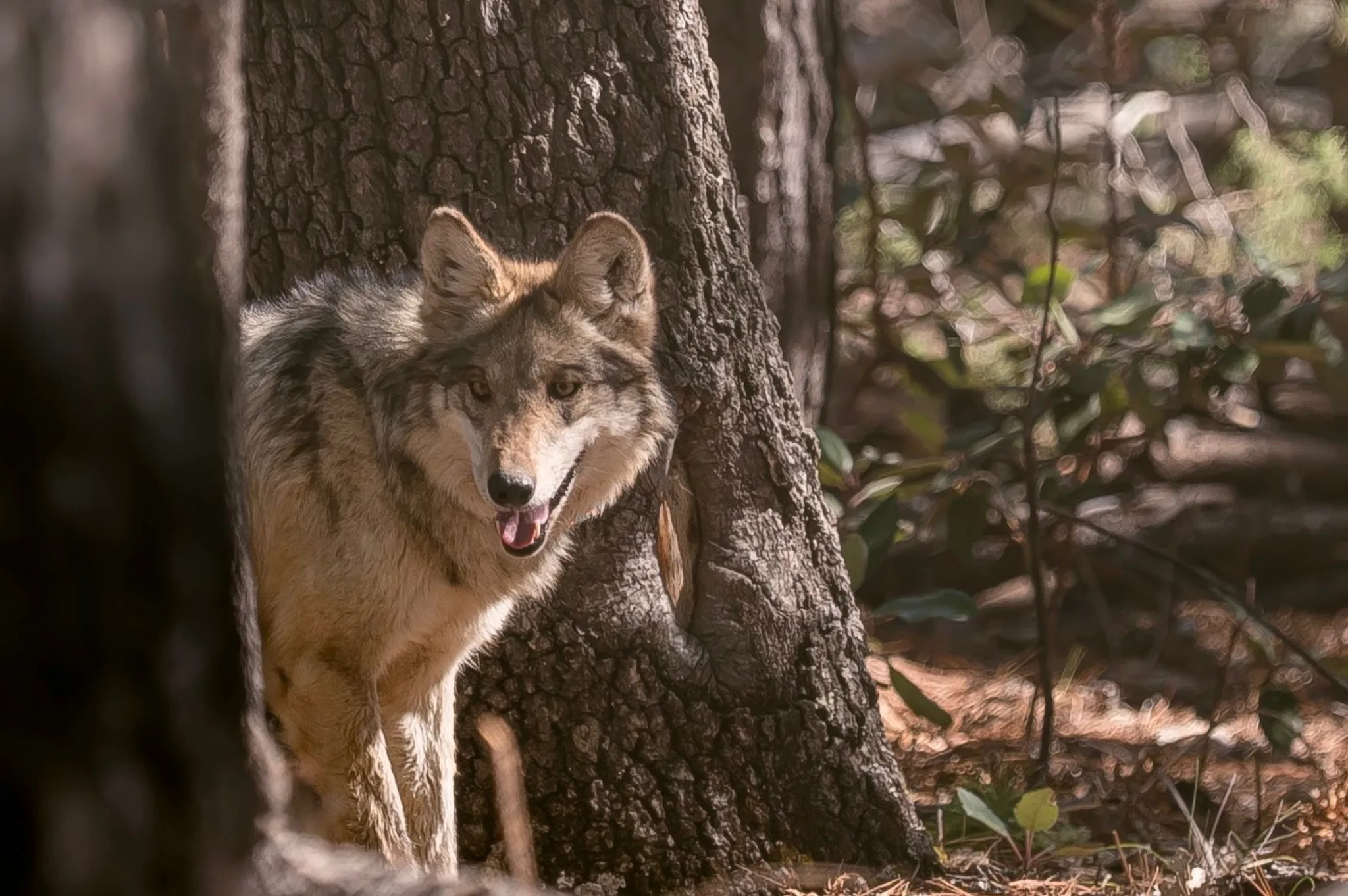
Durango, Mexico — A new pack of Mexican wolves has been successfully reintroduced to the Sierra Madre Occidental in Durango, marking another step in binational efforts to conserve the endangered species.
Marina Robles, Undersecretary of Biodiversity and Environmental Restoration at Mexico’s Environment Ministry (Semarnat), announced that the release involved a family of four wolves: a mother, father, and two eight-month-old male pups. Authorities transported the pack from the United States to Mexico on March 25, releasing them in the forest communities of El Tarahumar and Bajíos del Tarahumar in Santa Catarina de Tepehuanes.
This marks the second wolf transfer to this reintroduction site, following an initial release of four wolves on March 13.
Robles emphasized that the release represents ongoing collaboration between Mexico and the United States to restore the Mexican wolf population in the wild. The species had become extinct in the wild in Mexico before conservation efforts began.
Authorities will monitor the wolf family using satellite radio collars supplemented by field tracking by specialized personnel, allowing them to promptly detect any risks and implement protective measures.
Conservation Success in Mexico City
Separately, conservation efforts in Mexico City have yielded significant results. The city’s Environment Department, through its General Directorate of Zoos and Wildlife Conservation, has contributed to the Binational Mexican Wolf Conservation Program since 1978, with 194 wolf pups born in captivity.
This breeding success helped reclassify the Mexican wolf in 2019 from “probably extinct in the wild” to “endangered,” opening doors to reverse historical wildlife loss.
Following agreements at the 2024 binational recovery meeting in Cincinnati, authorities transferred a genetically valuable breeding pair from Tamatán Zoo in Tamaulipas to the San Juan de Aragón Wildlife Conservation Center in Mexico City. The female wolf has the highest genetic value in the conservation program.
The pair arrived on December 5, 2024, exhibited reproductive behavior in mid-February 2025, and produced four pups (two females and two males) on April 21. Staff first observed the pups outside their den on May 21.
Veterinarians have since vaccinated, dewormed, and conducted health evaluations on the pups, including weight measurements, morphometrics, blood samples, and permanent identification. These births help maintain a healthy, genetically stable future population.
Although the wolf enclosure at San Juan de Aragón isn’t publicly visible, conservation center officials shared the news as a significant achievement for the conservation program. The ultimate goal is to establish a genetically healthy captive population large enough to sustain ongoing wild reintroductions across the species’ historic range.
Discover more from Riviera Maya News & Events
Subscribe to get the latest posts sent to your email.