
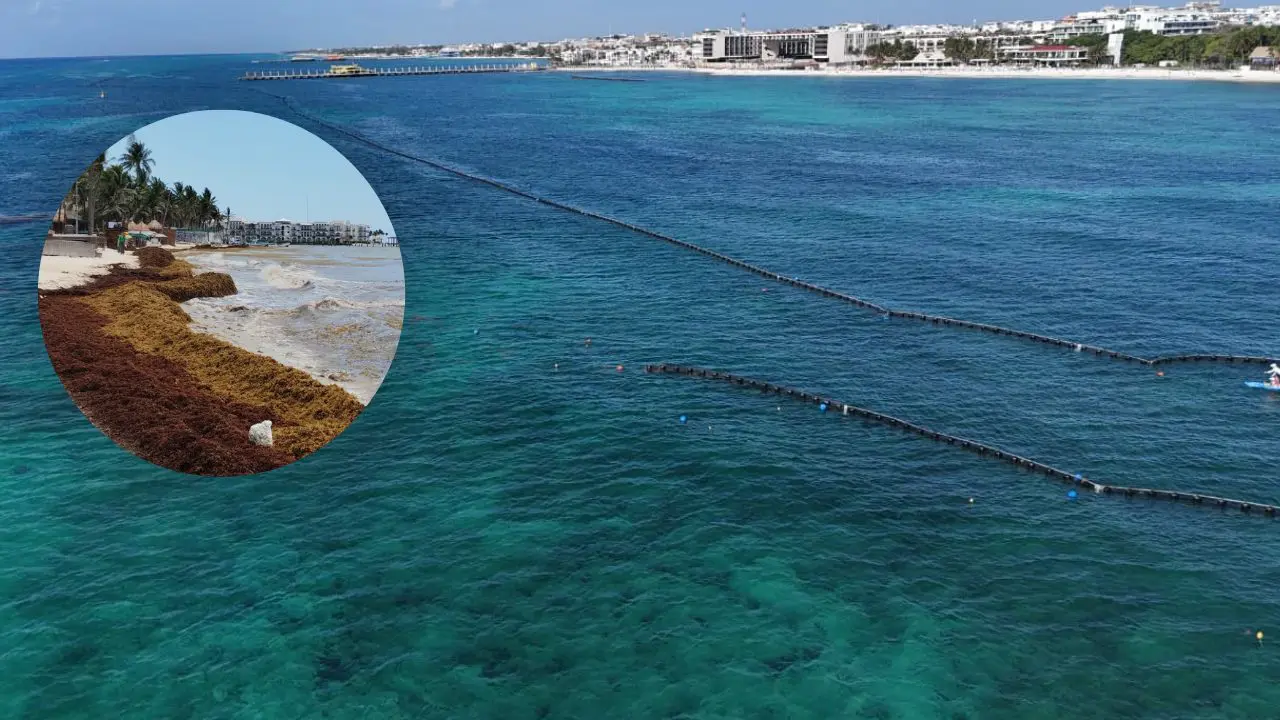
Playa del Carmen, Quintana Roo — Authorities began installing five kilometers of sargassum barriers along the coastline on Wednesday in a coordinated effort between the municipal government, the Mexican Navy (SEMAR), and private businesses. The operation aims to protect beaches along the Mexican Caribbean ahead of peak sargassum season, which typically runs from May through August, though arrivals have become increasingly unpredictable in recent years.
A Growing Regional Challenge
Sargassum has transformed from a seasonal nuisance into a persistent regional issue over the past decade. Since around 2015, massive blooms of the floating brown algae—originating in the Atlantic’s “Great Sargassum Belt”—have inundated coastlines from the Caribbean to West Africa.
In Quintana Roo, heavy influxes in 2018, 2019, and again in recent years have impacted tourism, marine ecosystems, and coastal infrastructure. Once it reaches shore, sargassum decomposes quickly, producing strong odors and affecting both beach conditions and water quality.
This has led to a shift in strategy—from reactive beach cleanup to proactive offshore containment.
Barrier Coverage Area
The containment structures being installed will stretch from Playa Fundadores to Punta Esmeralda, covering one of Playa del Carmen’s most visited beachfront corridors. At the same time, SEMAR is anchoring an additional offshore barrier from the fiscal pier southward to the Constituyentes pier, creating a layered defense designed to intercept sargassum before it reaches the sand.
According to Irving Lili Madrigal, director of the Federal Maritime-Terrestrial Zone (ZOFEMAT), the goal is to reinforce protection across key tourist areas where beach quality is critical to the local economy.
How the Barriers Work
These floating barriers—often referred to as “cortinas antisargazo”—are anchored offshore and designed to guide incoming sargassum toward designated collection points rather than allowing it to disperse along the coastline.
While not a perfect solution, they can significantly reduce the volume that reaches the beach when properly installed and maintained. Openings are intentionally left in strategic locations to allow boat traffic, fishing vessels, and water activities to continue operating without disruption.
Public-Private Effort Expands Coverage
Private businesses have begun installing their own complementary barrier systems, particularly in high-value beachfront zones. Progress has already been reported near Playa 88 at the Paradisus hotel, as well as in front of Reef Coco Beach and the Grand Coral development in the Punta Esmeralda area.
This type of hybrid approach—combining municipal, federal, and private investment—has become increasingly common across the Riviera Maya, especially as resorts seek to protect their beachfronts during peak tourist periods.
Several large resorts throughout the region, including those in Cancún, Puerto Morelos, and Tulum, have deployed independent barrier systems in recent years, often paired with offshore collection boats and daily beach cleanup crews.
Deployment Logistics
Two of the three Mexican Navy vessels assigned to the operation are already in place, with installation progressing northward from Playa Golondrinas. The third vessel is expected to join in the coming days to accelerate deployment.
Officials are working to ensure that barriers are properly secured and aligned with prevailing currents, as poor placement can reduce effectiveness or cause unintended buildup in certain areas.
Puerto Aventuras Plans Taking Shape
In Puerto Aventuras, a separate but related effort is moving forward. Private stakeholders—including hotel operators and residential associations—are expected to install their own barrier system to protect Bahía de Fátima and surrounding coastal areas.
A coordination meeting is scheduled in the coming days to define the scope, placement, and timeline of the project. Based on previous installations in the area, barriers will likely be positioned offshore at the mouth of the bay, where they can intercept sargassum before it enters the marina and beach zones.
Puerto Aventuras has been particularly vulnerable to sargassum accumulation due to its semi-enclosed bay design, which can trap seaweed once it enters. In past years, temporary barriers and manual removal efforts have been used with mixed results, making this more coordinated approach a priority for residents and businesses alike.
Looking Ahead
While no single solution has fully solved the sargassum problem, officials say early deployment of barriers remains one of the most effective tools available to reduce impact.
As forecasts continue to predict another active season, the focus is increasingly on coordination, timing, and maintenance—factors that will determine how well Playa del Carmen and surrounding communities can manage what has become one of the region’s most persistent environmental challenges.
More Environment
- Screwworm Cases Detected in Two Dogs and a Horse in Tulum
- Playa del Carmen Recognized as International Bull Shark Zone
- Five Zones in Playa del Carmen Lose Urban Jungle to Construction Boom
- Hurricane Isaias Strengthens to Category 3 as Heavy Rain Hits Quintana Roo
- Hurricane Isaías to Bring Rain and Heat to Cancún and Playa del Carmen This Weekend
More Playa del Carmen
- Quintana Roo Riders Resume ‘Vest Law’ Talks, No Protests
- Quintana Roo Plans Two Wastewater Plants and Two Aqueducts for Cancún and Playa del Carmen
- Playa del Carmen Ranks Second in HIV Cases in Quintana Roo, Official Says
- Playa del Carmen to Build Tactical Operations Center to Boost Fifth Avenue Security
- Environmentalists Submit Citizen Initiative to Protect Playa del Carmen’s Chen Zubul Site From Submarine Power Line
