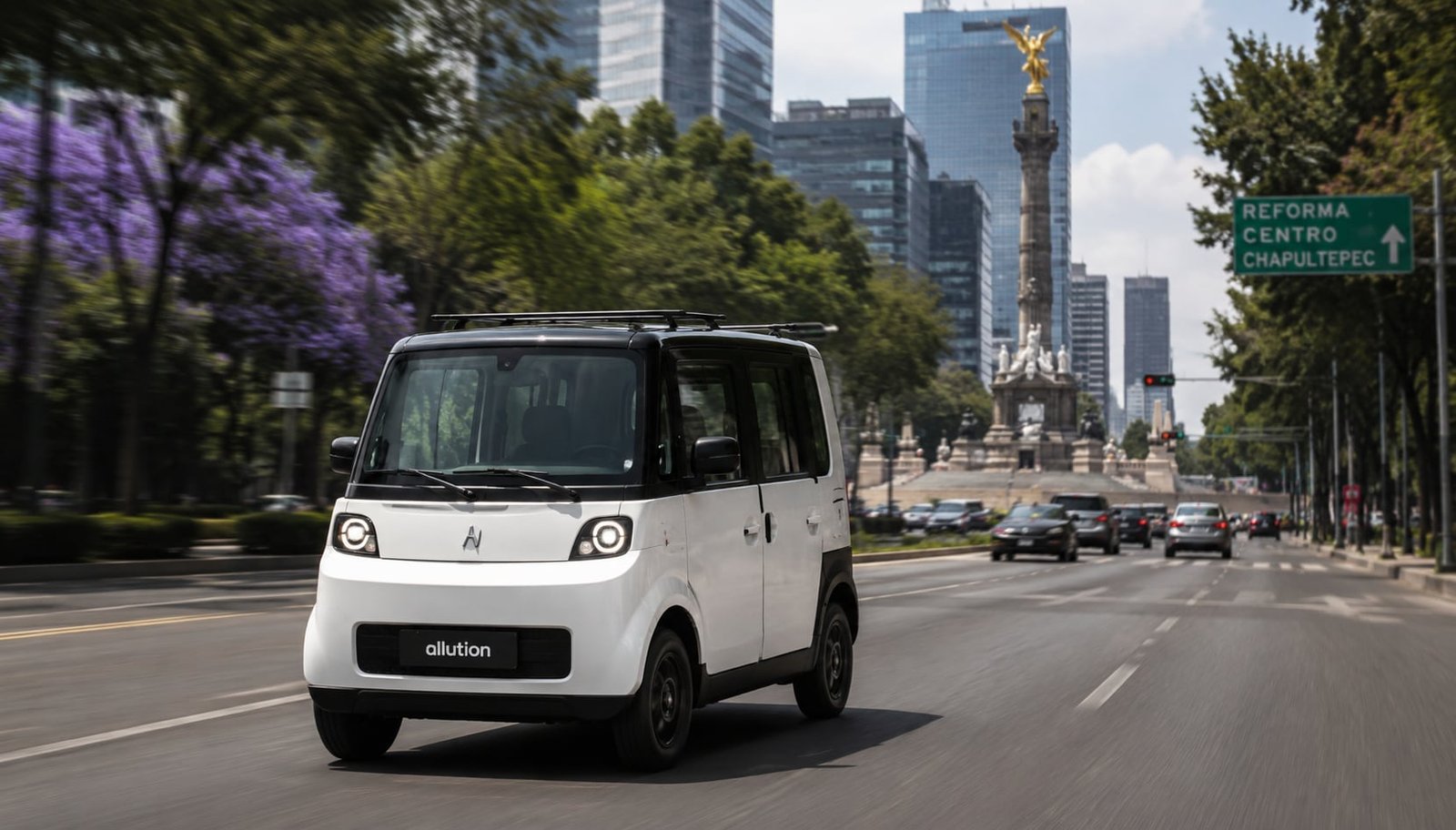
Mexico City — President Claudia Sheinbaum presented the first video preview of Olinia, Mexico’s homegrown electric vehicle project, during her morning press conference on May 13, 2026. The project, first announced in January 2025, aims to produce a 100% electric vehicle entirely in Mexico.
According to Roberto Capuano Trippel, director of the Olinia project, the vehicle has entered an advanced development phase. After approximately 18 months since its initial announcement, Olinia now has a functional physical prototype.
Pricing and Models
One of the most ambitious aspects of the project is its price. Olinia aims to offer electric vehicles at costs comparable to a motorcycle, potentially making electric mobility accessible to many Mexicans. The estimated price range is between 90,000 and 150,000 Mexican pesos (approximately $4,500 to $7,500 USD).
The project plans to achieve this through a modular multi-purpose platform. Three types of electric vehicles are envisioned, all designed for everyday urban mobility:
- Personal mobility: Targeting current motorcycle users.
- Neighborhood mobility: A more efficient alternative for local taxis, mototaxis, and short-distance transport.
- Last-mile deliveries: For urban delivery and short-distance goods transport within cities.
These models would share components, structure, and production systems, reducing manufacturing costs and optimizing resources — a strategy used by international manufacturers for years, now applied to a Mexican-developed project.
Launch Timeline
The official prototype presentation is scheduled for June 7, 2026, coinciding with the World Cup excitement. However, this is only the prototype. Trippel stated that production is expected to begin in 2027, with sales starting after an estimated 12 to 15 months.
The plant aims for an initial capacity of 20,000 units in the first stage, eventually reaching up to 50,000 units.
More Lifestyle
- Taco Social Run to Bring Recreation, Live Music and Street Tacos to Cancún’s Avenida Yaxchilán
- Playa del Carmen to Renew Eight Blue Flag Beach Certifications, Eyes Two More
- Cancún Sets October Dates for Free Dog and Cat Sterilization Clinics
- Quintana Roo Governor Urges Youth to Help Draft New Rights Law
- Playa del Carmen Reviews Parking Meter Concession Over Alleged Violations