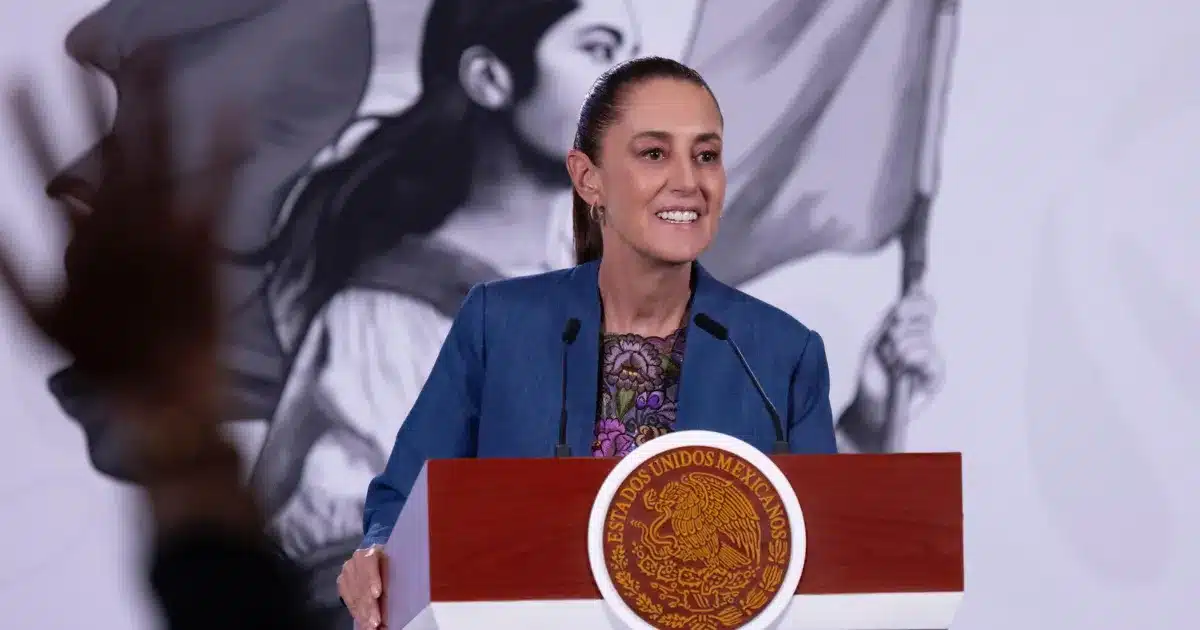
Mexico City — President Claudia Sheinbaum announced Wednesday that Mexico has recorded a 49% reduction in intentional homicides from September 2024 to May 2026, citing the work of the security cabinet and the National Security Strategy.
The daily average of homicides fell from 86.9 in September 2024 to 44.3 in May 2026, according to preliminary figures presented at the president’s morning press conference.
“The 49% reduction in homicides is the result of permanent, rigorous, professional and honest work by the Security Cabinet in coordination with other institutions and the states,” Sheinbaum said. “What matters to us is building peace in Mexico, which means reducing crime through attention to root causes and zero impunity.”
Sheinbaum said the National Security Strategy has led to the dismantling of nearly 2,400 clandestine laboratories and concentration areas, the seizure of more than 400 tons of drugs, and a 76% reduction in fentanyl seizures at the U.S. border — from 863 kilograms to 208 kilograms between October 2024 and April 2026, according to U.S. Customs and Border Protection data.
Authorities have arrested approximately 54,300 alleged criminals and 85 current or former public officials, including six mayors in office at the time of arrest. Through the “Attention to Causes” program, 6,798 young people have been integrated into education, employment, sports and culture.
Security Secretary Omar García Harfuch detailed that the decline in homicides is linked to the consolidation of the National Guard with a historic investment of more than 600 barracks nationwide and 120,000 personnel deployed. He noted that 4,600 alert cards have been issued, and 92 high-priority targets have been transferred to the United States in three operations between August 2025 and January 2026.
Nearly 30,000 firearms have been seized, 78% of which originated in the United States. The Financial Intelligence Unit has added 1,422 individuals to the blocked persons list, freezing more than 4 billion pesos.
Harfuch reported sustained reductions in the daily average of homicide victims in several states: Guanajuato down 68.5% from February 2025; State of Mexico down 60.6%; Jalisco down 50%; Nuevo León down 77.1% from September 2024; Guerrero down 60.6% from October 2024; Michoacán down 51.2% from January 2025; Chihuahua down 57.4% from September 2025; and Morelos down 62.8% from November 2024.
In Sinaloa, where the strategy was reinforced, homicides fell nearly 45%, with 2,500 arrests, 5,500 firearms seized, more than 1 million rounds of ammunition, 68,000 kilograms of drugs, and 2,000 laboratories dismantled. The UIF blocked 1,200 accounts and added 145 individuals to the blocked list.
Defense Secretary General Ricardo Trevilla Trejo said 107,000 army and National Guard personnel are deployed nationwide, including 13,344 in Sinaloa, 10,804 in Guerrero, 6,822 in Michoacán, 6,140 in Chihuahua, 4,840 in Baja California, 5,720 in the State of Mexico and 6,082 in Jalisco. Since October 1, 2024, 91 generals, 506 chiefs, 4,069 officers and 35,000 troops have been assigned to the National Guard.
Navy Secretary Admiral Raymundo Pedro Morales Ángeles reported 79,204 naval personnel deployed, supported by 130 ships, 121 boats, 45 helicopters, 47 aircraft, 9 unmanned aerial systems and 99 drones.
Interior Secretary Rosa Icela Rodríguez Velázquez said the “Attention to Causes” program has provided 6.6 million services and procedures, expanded educational infrastructure to offer 200,000 new high school places, enrolled 17,829 young people in scholarship programs, and engaged 691,000 youth in sports activities. Nearly 3 million young people have participated in peace workshops, and more than 10,000 firearms have been voluntarily surrendered through the “Yes to Disarmament, Yes to Peace” program.
More Politics
- Mexico Deputies Approve 2027 Federal Law of Rights
- Lawmakers Seek to Make Mexican Sign Language Mandatory in Quintana Roo Schools
- Brother-in-Law of Lázaro Cárdenas Mayor Elected to Lead Holbox Ejido
- Estefanía Mercado Files to Seek Morena’s Municipal Coordination in Playa del Carmen
- Electoral Institute of Quintana Roo Opens 152 Jobs Paying Up to 23,000 Pesos a Month