Mexico City — Mexico will hold its Second National Drill of 2026 on Saturday, with seismic alarms set to sound at noon across Mexico City and alert messages pushed to cellphones that have the emergency notification system enabled.
The alert will be broadcast through the more than 28,000 loudspeaker poles operated by the city’s C5 command and control center, and transmitted simultaneously to mobile devices.
What the Drill Will Simulate
In Mexico City, the hypothetical scenario is a magnitude 7.7 earthquake with an epicenter located 15 kilometers southwest of Tehuacán, Puebla.
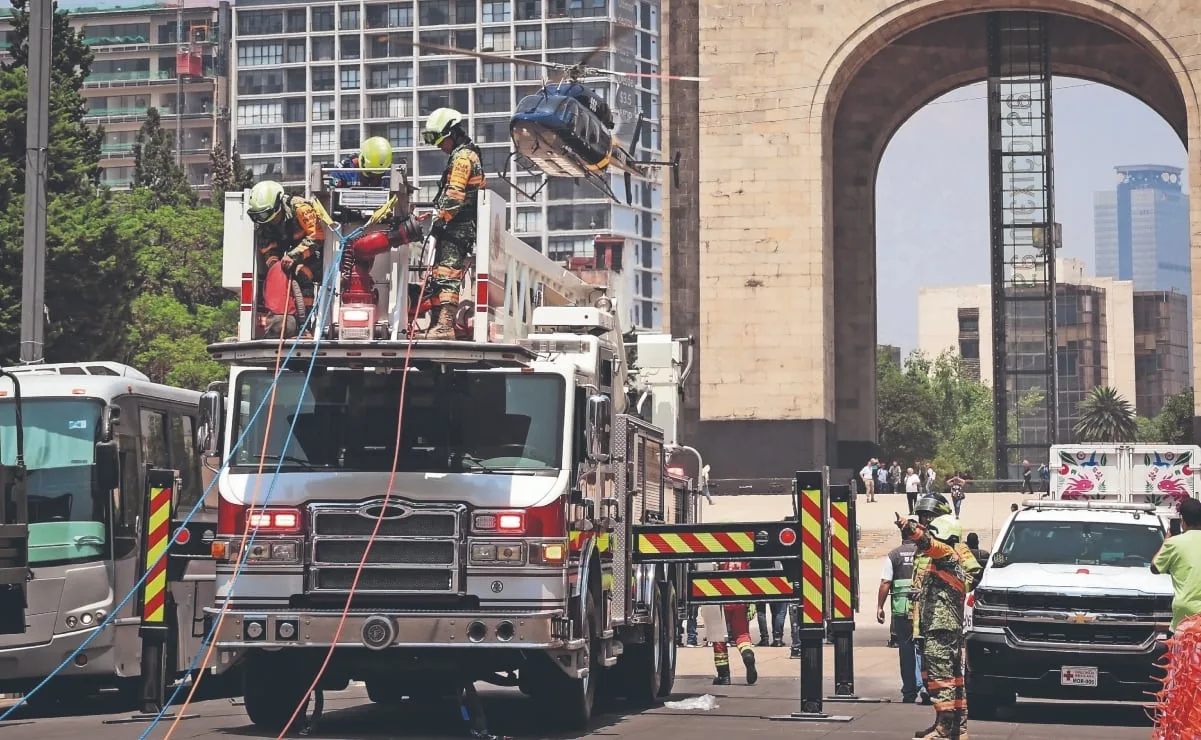
The Secretariat for Comprehensive Risk Management and Civil Protection (SGIRPC) will deploy two main emergency drill sites featuring rescue maneuvers and helicopters: one at the Monumento a la Revolución and, for the first time, a second location in the south of the city at the Deportivo Xochimilco sports complex.
Prevention Training Ahead of the Exercise
On Friday, SGIRPC head Myriam Urzúa and Social Prosecutor’s Office (Prosoc) chief Vladimir Aguilar inaugurated a training session for condominium administrators aimed at strengthening a culture of prevention ahead of Saturday’s drill.
The National Drill is a preventive exercise coordinated by local and federal authorities to assess their response capacity to earthquakes like those that struck the country in 1985 and 2017.
More Government
- Quintana Roo Tightens Rules for Scuba Divers Arriving With Specialized Gear
- Cancún Moves to Regulate Scooters Before They Roll Unchecked
- Puerto Morelos Mayor Accuses Predecessor Laura Fernández Piña of 1.26 Billion-Peso Embezzlement
- Man Arrested in Cancún for Posing as SIRESOL Official in Extortion Scheme
- Rafael Martínez Ruiz Named New Head of Mexico’s Migration Institute in Quintana Roo