Mexico City — A key committee in Mexico’s Chamber of Deputies approved changes to a proposed increase in the Non-Resident Fee (DNR), the charge foreign visitors pay when they enter Mexico without permission to carry out paid work, cutting the proposed 2027 rate to 1,158 pesos from an earlier figure of 1,334 pesos.
The revision lowers the increase originally sought by the federal government but keeps it above the 983 pesos currently in force in 2026. If enacted, the fee would rise by about 17.8 percent — a change with particular weight in Quintana Roo, where the economy depends heavily on international tourism.
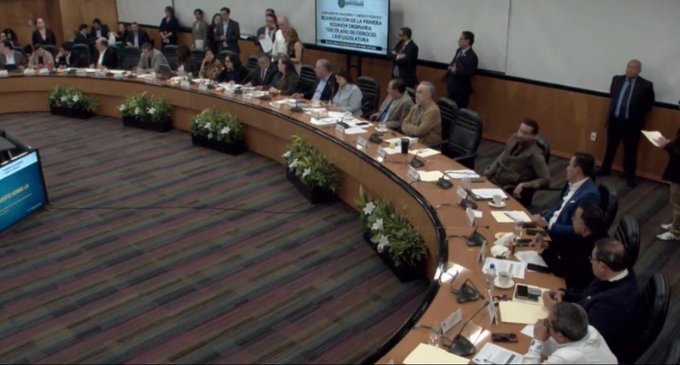
The Finance Committee approved the 2027 Federal Rights Law in general and with modifications, according to reporting by La Jornada. Lawmakers incorporated the DNR adjustment after reviewing proposed amendments with the Finance Ministry. The measure must still complete the legislative process before it can take effect.
The increase represents an added cost for foreign visitors, especially for those arriving by air to destinations such as Cancún, the Riviera Maya and Cozumel, where international tourism is central to economic activity.
The charge should not be confused with a state or municipal tax: it is a federal fee tied to the immigration status of foreign visitors. Its effect on the total cost of a trip will also depend on the traveler’s point of entry and the rules that apply to each type of visitor.
More Revenue for the Tren Maya and the AIFA
One of the approved changes concerns how the revenue collected through the fee is distributed. The original proposal allocated 26 percent to the National Migration Institute (INM), 50 percent to the Defense Ministry and 24 percent to the Federal Treasury.
Under the change endorsed by the committee, the split would become 57 percent for the Defense Ministry trust that administers the Tren Maya and the Felipe Ángeles International Airport (AIFA), 15 percent for the INM and 28 percent for the Treasury.
The shift channels a larger share of the fee’s revenue into the trust linked to both projects while reducing the share previously planned for the migration agency.
For Quintana Roo, where the Tren Maya has been folded into the federal strategy for mobility and tourism development, the debate goes beyond what visitors will pay to include where the money they generate ends up.
The Impact on Mexico’s Caribbean
The adjustment follows concerns raised by tourism industry representatives over the increase initially proposed, which would have raised the fee from 983 pesos to roughly 1,335 pesos, an increase of nearly 36 percent.
The reduction approved in committee moderates that adjustment but does not eliminate the higher cost planned for next year. In a destination that competes with other international sun-and-beach markets, the charge adds to the cost of flights, lodging and other vacation expenses.
The increase alone does not establish that fewer tourists will arrive in Quintana Roo. Measuring that potential effect would require tracking bookings, airfares, hotel occupancy and the performance of the main source markets.
The debate also covers how the revenue is used. The federal proposal calls for financing migration services and other public projects, but the new distribution concentrates a larger share in the trust that administers the Tren Maya and the AIFA rather than directing it primarily to the INM.
The proposal approved by the Finance Committee must still complete the corresponding legislative process. Until that process concludes, the 1,158-peso rate should be treated as the proposed amount for 2027 and not as a charge already in force.
For Quintana Roo, the central questions will be how the increase is justified, what concrete benefits the revenue delivers and how its potential effect on the Mexican Caribbean’s tourism competitiveness is assessed.
More Economy
- Starbucks Exits Tulum: Why the Hotel Zone Is Losing Its Buzz
- Cancún Brings Electricity to Three Popular Neighborhoods With 358 New Meters
- Funeral Services in Cancún Can Top 100,000 Pesos, Workers Say
- Riviera Maya Forum Pushes Caribbean Mexico Toward Regenerative Tourism
- Coparmex Quintana Roo Prepares Businesses for Shorter Workweek
More Quintana Roo
- Researchers Document First Recorded Spawning of Priority Coral Species in Cozumel Reef Park
- Quintana Roo Identifies 780 Irregular Settlements, Prepares Regularization Strategy
- Quintana Roo Lawmaker Proposes Mandatory Child Support Registry Check Before Marriage
- Quintana Roo Prosecutors Search for 10 Missing People, Including Five Minors
- Childhood Obesity in Quintana Roo Up 18.5%, Diabetes Cases Rise