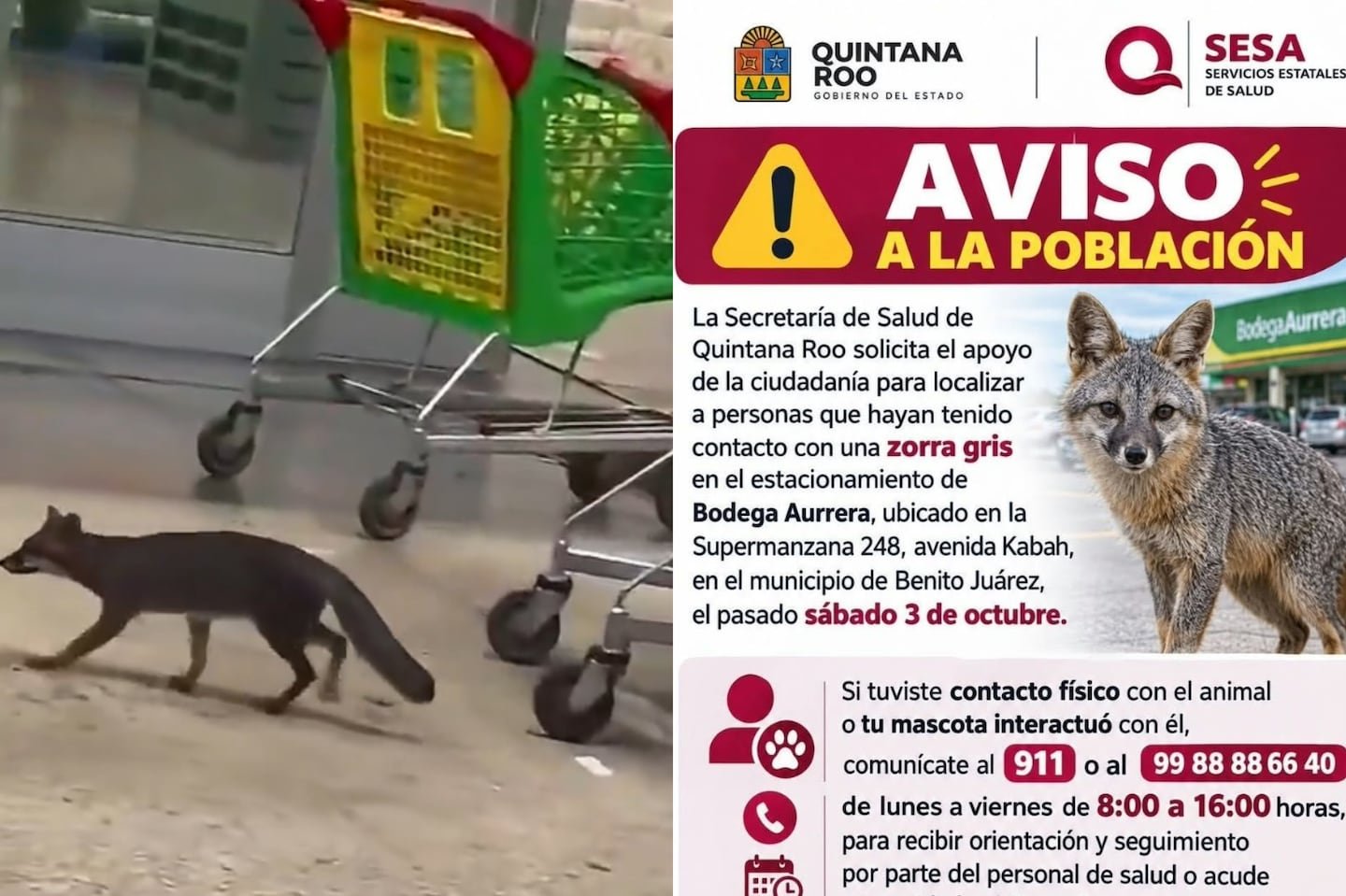
Cancún, Quintana Roo — Health officials in Quintana Roo have confirmed that a gray fox found in a Cancún parking lot was carrying rabies, and they are urging anyone who came into contact with the animal — directly or through a pet — to come forward for medical evaluation.
The Quintana Roo Health Department said the fox was found on Saturday, October 3, in the parking lot of a Bodega Aurrera store on Avenida Kabah, in Supermanzana 248 of Cancún. On Sunday, October 11, the agency issued a public appeal to locate people and pet owners who had contact with the animal, after confirming that it scratched a one-year-old girl.
Officials Seek Anyone Who Touched the Fox
According to state health authorities, the girl suffered a scratch on one finger. She was treated immediately and given a rabies vaccine as a precaution, and officials said she is in good health and out of danger.
Working with the Institute of Biodiversity and Protected Natural Areas of Quintana Roo, authorities captured the fox and transferred it to the Animal Control, Assistance and Zoonosis Center. There it was euthanized so that nervous tissue samples could be collected. The State Public Health Laboratory analyzed the samples and confirmed the presence of the virus.
Health officials said epidemiological surveillance and preventive care remain in place. No human rabies cases linked to the incident have been recorded in Quintana Roo, and the measures follow standard protocols for preventing zoonotic disease.
Why Contact With a Wild Fox Is Dangerous
Rabies is a viral disease that attacks the central nervous system. It spreads mainly through the saliva of an infected animal, via bites, scratches, or contact with open wounds or mucous membranes. Without prompt preventive treatment, the disease is almost always fatal once symptoms appear.
Wild animals such as gray foxes can carry the virus, so any physical contact with wildlife in urban areas is considered a risk and requires immediate medical assessment — without waiting for symptoms to appear.
Why Officials Are Tracking Contacts
Health authorities are working to identify everyone who touched the animal or whose pets interacted with it so they can offer medical guidance, evaluation and, where warranted, a preventive vaccination schedule. Tracing contacts allows officials to apply surveillance protocols, prevent possible transmission and protect public health. The appeal covers both direct contact and indirect contact through pets.
More Lifestyle
- Astrid Hadad Brings ‘Heavy Nopal’ Costume Exhibition to Her Hometown of Chetumal
- Kantunilkín Plant Swap Collects Food for Needy Families in Lázaro Cárdenas
- Playa del Carmen’s Three Public Libraries Draw Over 6,000 Visitors in 2026
- Two Puerto Morelos Schools Certified for Health Promotion and Dengue Prevention
- Isla Mujeres DIF to Host Hearing Care Clinic on Friday
More Cancun
- Cancún Airport Passenger Sentenced to Over Four Years for Smuggling Nearly Six Kilos of Methamphetamine
- Cancun and Tulum Expand Winter Flights with New Routes from Canada, US, and Europe
- Winter Tourism Set to Bring Relief to Mexican Caribbean, With Canada Playing Key Role
- Olimpia Coral and Eufrosina Cruz Share Their Stories at Cancun Panel on Women’s Rights
- Cancún Arrest Ends 18-Month Manhunt in Naucalpan Child Killing