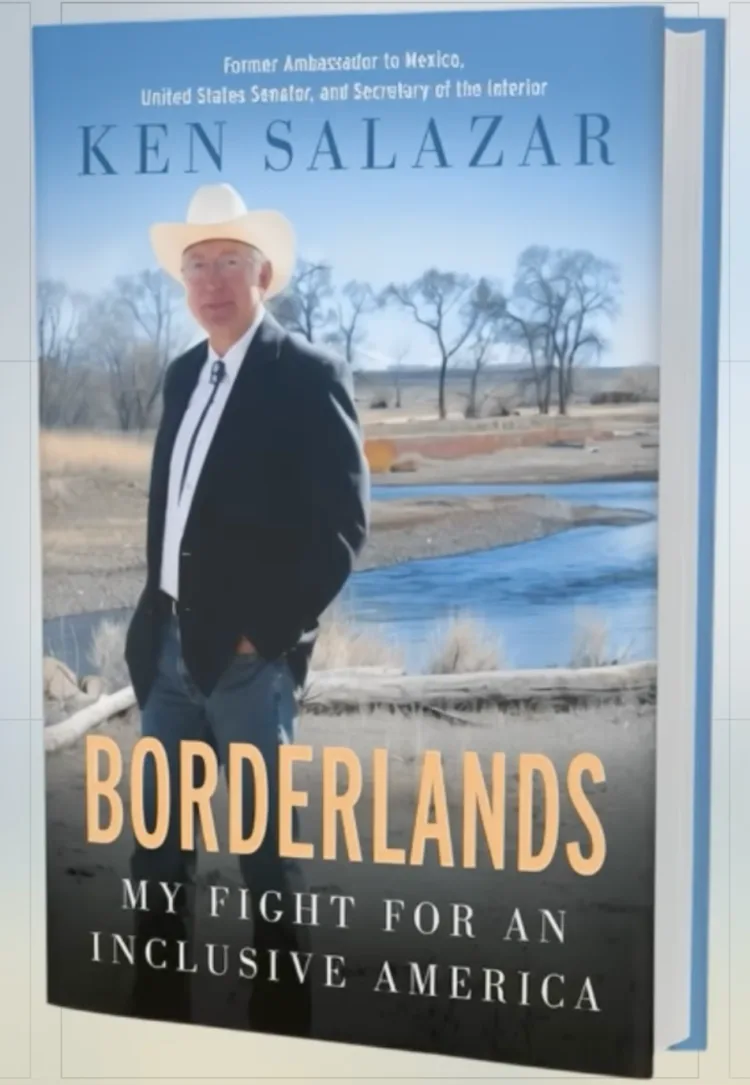
Washington, D.C. — Former U.S. Ambassador to Mexico Ken Salazar has called for a sweeping overhaul of North American cooperation, proposing a “Fifth Transformation” that would include a new trilateral security treaty among Mexico, the United States, and Canada. In a wide-ranging interview with Univision aired Sunday, Salazar also addressed the controversial July 2024 detention of Sinaloa Cartel leader Ismael “El Mayo” Zambada, revealing new details about the diplomatic fallout with Mexico’s then-president Andrés Manuel López Obrador.
Speaking from his ranch in Colorado’s San Luis Valley, Salazar urged the three nations to enter a “new era” of deep integration, arguing that current mechanisms are inadequate to tackle security crises and global market demands. He framed the proposal as an extension of Mexico’s “Fourth Transformation” — the political project of López Obrador — but with a trilateral focus.
Border ‘Broken’ Since 1848
Salazar described the U.S.-Mexico border as “broken” and traced its dysfunction to the 1848 war between the two countries. He noted that after the conflict, nearly a century passed before a U.S. president — Harry S. Truman in 1947 — visited Mexico in a spirit of peace. “The border is broken in many places because neither Mexico nor the United States has given it the attention or priority it deserves,” Salazar said. He called for urgent, coordinated modernization of the 3,000-kilometer frontier, moving beyond divisive rhetoric and wall-building.
New Security Treaty Needed
Pointing to the flow of fentanyl northward and illegal weapons southward, Salazar declared that existing cooperation frameworks have expired. “Without security, there is no prosperity,” he said, linking public safety to democratic and economic viability. His proposed “Fifth Transformation” would be anchored by a binding international security treaty among the three nations, designed to create a “trust alliance” that outlasts changes in government.
USMCA Must Be Long-Term
On trade, Salazar expressed concern over the Trump administration’s push to review the USMCA on an annual basis. He argued that such volatility undermines investment. “A durable framework is what companies need to invest in Mexico and the United States,” he said, recalling that under his tenure, Mexico and the U.S. became each other’s top trading partners.
Inside the ‘El Mayo’ Fallout
Salazar read excerpts from his forthcoming book, Borderlands, detailing the hours after Zambada’s capture on July 25, 2024. He said he sent direct communications to López Obrador and Attorney General Alejandro Gertz Manero that night, and the next day U.S. Attorney General Merrick Garland formally stated: “It was not our plane, not our pilot, not our operation.” Despite offering immediate meetings, Salazar said he received no response from the Mexican president. “The open door I had enjoyed with the president seemed to slam shut,” he recalled.
Regarding the Beechcraft aircraft used to transport Zambada — later displayed at a museum in New Mexico — Salazar denied it belonged to U.S. intelligence agencies. He said the plane was seized by U.S. judicial authorities after landing at Doña Ana Airport and placed on public display solely for historical purposes related to the fight against drug trafficking.
Salazar confirmed that Mexican prosecutors from the Attorney General’s Office crossed the border at Ciudad Juárez to inspect the plane and examine evidence. “We were there to cooperate with them,” he said.
The former ambassador also mentioned a passage in his book about a prominent Mexican businessman — whom he called “the whisperer” — who warned him that López Obrador was deeply concerned about what Zambada might reveal in U.S. courts about alleged political ties. Salazar said he personally had no evidence of such collusion but acknowledged it was a common topic in business and civil circles.
Salazar lamented that what should have been a shared victory against organized crime became a diplomatic rupture, and he called for mutual transparency and institutional cooperation to move toward the “new era” North America needs.
More Politics
- Mexico Deputies Approve 2027 Federal Law of Rights
- Lawmakers Seek to Make Mexican Sign Language Mandatory in Quintana Roo Schools
- Brother-in-Law of Lázaro Cárdenas Mayor Elected to Lead Holbox Ejido
- Estefanía Mercado Files to Seek Morena’s Municipal Coordination in Playa del Carmen
- Electoral Institute of Quintana Roo Opens 152 Jobs Paying Up to 23,000 Pesos a Month