
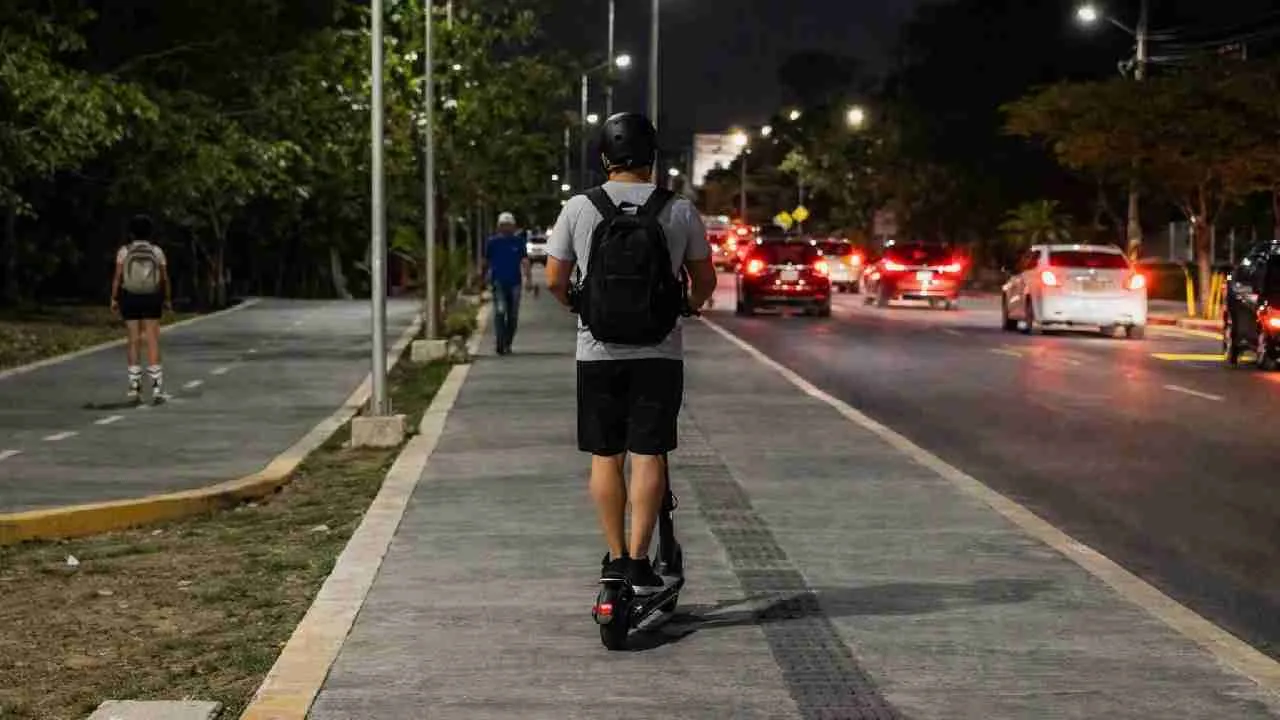
Cancún, Quintana Roo — Officials in Cancún are preparing a regulatory framework for electric scooters, covering the streets where they may circulate, permitted speeds and required safety measures, according to Diana González Toledo, director of Active Mobility at the Municipal Planning Institute (Implan) of Benito Juárez.
González Toledo said the institute is producing technical information so that the authorities responsible for regulation can set criteria suited to local conditions, drawing on the experience of other Mexican and international cities.
“We are not going to implement something that is happening in other cities that does not correspond to the conditions of Cancún, of Benito Juárez; we always look for the best alternative for the city and its residents,” she said.
Technical guidance, not enforcement
The official stressed that Implan is not the body that will issue the rules directly. Its role is to generate recommendations that guide decisions by municipal authorities, she said.
“What we will seek is for the authorities in charge of regulation to have complete information — where it is suggested they travel, how it is done in other cities, what the permitted speeds are, safety measures and so on,” González Toledo said.
She noted that micromobility falls under municipal jurisdiction, meaning elected and appointed officials in Benito Juárez will determine the specific rules for scooters and similar vehicles.
Safety and local conditions
Among the issues under review are which roads are suitable for scooter traffic, speed limits and safety requirements. No timeline has been set for finalizing a specific regulation.
González Toledo said the aim is to move toward micromobility that accounts for both road safety and the particular characteristics of Cancún, as well as to offer accessible and sustainable transport alternatives.
She added that the goal is not to transplant models applied elsewhere automatically, but to analyze which of them could work in Benito Juárez.
More Government
- Quintana Roo Tightens Rules for Scuba Divers Arriving With Specialized Gear
- Puerto Morelos Mayor Accuses Predecessor Laura Fernández Piña of 1.26 Billion-Peso Embezzlement
- Man Arrested in Cancún for Posing as SIRESOL Official in Extortion Scheme
- Rafael Martínez Ruiz Named New Head of Mexico’s Migration Institute in Quintana Roo
- Quintana Roo Regulates Rental Golf Carts With New Inspection Rules
More Cancun
- Cancún Taxi Driver Faces Up to 40 Years in Uber Extortion Case
- New CFE Substation in Cancún’s Polígono Sur to Be Ready in December
- Cancún Airport Logs Just 286 Flights in a Day, Its Lowest Level in Two Decades
- Cancún Restaurant Raided in Human Trafficking Investigation
- Autocar Adds 100 Hybrid Buses to Its Cancún Fleet