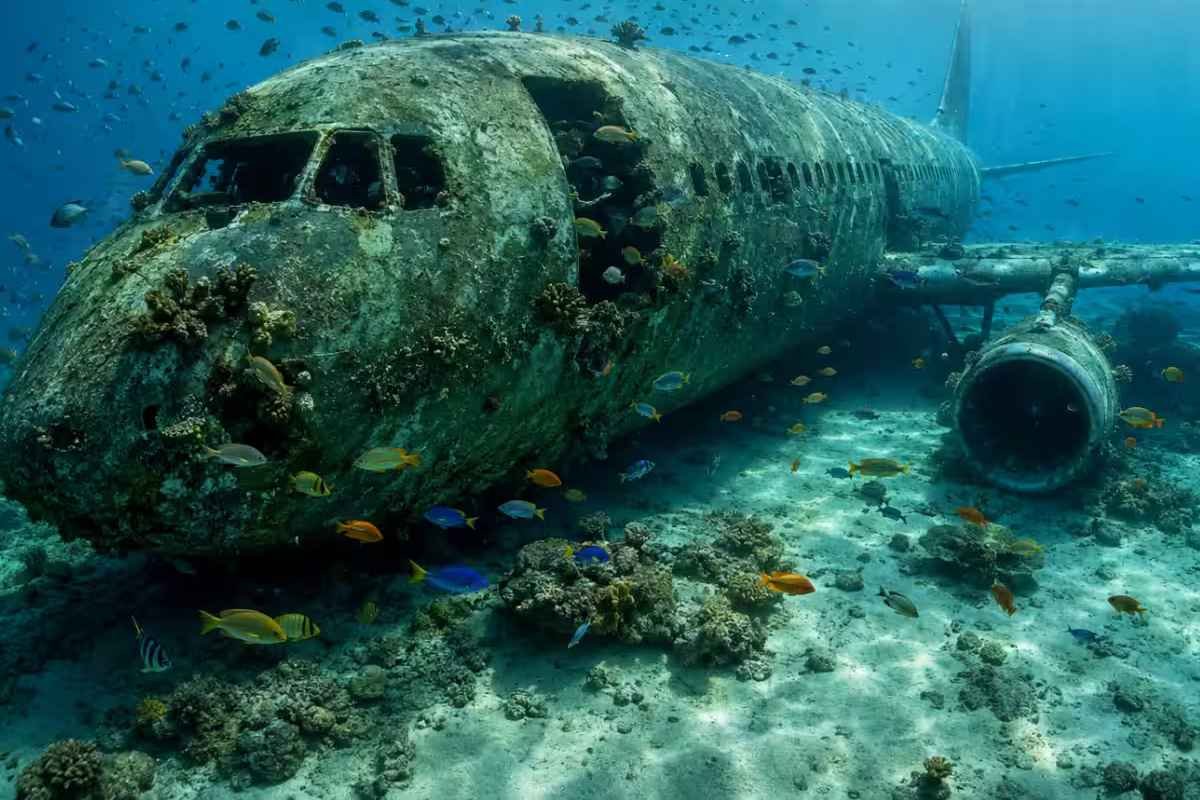
Cancún, Quintana Roo — Nautical operators in Cancún are proposing to sink abandoned small aircraft to build an underwater park, creating artificial reefs that would draw divers away from the region’s stressed natural reef system.
Francisco Fernández, president of the Asociados Náuticos de Quintana Roo, said the idea was raised during the group’s tenth general assembly, where members met with the Benito Juárez municipal Tourism Department, headed by Juan Pablo Zulueta.
According to Fernández, Zulueta told the group that airport operator ASUR has opened the possibility of donating abandoned aircraft so they can be sunk and turned into artificial reefs. The structures would diversify diving activities and create new marine habitat somewhere around Punta Cancún and Punta Nizuc, relieving tourist pressure on the natural reef.
Operators would handle sinking; city would fund transport
The nautical operators said they are willing to take charge of the logistics of sinking the aircraft, but noted that the municipal government would need to provide the funds to move the structures to the drop sites.
An abandoned boat at Playa Langosta could be added to the proposal. The company that owns it, which is linked to one of the association’s members, is reportedly willing to donate the vessel.
The project, which could get under way next year, aims to create artificial habitats where the structures would encourage marine species to reproduce and gather.
Fernández said Cancún has favorable conditions for this kind of project because some areas are close to 10 meters deep, making them ideal for people learning to dive. Destinations such as Playa del Carmen and Cozumel, by contrast, have sites between 15 and 40 meters deep that are aimed at more experienced divers.
Possible locations under consideration include areas off Punta Cancún and behind Isla Mujeres, though no final decision has been made.
Environmental permits already in hand
On environmental approvals, Fernández said the association holds environmental impact authorizations for establishing artificial habitats in areas including Cancún bay, Punta Cancún, Punta Nizuc and Puerto Morelos. Specific scopes would still need to be reviewed and coordinated with authorities before any sinking takes place.
He pointed to a project launched more than a year ago using structures designed as artificial habitats that are already generating life, with coral attaching and growing on them and larger concentrations of fish. Those sites, he said, reduce pressure on natural reefs, citing the Meco site, which draws more than 5,000 visitors, where underwater observation takes place on the artificial structures.
Work is under way on two new artificial habitats, and the association is also weighing whether to take over management of a sunken ship in order to bring order to nautical activities in the area.
The aircraft proposal, Fernández said, emerged at this meeting and is in an early stage of analysis, but it is feasible.
The assembly, the sector’s last of the year, also covered schedules for nautical activities that will be shared with authorities and issues related to sargassum. Officials from Infratur and other agencies took part.
More Environment
- Sian Ka’an Ranked Among Most Flood-Exposed Coasts as NASA Maps Project Sea-Level Rise
- Biologist Calls for Regulation of Chivita Snail Harvesting in Bacalar Lagoon
- IUCN Declares Mesoamerican Reef Critically Endangered
- UIMQROO Researcher Proposes Genetic Study of Dengue, Zika and Chikunguña to Aid Vaccine Research
- Playa del Carmen Keeps Macondo Playacar Permits on Hold After Judge Dismisses Environmentalists’ Injunction
More Cancun
- Quintana Roo Adds Five Hotels to the Michelin Keys 2026 Selection
- ADO’s Pink Caravan Marks 15 Years of Free Breast Cancer Screening in Cancún
- Colombia’s Cancún Consulate Expands Assistance as Demand Grows
- Quintana Roo Police Detain 299 People in One Week of Coordinated Operations
- Quintana Roo Swelters Under 40°C Heat as Stalled Cold Front Brings Isolated Showers