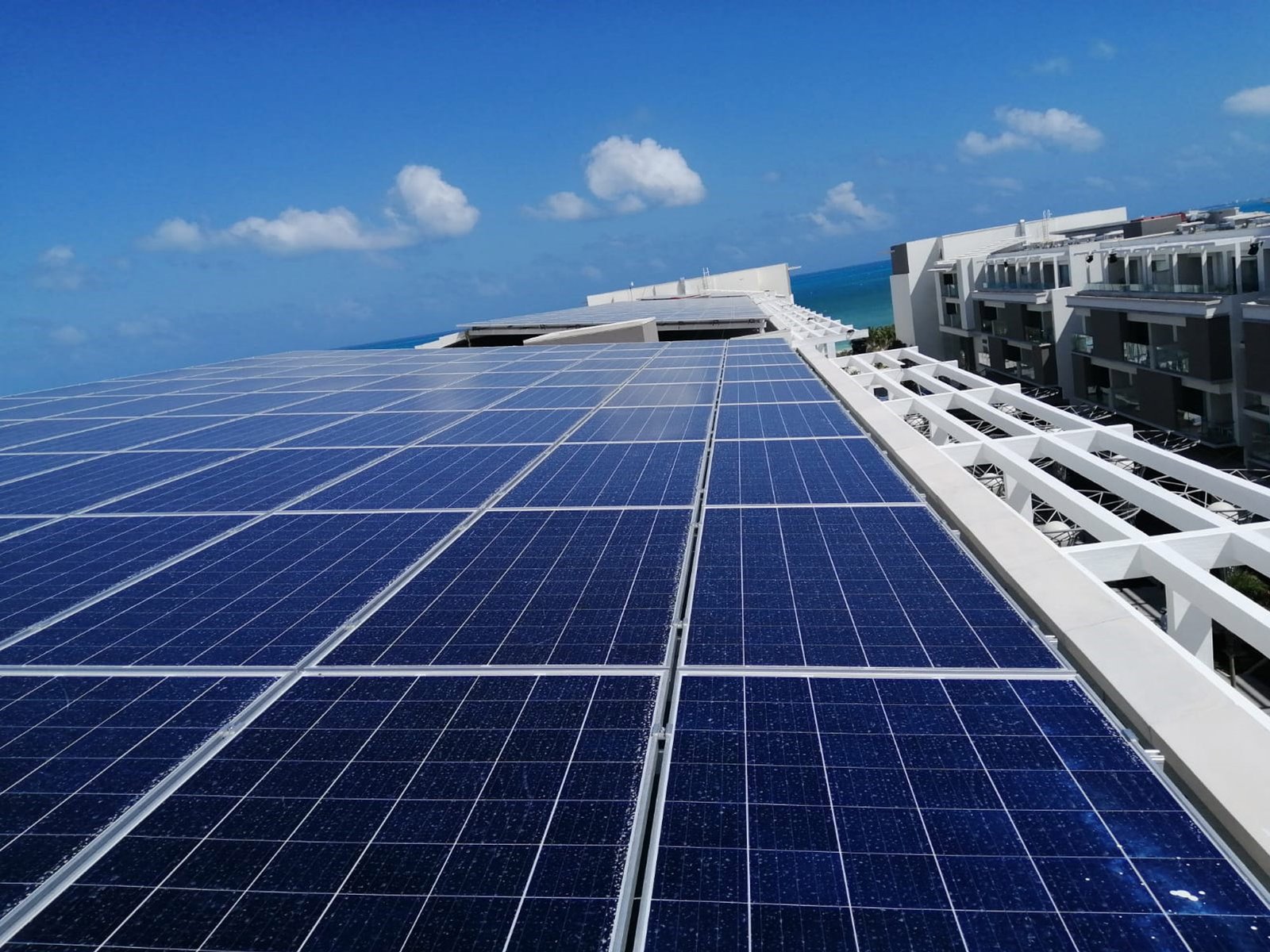
Cancun, Quintana Roo — More than 20 resorts in Cancun and the Riviera Maya are now operating with advanced energy storage systems, representing about 10% of the hotel supply in these destinations, as the region accelerates its clean energy transition.
The hotels, including RIU Palace, Hyatt Ziva Cancun, Hyatt Vivid Playa, Secrets Riviera, and Emporio Cancun, have installed Huawei BESS (Battery Energy Storage System) technology. These smart batteries store energy and discharge it during peak consumption hours, significantly reducing strain on the grid operated by the Federal Electricity Commission (CFE).
Federico Williamson, representative of C&I BESS Business Development Mexico Digital Power Smart PV at Huawei, explained that the capacity charge accounts for approximately 30% of the total CFE electricity bill. “The batteries inject energy during the hours of highest demand,” he said. Huawei generates an annual local investment of $300 million and supports more than 15,000 jobs in Mexico.
Alongside hotel-level storage, the state is pushing larger renewable projects led by the private sector. Artemio Santos Santos, coordinator of the Public Policy Cabinet of Quintana Roo, said federal authorizations from the Energy Secretariat (Sener) and CFE are required for these developments. “We provide the facilities; the private sector develops the projects and provides the capital,” he noted.
The state strategy leverages high solar radiation potential with a regionalized approach: community solar parks in Cancun, Puerto Morelos, and Isla Mujeres; bioenergy projects in the Maya Zone (Felipe Carrillo Puerto and J.M. Morelos); large-scale solar in Othon P. Blanco and Bacalar; and planned solar panel and EV charger installations on public buildings.
The most advanced large-scale project is the Vientos del Caribe wind farm, located in the ejidos of Juan Sarabia and Sergio Butron Casas in southern Quintana Roo. With private investment exceeding $182 million, civil works are underway. Santos Santos said turbine assembly is expected to begin early next year, with an estimated lifespan of 30 years. A photovoltaic park is also being processed in the Laguna Om ejido near Nicolas Bravo.
Other proposals under review include generating energy from ocean currents in the Cozumel Channel by a Spanish firm, and a Turkish floating power plant at Calica, considered only as a temporary support measure. The state is prioritizing a permanent shift to clean infrastructure.
More Business
More Cancun
- Man, 25, Killed Outside Cancun Home; Dog Shot, Suspect Caught
- Cancún Opens Registration for Janal Pixan 2026 Catrina and Altar Contests
- Cancún Launches 2026 Ocular Prosthetics Program With Free Evaluations
- Cancún Council Approves Programs for Caregivers, Students and People With Disabilities
- Study Finds Cancún’s Laguna Manatí Mangrove Could Qualify for Carbon Credits