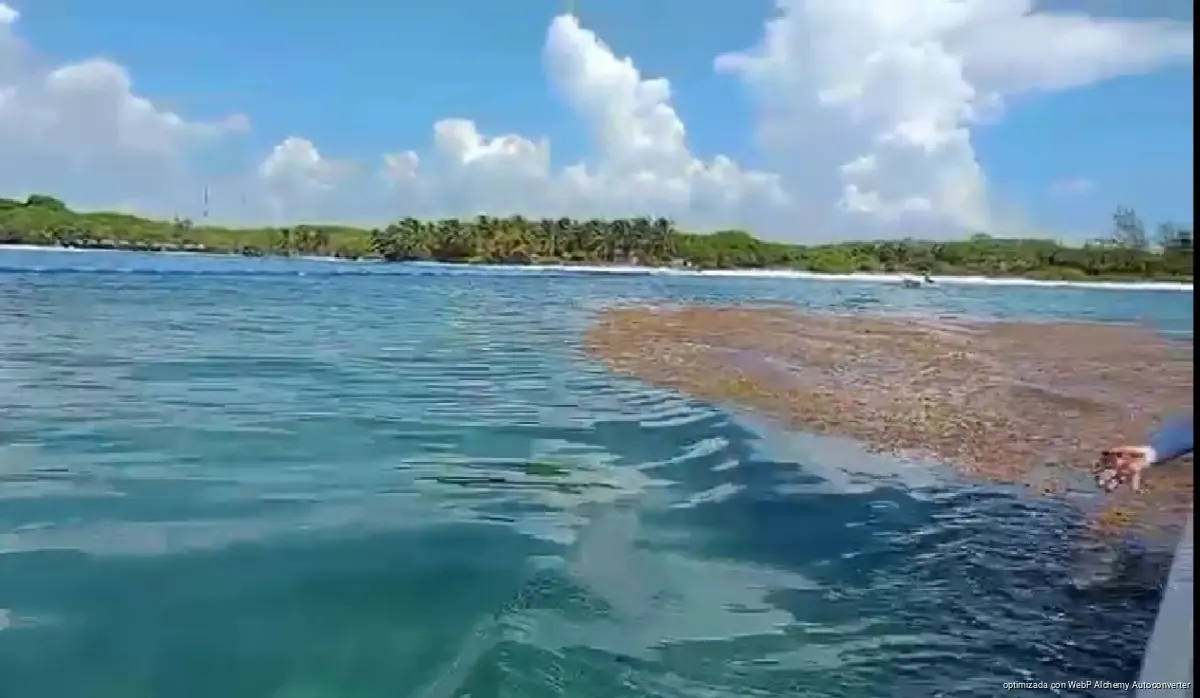
Playa del Carmen, Quintana Roo — Sargassum in Quintana Roo must be handled through industrial processes capable of absorbing tons of the macroalgae every day, given the sheer volumes washing onto Mexico’s Caribbean coast, the head of the local branch of the National Chamber of the Transformation Industry (Canacintra) said.
José Luis Acosta Quiam, president of Canacintra in Playa del Carmen, acknowledged in an interview that projects to turn sargassum into various products have emerged in recent years, but said the challenge is increasing their scale.
“We have to find a way to make use of the sargassum, but on an industrial scale,” he said.
Small Products Cannot Absorb the Volume
Acosta Quiam pointed to the production of items that use only small quantities of the seaweed. “If I end up making candles, how many candles, how much sargassum will I recover in a day? One kilo, two kilos?” he asked.
He said such alternatives can make use of the material but fall far short of the tons arriving on the coast, and called for developing technologies that can convert larger volumes into raw material.
The Canacintra president said the business sector is watching for guidelines from the federal government that would give greater certainty to companies and entrepreneurs interested in using sargassum. He cited a project developed in Puerto Morelos as a reference, and said the response to the phenomenon should have been strengthened years ago, when the influxes began to become a recurring problem for tourist destinations.
Acosta Quiam argued that a solution requires coordination among governments, universities, scientists and companies to develop technology and the conditions for large-scale use. He added that Canacintra remains in contact with companies interested in environmental projects and will keep tracking both new production alternatives and federal rules on handling and using sargassum.
More Environment
- Sargassum Leaves 60 Boats Damaged and Millions in Losses in Playa del Carmen
- Bird Populations Decline in Quintana Roo’s Maya Zone, Academics Warn
- Deer Trapped in Playacar Fence Rescued After Social Media Reports
- Tulum Beaches Recover as Sargassum Arrivals Ease, Cleanup Work Continues
- First Monarch Butterfly of the Season Sighted at Cozumel’s Kuzá Park
More Playa del Carmen
- Playa del Carmen Councilor Pushes for Direct Federal Funds for Indigenous Communities
- Playa del Carmen Adds Lifeguard Stations and Patrol Vehicles as Swimmers Ignore Red Flags
- Playa del Carmen Offers 21,000 Flu Vaccine Doses to Older Adults and Young Children
- Playa del Carmen to Deploy 100 Tourist Police on Quinta Avenida
- Federal Seizure of Playacar ‘Macondo’ Project Exposes Duarte-Linked Developers