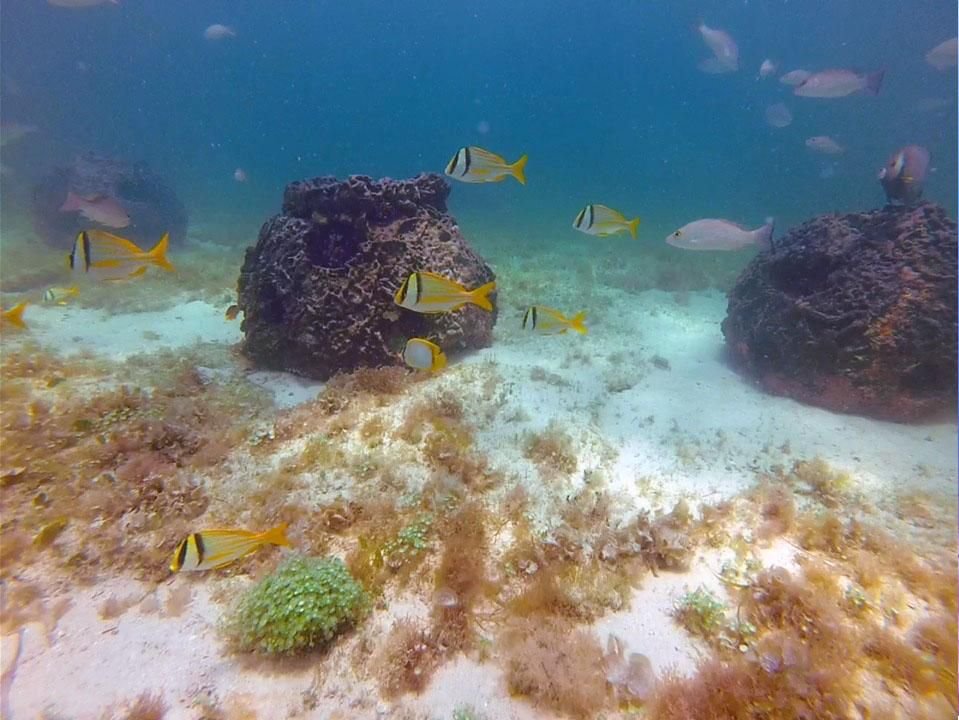
Rio Lagartos, Yucatan — State fisheries and aquaculture authorities have begun installing the first 30 artificial reef structures off the coast of this municipality, launching a long-term initiative to transform the environmental, fishing, and tourism prospects along more than 300 kilometers of Yucatan’s coastline.
According to a report from Yucatan’s Secretariat of Sustainable Fisheries and Aquaculture (Sepasy), the structures were transported and installed three miles (4.82 kilometers) offshore from Rio Lagartos in a pre-studied area to ensure stability and protect the marine ecosystem. The plan calls for a total of 500 “false” bases to be ready by 2030.
Officials estimate that by this summer—between June and September—snorkeling may already be possible in the area as the structures begin to host their first fish species and the natural marine colonization process consolidates.
Sepasy head Lila Frías Castillo said in an interview that the project offers multiple benefits and long-term vision, with participation also from the Secretariat of Sustainable Development.
“Yucatan has 370 kilometers of coastline and 15 fishing ports, giving us a historic opportunity to deploy this artificial reef system along the entire coast,” Frías Castillo said. “It’s not just about the biological benefits these structures bring to marine biodiversity, but also about establishing them as a major tourist attraction and environmental awareness tool for visitors who enjoy the natural wealth that distinguishes our state.”
The initiative aims to install up to 500 artificial reefs by 2030, creating an underwater mountain range to benefit species like grouper, octopus, and lobster, with goals of marine restoration, strengthened fisheries, and ecotourism development.
The project has been described as challenging and deeply social, directly involving coastal communities who participate even in transporting the structures with their own boats.
Frías Castillo noted coordination with the National Commission of Natural Protected Areas (Conanp), as the plan not only supports actions for bioorganisms and ecosystem protection but also represents an effective methodology for tourism conversion and biomass recovery, especially for species under fishing bans.
Mario Massa Alcocer, a representative of service providers in Rio Lagartos, said: “Once mature, the artificial reef will be able to offer snorkeling services, generating new economic benefits for the community.”
Discover more from Riviera Maya News & Events
Subscribe to get the latest posts sent to your email.