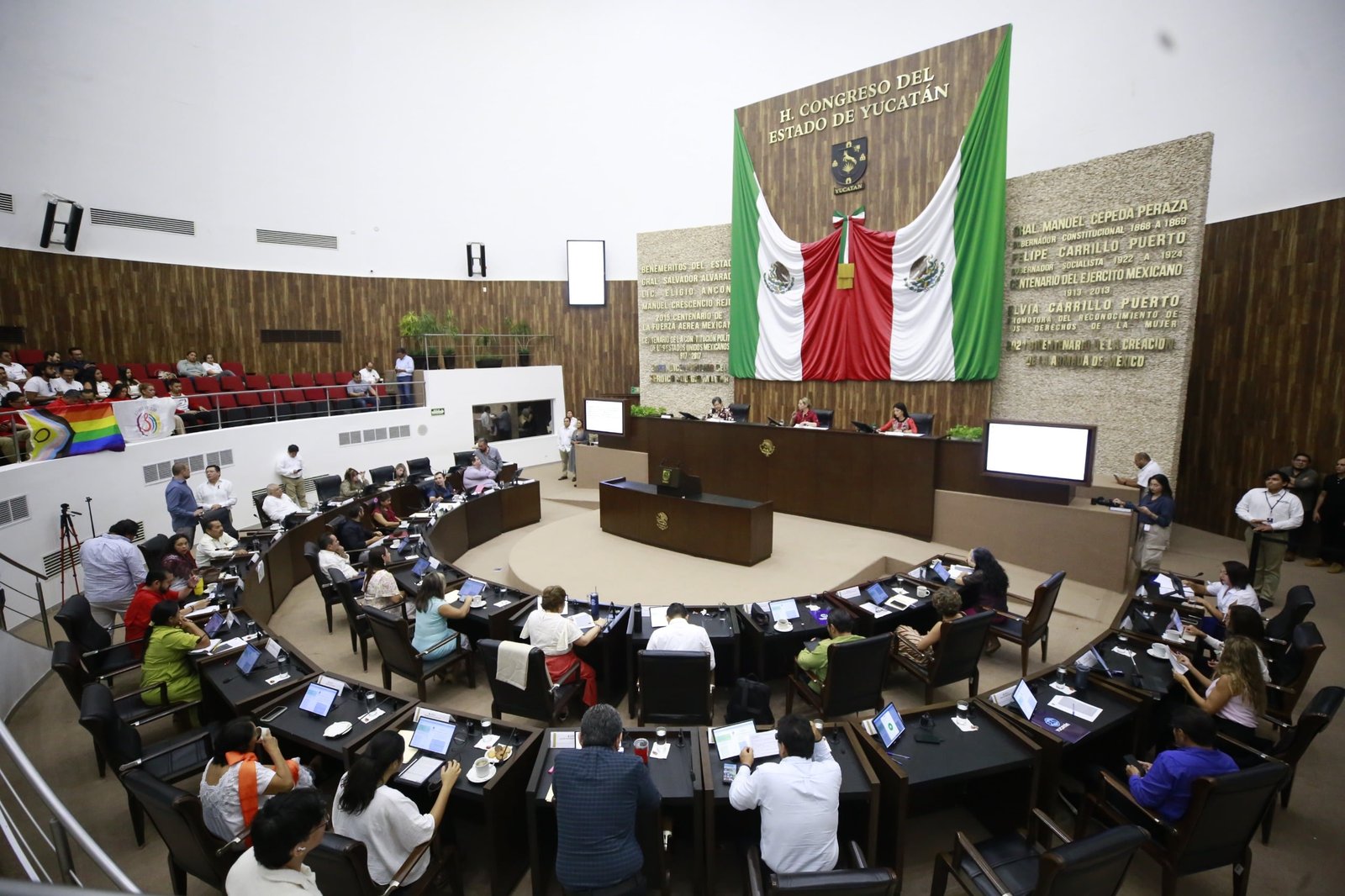
Mérida, Yucatán — The Yucatán Congress voted unanimously to strike the “danger of contagion” offense from the state Penal Code, ending the criminalization of people living with HIV on the basis of their health status.
The approved decree repeals Article 189 of the Penal Code, which defined the crime of danger of contagion, and amends both the Law to Prevent and Eliminate Discrimination in Yucatán and state legislation on the prevention and control of HIV and other sexually transmitted infections. Under the changes, criminal liability must rest on duly proven intentional conduct — not on the fact of living with HIV.
The reform incorporated proposals from the Morena, PRI and PAN caucuses as well as contributions from civil society organizations and collectives that had spent years pushing for legal changes to end discrimination against people living with HIV.
Speaking from the floor, Morena Deputy Clara Paola Rosales Montiel argued that living with HIV is not a crime and should never be grounds for discrimination. She said keeping offenses such as danger of contagion fuels stigma and prejudice and can become a barrier to prevention, testing and health care.
“This is not about ceasing to protect society; it is about protecting it in a more humane way and with a human rights perspective,” she said.
PAN Deputy Itzel Falla Uribe warned that the vote should not mark the end of the process, saying the state must now ensure that people can obtain medication, medical care, privacy and continuity of treatment. She noted that problems with the supply of antiretrovirals and difficulties in accessing health services have been reported this year.
“Rights are guaranteed with budget,” she said, calling for the obligations set out in the reform to be reflected in the 2027 spending budget and translated into available medicines, sufficient staff and uninterrupted treatment.
PRI Deputy Gaspar Quintal Parra said the changes aim to guarantee that people living with HIV receive medical care without prejudice, confidentiality about their diagnosis, job opportunities and dignified treatment. Any criminal liability, he said, must rest on conduct that has been properly established — not on a person’s health status.
“The repeal of the crime of danger of contagion must be consistent with the other provisions of the decree,” he said.
Morena Deputy Bayardo Ojeda Marrufo recalled the stigmatization that gay people faced for decades over their association with HIV and AIDS, and shared a personal experience to illustrate the lack of understanding that once surrounded how the virus is transmitted.
“For more than 40 years we were stigmatized as if being gay meant we already had HIV or AIDS,” Ojeda Marrufo said. He stressed that the reform is a step toward ending the association of HIV with a sexual orientation, noting that anyone can acquire the virus and that medical advances now allow people living with HIV to lead full lives with treatment.
Organizations and activists had for years criticized the offense as a form of criminalization of people living with HIV. Lawmakers said the accompanying reforms are intended to ensure access to health care and dignified treatment free of stigma and discrimination.
Dual Nationals Must Give Up Other Citizenship to Run
In the same session, lawmakers voted 20-15 to approve a measure sent by the federal Congress that amends Mexico’s Constitution on nationality as it applies to who may hold executive office at the federal and state levels.
The reform requires anyone seeking the presidency, a state governorship or the head of government post in Mexico City who holds another nationality to renounce it before applying to register as a candidate. While in office, they may not acquire or apply for another nationality, or invoke one before foreign authorities in cases established by the Constitution.
Forums Planned on Disability Rights
Lawmakers unanimously approved a call for people with disabilities, their families, caregivers, organizations, institutions, civil society and interested citizens to take part in consultation forums on initiatives affecting their rights. The forums will collect proposals on working conditions, accessibility of notary services, inclusion in the public and private sectors, personal assistance, parental leave to accompany medical appointments, student mobility, and official recognition of skills and learning acquired at Multiple Attention Centers, among other topics.
Six forums will be held, all at 9 a.m.: Oct. 8 at the Progreso Higher Technological Institute; Oct. 9 at the Valladolid Higher Technological Institute; Oct. 12 at the Ricardo Palmerín Convention Center in Tekax; Oct. 13 at the Motul Higher Technological Institute; Oct. 15 at the state Congress in Mérida; and Oct. 16 at the Yucatán State Center for Humanist Training, Research and Outreach in Izamal. Participation can be in person, in writing, by email or through the Congress’s website, with accessible formats provided.
Other Initiatives
In general business, Morena Deputy Alba Cristina Cob Cortés introduced a proposal to strengthen Yucatán’s Victims Law and incorporate gender, intercultural and differential approaches across its provisions, expanding comprehensive support through safe spaces, legal advice, psychological and psychiatric care, social assistance and institutional coordination. She said the measure would pay special attention to children and adolescents, women, people with disabilities, Maya speakers, older adults and other groups in particularly vulnerable conditions.
PAN Deputy Marco Antonio Pasos Tec presented an initiative on transparency and traceability of public funds; PAN’s Manuela de Jesús Cocom Bolio proposed a reform to the Penal Code on unlawful occupation of property; Larissa Acosta Escalante of the Citizens’ Movement proposed professionalizing the public administration; and PRI’s Gaspar Armando Quintal Parra introduced a measure to improve accessibility of the state civil protection system for deaf people and those with hearing disabilities.
Congress board president Naomi Raquel Peniche López, of Morena, presented a proposed agreement recognizing the record and social, educational and formative contribution of Scouts in Yucatán for their role in the development of children, adolescents and young people and their promotion of community service, leadership, solidarity, responsibility and teamwork. The proposal was accepted for a second reading.
More Courts
- Mexico’s Senate Approves Animal Welfare Law With Fines up to 229,000 Pesos
- Two Extortionists Sentenced to 22 and 15 Years in Cancún
- Quintana Roo Congress Approves Single-Nationality Rule for Top Elected Offices
- US Lawmakers Press Mexico to Resolve Vulcan Materials’ Calica Dispute
- Mexico’s Senate Approves ‘Anti-Meme’ Law With Five-Year Prison Terms