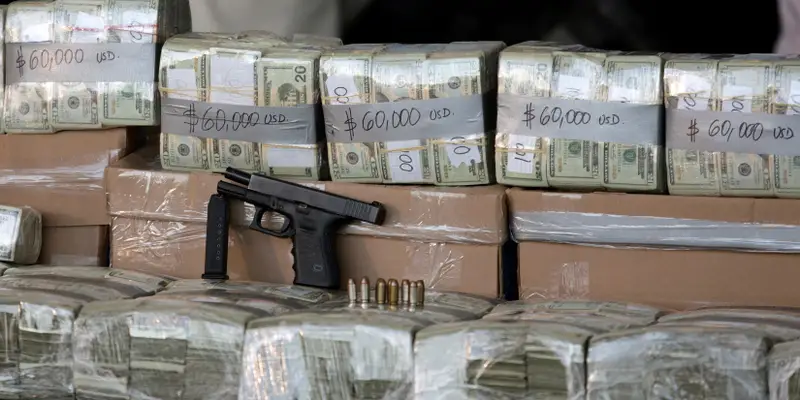
Mexico — The U.S. Justice Department is directing its attention to the financial sources of Mexico’s most violent drug cartels, focusing on financial intermediaries who prosecutors say have adapted to increased law enforcement by channeling drug profits through cryptocurrency from U.S. cities to organized crime leaders.
Recent cases involving four defendants sent from Mexico to the U.S. for prosecution offer a glimpse into the shadowy money laundering networks that allow the Jalisco New Generation Cartel and other violent groups to continue funneling dangerous drugs into American communities. The prosecutions underscore Justice Department efforts to increase pressure on cartels and stay ahead of their constantly evolving tactics to launder money across the border undetected.
By targeting alleged financial intermediaries rather than street-level traffickers, prosecutors say they’re focusing on a critical element they consider essential for cartels to maintain operations as law enforcement pressure increases on more visible drug routes.
“If you cut the money, you hurt the cartels, and that’s what we’re trying to do,” said A. Tysen Duva, the assistant attorney general in charge of the Justice Department’s criminal division, in an interview.
Since the start of President Donald Trump’s second term, the Mexican government has handed over more than 90 high-level defendants linked to cartels in three transfers that are now at the center of a legal debate in Mexico. The defendants were sought by prosecutors for crimes including drug trafficking, human trafficking, and money laundering.
Senior Justice Department officials say transferring cartel figures to the U.S. aims to do more than send a deterrent message. It could also lead to charges against other high-level leaders if defendants cooperate, allowing prosecutors to reach higher levels in drug leadership. In the Republican administration of Donald Trump, the Justice Department has restructured the Criminal Division to integrate narcotics prosecutors with money laundering experts to better target cartels.
Among the defendants recently transferred to the U.S. are alleged financial intermediaries residing in Mexico, who authorities say oversee the movement of drug trafficking profits and keep a percentage of the money returning to cartels as commission, according to court documents. The intermediaries organize cash collection in North American cities and conceal the money to cross the border, often through digital assets, as law enforcement has cut off other methods.
Prosecutors “want to know how the distribution side works, who’s involved, and seek additional charges, and on the money laundering side, what exactly are the methods they use to get money out of the United States through that country’s banks,” Duva said. “There’s bulk cash smuggling that has happened since the beginning of time, and there’s also the new trend of taking cash, buying cryptocurrencies, and then trading with them.”
The transfer of 37 defendants from Mexico to the U.S. in January was the third of its kind under Trump’s second term. Various observers have described those transfers as an offering from Mexican authorities to counter Trump’s growing threats of military action against cartels.
A group of lawyers and family members of cartel figures have accused Mexico of violating the law by sending them without an extradition order. The Mexican government has maintained that the transfers were legal.
Discover more from Riviera Maya News & Events
Subscribe to get the latest posts sent to your email.